A European holiday often begins with a photograph rather than a form. It might be an image of an Alpine village reflected in a lake, a candlelit street in Rome, a medieval square in Bratislava, or a glass-roofed cabin beneath the Finnish sky. The traveler sees the destination first. Only later do the appointment calendar, bank statements, hotel confirmations, travel insurance, and flight itinerary enter the picture.
For travelers who need a Schengen visa, that administrative stage can shape the entire journey. One of the first questions applicants consequently ask is: Which Schengen country offers the easiest tourist visa approval?
There is no country that automatically approves tourist visa applications. Every Schengen consulate must assess the applicant’s travel purpose, financial position, accommodation, transportation plan, personal circumstances, immigration history, and intention to leave the Schengen Area before the visa expires. A country with a comparatively low refusal rate can still reject an incomplete, contradictory, or unconvincing application.
Nevertheless, official visa statistics reveal meaningful differences among Schengen countries.
The European Commission’s latest complete dataset covers applications processed during 2025 and was published on May 28, 2026. Schengen countries collectively received more than 12.2 million uniform short-stay visa applications, issued approximately 10.27 million uniform visas, and recorded an overall not-issued rate of approximately 14.65%. More than half of the uniform visas issued were multiple-entry visas.
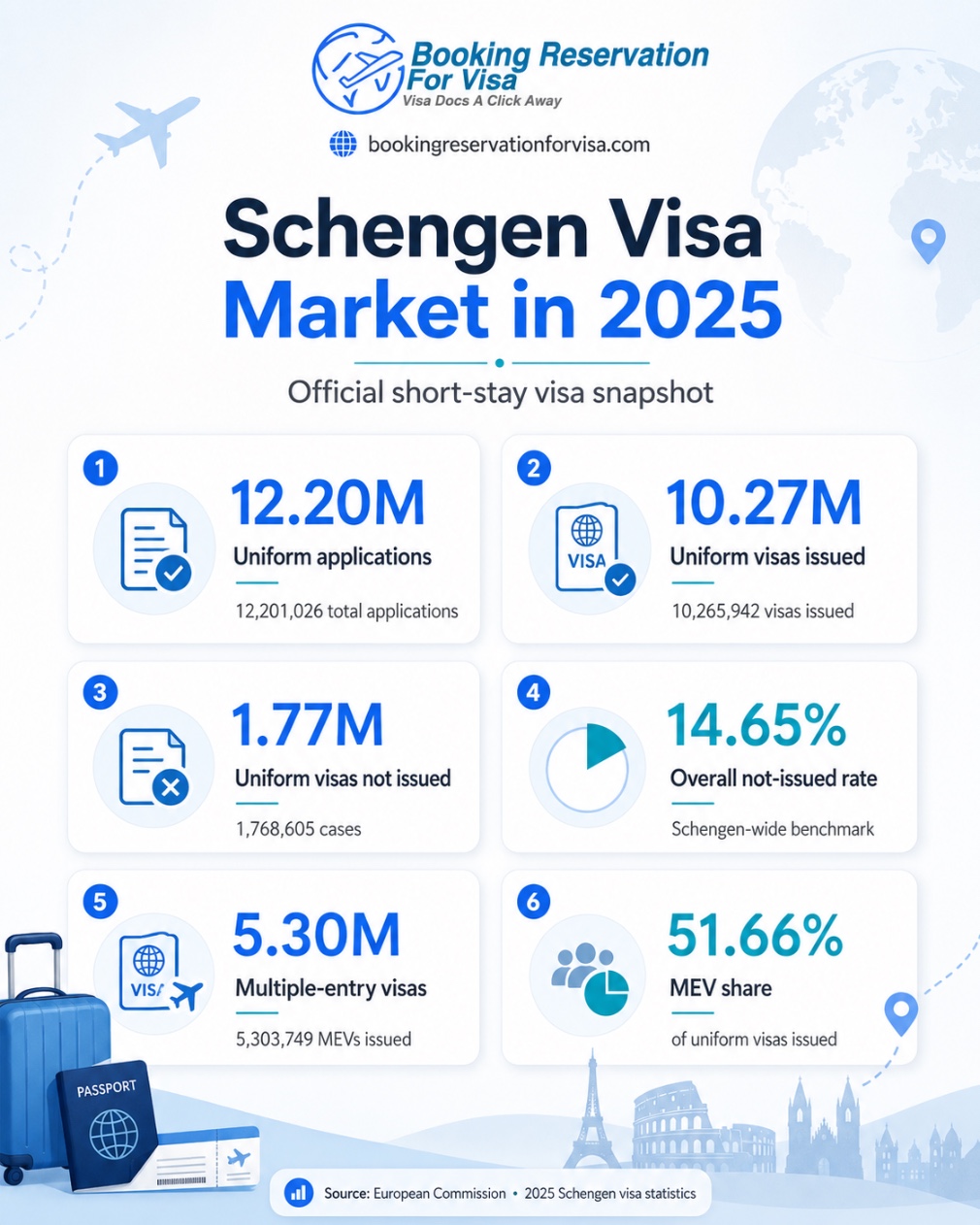
Graphic Title: Schengen Visa Market in 2025
Suggested Caption: A snapshot of uniform Schengen visa applications, visas issued, visa cases not issued and multiple-entry visa activity recorded during 2025.
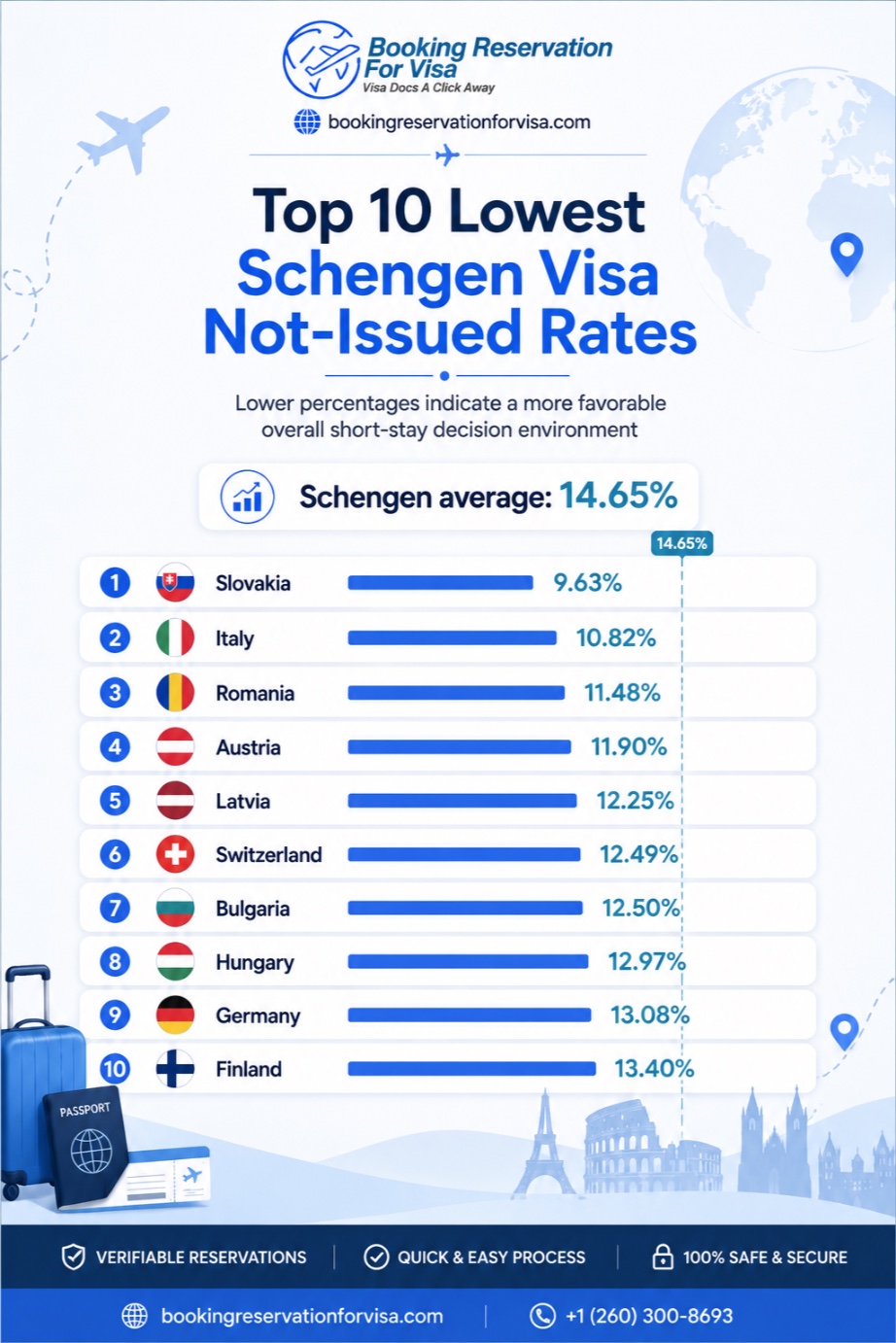
Based on the lowest official 2025 visa not-issued rates, the ten leading countries were:
- Slovakia
- Italy
- Romania
- Austria
- Latvia
- Switzerland
- Bulgaria
- Hungary
- Germany
- Finland
This ranking offers a useful statistical starting point, but it must be interpreted correctly. The European Commission does not publish a separate worldwide approval table exclusively for tourist visas. Its country totals combine uniform short-stay applications submitted for tourism, business, private visits, cultural activities, medical travel and other permitted short-stay purposes.
The percentages in this article should therefore be treated as indicators of the overall short-stay visa decision environment, not as promises that a tourist application will receive the same result.
Quick Answer: Which Schengen Country Has the Highest Visa Approval Indicator?
Based on the latest 2025 statistics, Slovakia recorded the lowest uniform short-stay visa not-issued rate at approximately 9.63%. This produces an indicative positive-outcome share of approximately 90.37%.
Italy followed with an indicative positive-outcome share of approximately 89.18%, while Romania, Austria, Latvia, Switzerland, Bulgaria, Hungary, Germany and Finland completed the top ten.
However, Italy and Germany processed vastly more applications than Slovakia or Latvia. Their positions may therefore be more informative for applicants who prefer a destination with both a comparatively favorable rate and a substantial global processing volume.
Top 10 Easiest Schengen Countries for Tourist Visa Approval: 2025 Statistics
| Rank | Schengen Country | Uniform Visa Applications | Uniform Visas Issued | Official Not-Issued Rate | Indicative Positive-Outcome Share | Multiple-Entry Visa Share |
| 1 | Slovakia | 18,033 | 15,988 | 9.63% | 90.37% | 39.35% |
| 2 | Italy | 1,326,876 | 1,182,665 | 10.82% | 89.18% | 60.68% |
| 3 | Romania | 54,100 | 47,776 | 11.48% | 88.52% | 50.35% |
| 4 | Austria | 250,112 | 213,694 | 11.90% | 88.10% | 53.89% |
| 5 | Latvia | 19,222 | 16,677 | 12.25% | 87.75% | 44.73% |
| 6 | Switzerland | 619,323 | 538,341 | 12.49% | 87.51% | 66.67% |
| 7 | Bulgaria | 179,402 | 152,236 | 12.50% | 87.50% | 52.51% |
| 8 | Hungary | 265,479 | 228,385 | 12.97% | 87.03% | 43.89% |
| 9 | Germany | 1,497,619 | 1,288,597 | 13.08% | 86.92% | 89.13% |
| 10 | Finland | 90,463 | 77,543 | 13.40% | 86.60% | 20.62% |
Graphic Title: Top 10 Lowest Schengen Visa Not-Issued Rates
Suggested Caption: The ten Schengen countries with the lowest overall uniform short-stay visa not-issued rates in 2025, compared with the Schengen-wide average of 14.65%.
How We Ranked the Easiest Schengen Visa Countries
The ranking uses the official not-issued rate for uniform visas reported for each Schengen state in the European Commission’s 2025 statistical workbook.
A lower schengen visa not-issued rate resulted in a higher position.
The ranking does not use unofficial embassy reviews, social-media approval stories, travel-agent claims or isolated applicant experiences. Those sources may help travelers understand practical procedures, but they cannot replace a standardized multinational dataset.
Four measurements are used throughout the article:
- Uniform Visa Applications
This is the number of uniform short-stay visa applications recorded for the country during the statistical year.
It provides important scale. A rate based on 18,000 applications must be read differently from a rate based on 1.5 million applications.
- Uniform Visas Issued
This is the number of uniform short-stay visas issued, including multiple-entry visas.
It does not include every type of document that may appear in a country’s visa statistics. Limited territorial validity visas, for example, are reported separately.
- Schengen Visa Not-Issued Rate
This is the official percentage used to compare countries in this article.
Although the expression is commonly interpreted as a refusal or rejection rate, this article preserves the Commission’s term, “not issued,” wherever statistical precision is important.
- Multiple-Entry Visa Share
The multiple-entry visa, or MEV, share shows how many issued uniform visas permitted more than one entry.
A high MEV share does not mean that first-time tourist applications are easier. It may reflect a country’s applicant population, repeat-traveler patterns, commercial relationships, nationality mix or visa-issuance practices.
Germany’s 89.13% MEV share, for instance, is remarkable, but it should not be confused with its general positive-outcome indicator of 86.92%.
Important Limitation: These Are Not Tourist-Only Approval Rates
The phrase “tourist visa approval rate” is widely searched, but the official European Commission totals do not isolate tourism from all other uniform short-stay purposes.
An applicant seeking a holiday visa should therefore use the ranking as one layer of research rather than as a destination-selection shortcut.
The figures can help answer:
- Which Schengen countries recorded comparatively low not-issued rates?
- Which countries processed enough applications to provide a substantial statistical sample?
- Which destinations improved or declined compared with the previous year?
- Which countries issued a high share of multiple-entry visas?
- Which destinations may suit a straightforward and credible tourism itinerary?
They cannot answer:
- Whether a particular nationality will receive the same outcome
- Whether one consulate is easier than another
- Whether a weak bank statement will be accepted
- Whether an unexplained deposit will be overlooked
- Whether a false itinerary will pass verification
- Whether a first-time traveler will receive a multiple-entry visa
- Whether a visa will be issued within a particular number of days
The applicant’s country of residence, nationality and filing location can materially influence the result. A Schengen state may record a low global visa not-issued rate while maintaining a much higher rate at a particular consulate.
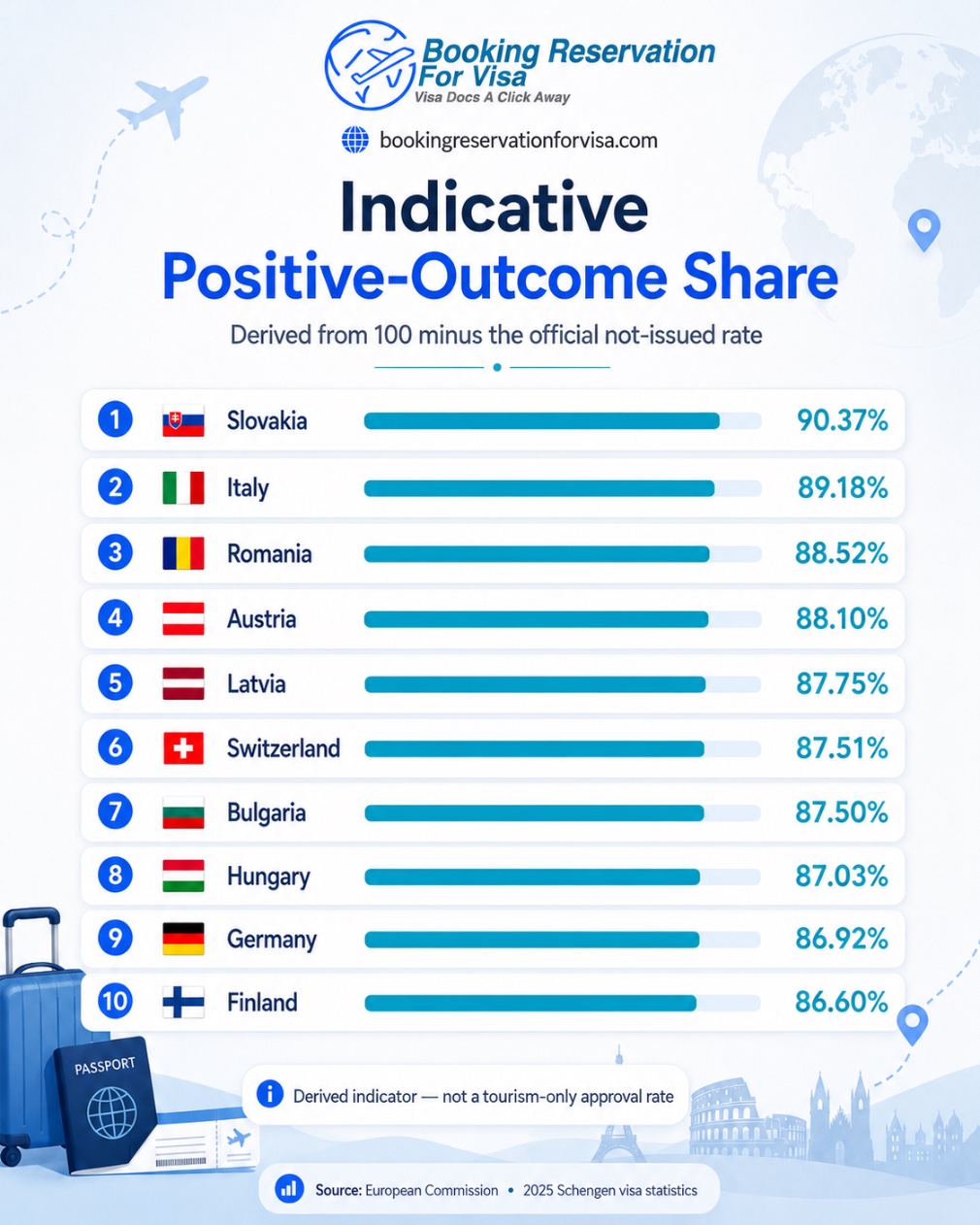
Graphic Title: Indicative Positive-Outcome Share
Suggested Caption: A simplified positive-outcome indicator derived by subtracting each country’s official schengen visa not-issued rate from 100. These figures are not official tourist-only approval rates.
The Main-Destination Rule Comes Before the Ranking
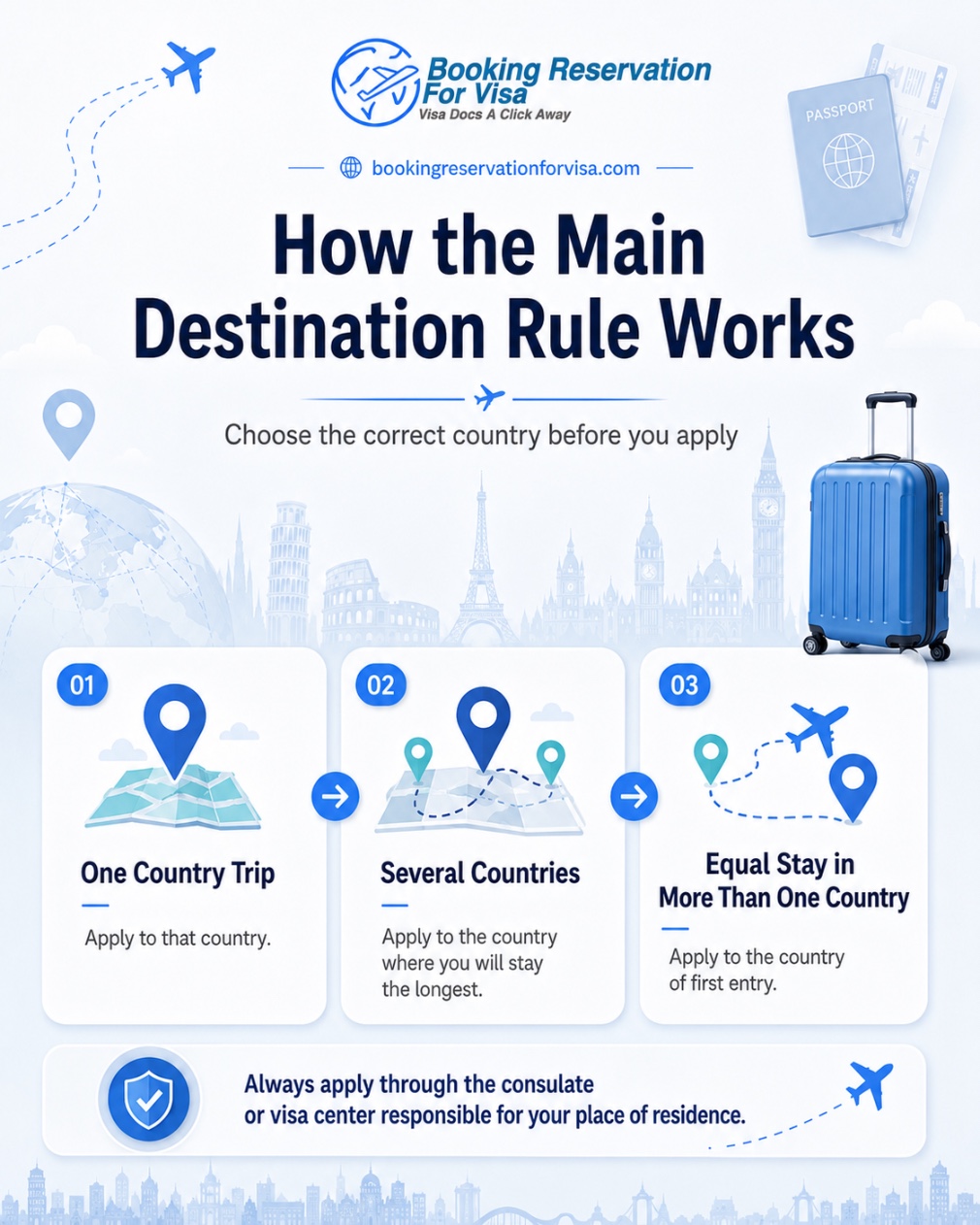
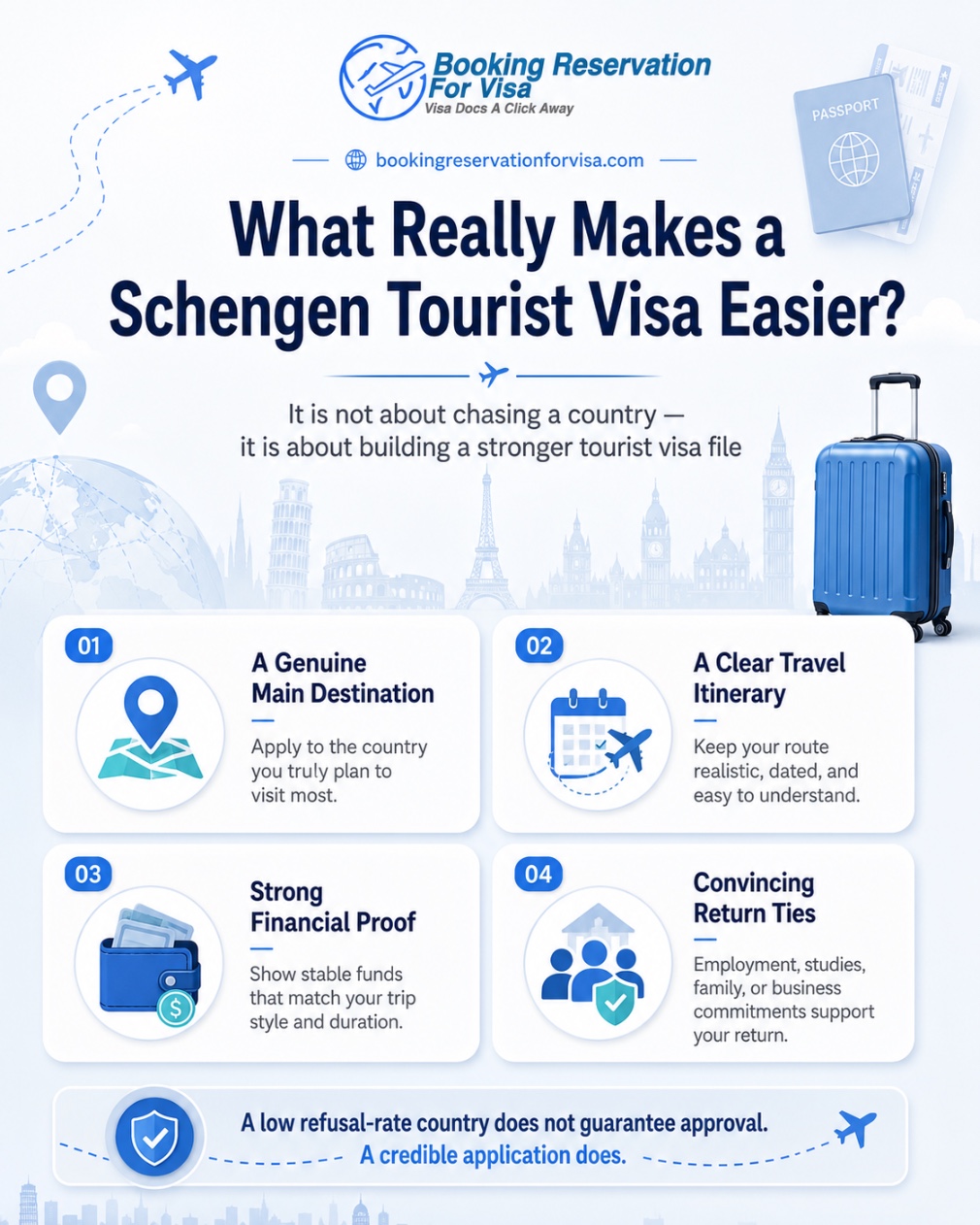
The most important rule in this article is simple: apply to the country that is genuinely responsible for your trip.
When visiting only one Schengen country, the application should normally be submitted to that country’s competent consulate.
When visiting several Schengen countries, the applicant must apply to the country where the longest stay will take place. When the stays are equal, the application generally belongs to the country of first entry.
As a general rule, the application must also be lodged through the consulate with territorial responsibility for the country where the applicant legally resides.
A traveler planning four nights in France, three nights in Switzerland and two nights in Italy cannot legitimately apply to Slovakia merely because Slovakia appears first in a statistical ranking.
Attempting to manipulate the itinerary around a low refusal rate is often described as visa shopping. It can produce hotel dates, transportation sectors and explanations that do not withstand scrutiny. Even when a visa is issued, applicants may be questioned at the external border and asked to show documentation concerning their accommodation, funds, onward travel and purpose of stay.
The easiest Schengen country for a traveler is therefore not simply the country with the lowest percentage. It is the country that combines:
- A legitimate main destination
- A clear tourism purpose
- A financially realistic trip
- A coherent itinerary
- Sufficient supporting documents
- Convincing reasons to return home
Slovakia
2025 Statistical Position
Slovakia ranked first with:
- 18,033 uniform visa applications
- 15,988 uniform visas issued
- 63% official not-issued rate
- 37% indicative positive-outcome share
- 35% multiple-entry visa share
Its visa not-issued rate improved slightly from approximately 9.94% in 2024 to 9.63% in 2025.
That makes Slovakia the statistical leader, but the application volume is relatively modest. Its rate should not be read as evidence that every Slovak consulate approves nine out of ten tourist applicants from every nationality.
Why Slovakia Can Produce a Convincing Tourist Itinerary
Slovakia works especially well for travelers who genuinely want a compact Central European experience rather than a hurried tour of unrelated capitals.
Bratislava can anchor a short city itinerary, while the country’s castles, historical towns, caves, mountain areas, spa traditions and High Tatras routes allow the traveler to build a trip with a distinct Slovak identity. Slovakia’s official tourism platform presents the country as a destination combining natural landscapes, cultural heritage and regional experiences.
A focused itinerary might include Bratislava, Trenčín, Banská Štiavnica and the High Tatras. Such a route is easier to explain than an implausible plan containing seven cities in six countries over eight days.
Who May Find Slovakia Suitable?
Slovakia may suit:
- Travelers who prefer less congested European destinations
- Applicants planning a compact Central European holiday
- Nature, castle, hiking or winter-tourism visitors
- Travelers combining Slovakia with nearby countries while spending the longest period in Slovakia
- Applicants with a moderate budget who can document the trip properly
Application Strengths to Emphasize
A Slovak tourist visa application should make the country’s role unmistakable. The cover letter, hotel booking, flight reservation and daily itinerary should show that Slovakia is not merely being used as the issuing country for a trip concentrated elsewhere.
The applicant should explain why Slovakia was selected, which regions will be visited, how the traveler will move between them, and why the proposed expenditure is reasonable.
The country’s favorable rate cannot compensate for an itinerary that gives Bratislava one night while allocating most of the holiday to Vienna, Prague or Budapest.
Principal Statistical Caution
Slovakia processed fewer applications than Italy, Germany, Switzerland, Hungary or Austria. Smaller datasets can move more sharply from year to year, and the global average may conceal substantial consular differences.
Slovakia deserves first place statistically, but Italy may offer a more robust comparison for travelers who value both a favorable rate and a much larger processing volume.
Italy
2025 Statistical Position
Italy ranked second with:
- 1,326,876 uniform visa applications
- 1,182,665 uniform visas issued
- 82% official not-issued rate
- 18% indicative positive-outcome share
- 68% multiple-entry visa share
Italy’s visa not-issued rate was approximately 10.89% in 2024 and 10.82% in 2025, showing notable year-to-year stability.
Why Italy Is One of the Strongest Countries in the Ranking
Italy combines the second-lowest visa not-issued rate with one of the largest application volumes in the entire Schengen system.
That combination matters. Slovakia had a slightly better percentage, but Italy processed more than 1.3 million applications. Its 2025 outcome was therefore produced across a vast and diverse network of consular locations.
Italy is also naturally compatible with tourism. Rome, Florence, Venice, Milan, Naples, Sicily, Sardinia, the Amalfi Coast, Tuscany, the Italian Lakes and the Dolomites support numerous coherent itinerary styles. Italy’s official tourism portal organizes the destination around cities, art, culture, archaeology, nature, food, coastal travel and regional itineraries.
The Advantage of a Country-Focused Italian Itinerary
Italy’s geographical and cultural variety means an applicant does not need to add several countries merely to make the trip appear interesting.
A first-time visitor can build a persuasive nine-day route around Rome, Florence and Venice. A slower traveler could spend the same period in Rome and southern Italy. A nature-oriented applicant could concentrate on the lakes and Dolomites.
This can strengthen the documentary logic because flights, trains, hotel bookings and daily activities remain within one principal country.
Who May Find Italy Suitable?
Italy may be suitable for:
- First-time European tourists with a genuine Italy-focused plan
- Art, architecture, history and culinary travelers
- Couples or families preparing a conventional holiday itinerary
- Applicants who want a high-volume destination with a comparatively low not-issued rate
- Travelers who can show realistic internal transportation between cities
What Italian Applications Need to Demonstrate
A strong Italian tourist visa file should establish:
- Why Italy is the main destination
- The number of nights in every city
- Confirmed or reserved accommodation for the full stay
- Transportation between Italian cities
- A round-trip flight plan
- Sufficient funds for the selected regions and travel style
- Employment, education, family, business or property ties supporting return
Italy’s popularity can create a deceptive sense that any itinerary will look believable. In practice, a plan can become weaker when it tries to cover Rome, Florence, Venice, Milan, Naples, Paris and Zurich in little more than a week.
The stronger story is usually the more disciplined one.
Why Italy May Be the Best Overall Statistical Choice
If “easiest” is measured only by the lowest not-issued rate, Slovakia ranks first.
If the assessment also considers volume, tourism compatibility, route flexibility and year-to-year stability, Italy arguably presents the strongest overall statistical profile in the top ten.
That does not make Italy universally easy. It makes Italy a destination where a genuine tourism file can align naturally with the purpose of travel.
Romania
2025 Statistical Position
Romania ranked third with:
- 54,100 uniform visa applications
- 47,776 uniform visas issued
- 48% official not-issued rate
- 52% indicative positive-outcome share
- 35% multiple-entry visa share
Romania’s 2024 not-issued rate was approximately 9.37%, rising to 11.48% in 2025.
However, that comparison requires context. Romania and Bulgaria began issuing Schengen visas instead of national short-stay visas from March 31, 2024, meaning the 2024 figures did not represent a conventional full year under the same statistical conditions.
Why Romania Is Becoming More Relevant to Schengen Travelers
Romania offers a different European narrative from the heavily visited Western European circuit.
A tourist route can connect Bucharest with Brașov, Sibiu, Sighișoara, Transylvania, Maramureș, Bucovina, the Danube Delta or the Black Sea coast. The country’s tourism platforms emphasize historical cities, castles, local gastronomy, rural experiences, monasteries, landscapes and longer regional tours.
The result can be a strong, destination-specific itinerary that does not look copied from a generic “five countries in ten days” template.
Who May Find Romania Suitable?
Romania may appeal to:
- Travelers looking for an emerging Schengen destination
- Visitors interested in castles, medieval towns and rural tourism
- Applicants planning a longer, slower and comparatively affordable trip
- Travelers who can explain a Romania-centered route clearly
- Repeat European visitors seeking a less conventional itinerary
Building a Strong Romanian Visa File
A Romanian tourism file should be precise about geography.
An applicant listing Bucharest, Brașov, Sibiu and the Danube Delta should understand the distances involved and show credible transportation. A list of attractions without a workable route does not become a genuine itinerary merely because every location exists.
Hotel bookings should follow the actual travel sequence. Check-out and check-in dates should correspond with train, road or domestic transportation plans. The return flight should depart from a city that the applicant can reasonably reach.
Statistical Interpretation
Romania’s third-place position is encouraging, but it should not yet be treated as a long-established trend. Its modern Schengen statistical history is shorter than that of Italy, Austria, Germany or Switzerland.
The 2025 dataset nevertheless shows that Romania processed more than 54,000 uniform visa applications while maintaining a not-issued rate well below the Schengen-wide average.
Austria
2025 Statistical Position
Austria ranked fourth with:
- 250,112 uniform visa applications
- 213,694 uniform visas issued
- 90% official not-issued rate
- 10% indicative positive-outcome share
- 89% multiple-entry visa share
Austria improved considerably from an approximate 13.67% not-issued rate in 2024 to 11.90% in 2025, a reduction of about 1.77 percentage points.
Why Austria Supports a Clear Tourism Story
Austria is particularly suitable for itineraries built around classical city tourism and Alpine travel.
Vienna provides a natural cultural anchor. Salzburg can support a music, architecture and heritage route, while Innsbruck, Tyrol, Hallstatt and the lake districts make nature-oriented extensions possible. Austria’s official foreign-affairs information directs travelers to the national tourism resources for comprehensive trip-planning information.
A seven to ten day Austria itinerary can therefore feel complete without forcing the applicant to move through several countries.
Who May Find Austria Suitable?
Austria may work well for:
- Cultural travelers visiting Vienna and Salzburg
- Winter-sports or Alpine-tourism applicants
- Couples and families seeking an organized city-and-nature holiday
- Travelers combining Austria with nearby Schengen countries while keeping Austria as the principal destination
- Applicants who can afford and document the expected cost of the trip
Financial Realism Matters
Austria can require a more substantial tourism budget than some Central or Eastern European destinations.
A bank balance should not merely cover the theoretical minimum. It should correspond with the applicant’s selected hotels, travel dates, internal transportation and daily expenses.
A luxury Vienna hotel, private Alpine transfers and premium experiences may look inconsistent when the applicant’s financial documents show limited disposable income. Conversely, a carefully budgeted trip using moderate accommodation and public transportation can appear credible when supported by stable earnings and savings.
Austria’s Statistical Strength
Austria offers a useful middle ground in the ranking. Its application volume is considerably larger than Slovakia, Latvia, Romania or Finland, while its not-issued rate remains below 12%.
Its improvement from 2024 also makes it one of the most notable positive movers in the top ten.
Latvia
2025 Statistical Position
Latvia ranked fifth with:
- 19,222 uniform visa applications
- 16,677 uniform visas issued
- 25% official not-issued rate
- 75% indicative positive-outcome share
- 73% multiple-entry visa share
Its not-issued rate increased from approximately 10.88% in 2024 to 12.25% in 2025.
Why Latvia Can Work for a Focused Baltic Holiday
Latvia offers a tourism profile that can be presented simply and coherently.
Riga can form the center of the trip, with possible extensions to Jūrmala, Sigulda, Cēsis, Gauja National Park, Kuldīga or the Baltic coast. Latvia’s official tourism resources highlight its historical towns, nature, food, regional travel and authentic local experiences.
A Latvia-centered route may be particularly attractive to travelers who prefer a quieter European itinerary over the most crowded capitals.
Who May Find Latvia Suitable?
Latvia may suit:
- Travelers planning a Baltic city break
- Nature and cultural-tourism visitors
- Applicants seeking a compact itinerary
- Travelers combining Latvia, Lithuania and Estonia, provided Latvia remains the legitimate main destination
- Repeat travelers looking beyond Western Europe’s conventional routes
Baltic Itineraries Require Precise Jurisdiction
The main-destination rule becomes especially important when a traveler plans to visit all three Baltic states.
If the itinerary includes three nights in Latvia, three nights in Lithuania and three nights in Estonia, the first-entry rule may determine the competent country. If Latvia has four nights and the others have fewer, Latvia may become the main destination.
Applicants should calculate nights rather than simply counting cities.
A route containing Riga, Vilnius and Tallinn should also explain cross-border transportation. Hotel confirmations and bus, rail or flight reservations should be synchronized.
Statistical Caution
Like Slovakia, Latvia processed a comparatively modest number of applications.
Its fifth-place position is meaningful, but the smaller volume means applicants should not treat the global percentage as a substitute for checking the requirements and performance of the responsible Latvian consulate in their country of residence.
Switzerland
2025 Statistical Position
Switzerland ranked sixth with:
- 619,323 uniform visa applications
- 538,341 uniform visas issued
- 49% official not-issued rate
- 51% indicative positive-outcome share
- 67% multiple-entry visa share
The not-issued rate increased from approximately 11.27% in 2024 to 12.49% in 2025, but it remained below the Schengen-wide average.
Why Switzerland’s Ranking Is Significant
Switzerland combines a relatively low not-issued rate with a large application volume.
More than 619,000 uniform applications were recorded in 2025, providing a much broader statistical base than Slovakia, Latvia, Romania or Finland.
Switzerland’s tourism identity also supports highly structured itineraries. Travelers can organize a journey around Zurich, Lucerne, Interlaken, Bern, Geneva, the Jungfrau region, mountain railways, lakes, hiking or winter sports. Switzerland’s official tourism resources emphasize Alpine travel, scenic rail journeys, cities, lakes, outdoor activities and regional experiences.
Who May Find Switzerland Suitable?
Switzerland may suit:
- Applicants with strong and clearly documented finances
- Scenic-rail and Alpine travelers
- Couples or families planning a structured premium holiday
- Repeat international travelers
- Applicants whose itinerary can be completed primarily within Switzerland
A Favorable Rate Does Not Remove the Budget Question
Switzerland can be expensive, and consular credibility depends partly on whether the applicant can realistically fund the proposed trip.
An applicant should account for:
- Accommodation
- Intercity rail travel
- Mountain excursions
- Meals
- Travel insurance
- Local transportation
- Emergency funds
- Return transportation
A ten-day Switzerland itinerary supported by a bank balance that barely covers the hotel cost may generate questions even when the application contains every document on the checklist.
The purpose is not to display the largest possible balance. It is to demonstrate that the money is genuinely available, proportionate to the trip and consistent with the applicant’s income history.
Why Switzerland Remains a Strong Candidate
Its combination of scale, tourism clarity, a 12.49% not-issued rate and a 66.67% MEV share makes Switzerland one of the more statistically substantial countries in the ranking.
The destination is not necessarily easy for financially marginal applications. It can, however, be a strong choice for applicants whose resources, travel history and itinerary genuinely match the cost and character of the trip.
Bulgaria
2025 Statistical Position
Bulgaria ranked seventh with:
- 179,402 uniform visa applications
- 152,236 uniform visas issued
- 50% official not-issued rate
- 50% indicative positive-outcome share
- 51% multiple-entry visa share
The country’s rate increased from approximately 9.40% in 2024 to 12.50% in 2025. As with Romania, the comparison must be treated cautiously because Bulgaria began issuing Schengen visas during 2024 rather than at the beginning of that statistical year.
Bulgaria’s Tourism Range
Bulgaria can support several distinct tourism narratives.
A city-and-culture route might focus on Sofia, Plovdiv, Rila Monastery and Veliko Tarnovo. A summer itinerary might center on the Black Sea coast, while a winter application could be built around mountain and ski destinations.
The country’s official tourism resources present cultural, coastal, rural, ecological, spa, wellness, mountain, ski, wine, food and adventure tourism.
Who May Find Bulgaria Suitable?
Bulgaria may appeal to:
- Travelers interested in an emerging full-Schengen destination
- Cultural and historical tourists
- Black Sea holiday makers
- Ski and mountain travelers
- Applicants seeking a more moderately priced European itinerary
Avoid Treating Bulgaria as a Paper Destination
Because Bulgaria appears in the top ten, some travelers may be tempted to submit a Bulgarian application while concentrating the real trip elsewhere.
That approach is risky.
A legitimate Bulgarian file should contain:
- Accommodation in Bulgaria for the principal portion of the stay
- Activities that reflect the season
- Realistic domestic transportation
- An entry and exit route that makes geographical sense
- Funds proportionate to the stated travel style
- A cover letter explaining the tourism purpose
How to Interpret Bulgaria’s Position
Bulgaria’s 2025 figures are substantial enough to make its seventh-place position noteworthy. However, the movement from its partial 2024 statistics should not be presented as a straightforward deterioration without explaining the change in its Schengen participation and reporting context.
Future datasets will make it easier to judge whether the 2025 rate represents a stable pattern.
Hungary
2025 Statistical Position
Hungary ranked eighth with:
- 265,479 uniform visa applications
- 228,385 uniform visas issued
- 97% official not-issued rate
- 03% indicative positive-outcome share
- 89% multiple-entry visa share
Hungary’s 2024 not-issued rate was approximately 12.76%, making its 2025 result broadly stable.
Why Hungary Works for Short Tourism Itineraries
Budapest is capable of carrying an entire short holiday. Its architecture, river setting, thermal-bath culture, museums, markets, food and evening experiences allow applicants to create a detailed itinerary without excessive internal travel.
Longer routes can include Lake Balaton, Eger, Pécs, Szentendre, historical towns or wine regions. Hungary’s official tourism platform provides city, regional, cultural and day-by-day itinerary resources.
Who May Find Hungary Suitable?
Hungary may be suitable for:
- First-time travelers seeking a concentrated city break
- Applicants planning Budapest with one or two regional extensions
- Cultural, architectural, wellness and food tourists
- Travelers combining Central European countries while genuinely spending the longest period in Hungary
- Applicants whose budget supports a moderate European holiday
The Common Budapest – Vienna – Prague Problem
A Budapest, Vienna and Prague itinerary is popular, but applicants often make the mistake of choosing the application country according to appointment availability rather than the main destination.
The correct country depends on the actual allocation of nights.
The application becomes stronger when the traveler can explain:
- Which city is the principal destination
- Why more time is allocated there
- How the cities are connected
- Where each night will be spent
- Why the arrival and departure airports were selected
An itinerary should not be modified after submission in a way that effectively changes the main destination unless the change is genuine, documented and compatible with the issued visa.
Statistical Assessment
Hungary’s combination of a 12.97% not-issued rate and more than 265,000 applications gives it a useful degree of statistical credibility.
Its rate was not as low as Slovakia or Italy, but it remained comfortably below the Schengen-wide figure.
Germany
2025 Statistical Position
Germany ranked ninth with:
- 1,497,619 uniform visa applications
- 1,288,597 uniform visas issued
- 08% official not-issued rate
- 92% indicative positive-outcome share
- 13% multiple-entry visa share
Germany’s not-issued rate improved from approximately 13.73% in 2024 to 13.08% in 2025.
Why Germany Is One of the Most Important Countries in the List
Germany processed nearly 1.5 million uniform visa applications more than any other country in the top ten except none; in fact, within this ranking Germany recorded the highest application volume.
This scale makes its ninth-place position significant. The difference between Germany’s rate and Finland’s is small, but Germany’s result is supported by a much larger and more geographically diverse application base.
Its 89.13% multiple-entry visa share was also the highest among the top ten. This should not be interpreted as an 89% chance that a first-time tourist will receive an MEV. It simply shows that a large proportion of Germany’s issued uniform visas allowed multiple entries.
Germany’s Tourism Versatility
Germany supports many viable itinerary types:
- Berlin and contemporary history
- Munich and Bavaria
- Hamburg and northern Germany
- Cologne and the Rhine
- Dresden and Saxony
- The Black Forest
- Castle and medieval-town routes
- Christmas-market itineraries
- Cultural, industrial or automotive tourism
Germany’s national tourism organization promotes cities, culture, nature, castles, historical towns, museums, heritage locations and regional experiences.
Who May Find Germany Suitable?
Germany may suit:
- Travelers with a clear city or regional theme
- Applicants visiting relatives but filing under the correct purpose
- Repeat international travelers
- Families planning a structured holiday
- Travelers combining tourism with a genuine event or cultural purpose
- Applicants seeking a country with extensive processing experience
German Applications Reward Documentary Discipline
Germany should not be mistaken for a relaxed-documentation option merely because it appears in the top ten.
A credible file should contain orderly evidence concerning:
- Employment or business activity
- Approved leave
- Regular income
- Bank-account history
- Trip financing
- Accommodation
- Intercity travel
- Medical insurance
- Return plans
- Family, educational, professional or economic ties
Germany’s high application volume means its consular system encounters a wide range of files. Generic cover letters, unexplained deposits, contradictory forms and unrealistic itineraries are unlikely to become convincing simply because the destination has a below-average not-issued rate.
The Volume Advantage
For statistical graphics, Germany should be highlighted as the high-volume leader of the top ten.
Its rate is not the lowest, but processing approximately 1.5 million applications while maintaining a 13.08% not-issued rate gives it one of the most robust overall profiles in the ranking.
Finland
2025 Statistical Position
Finland ranked tenth with:
- 90,463 uniform visa applications
- 77,543 uniform visas issued
- 40% official not-issued rate
- 60% indicative positive-outcome share
- 62% multiple-entry visa share
Its not-issued rate improved from approximately 15.18% in 2024 to 13.40% in 2025, a reduction of about 1.79 percentage points, the strongest improvement among the established Schengen issuers in this top ten.
Finland’s Distinctive Tourism Profile
Finland can support a highly specific tourism narrative.
Helsinki, Finnish Lakeland, the coast, archipelago regions, traditional wooden towns and Lapland can form separate or combined itineraries. Seasonal experiences are particularly important: summer and winter trips may require completely different clothing, budgets, transportation and activities.
Finland’s official tourism portal highlights Helsinki, Lakeland, the coast and archipelago, Lapland, Arctic travel, local food, nature and historical wooden towns.
Who May Find Finland Suitable?
Finland may work for:
- Winter and Arctic tourism applicants
- Northern Lights or Lapland travelers
- Nature-oriented visitors
- Travelers who prefer a single-country Nordic itinerary
- Applicants with a budget that realistically covers seasonal transportation and accommodation
Seasonal Credibility Is Essential
A Finnish tourism application should reflect the proposed month.
A winter application may need to account for specialist clothing, shorter daylight, internal flights or trains, and higher seasonal accommodation costs in Lapland. A summer itinerary may focus on Helsinki, lakes, islands, national parks and long daylight hours.
The applicant should avoid submitting the same generic activity list regardless of the season.
Understanding Finland’s Low MEV Share
Finland’s multiple-entry visa share was approximately 20.62%, the lowest among the ten countries in this ranking.
This does not weaken its tenth-place approval indicator. The two figures measure different things.
An applicant seeking a single holiday should focus first on whether the purpose, finances and itinerary justify the visa requested. A multiple-entry visa should not be demanded without a genuine recurring travel need.
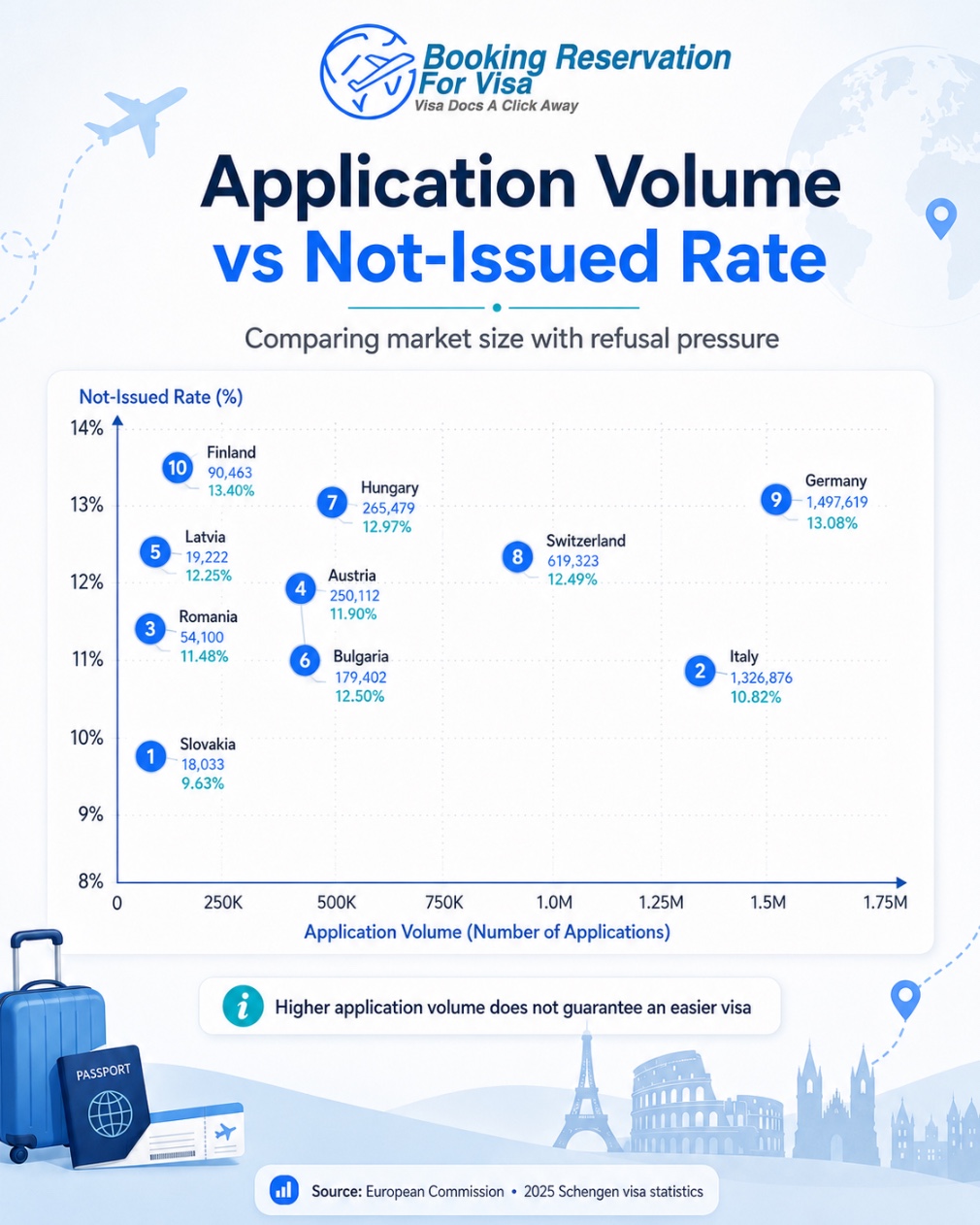
Graphic Title: Application Volume Versus Not-Issued Rate
Suggested Caption: A comparison of each top-ten country’s processing volume and overall not-issued rate, showing why both percentage and application scale matter.
What the 2025 Ranking Really Reveals
The ranking contains three distinct groups.
Low-Rate, Lower-Volume Countries
Slovakia and Latvia recorded excellent percentages but processed fewer than 20,000 applications each.
Their results are useful, but the smaller scale makes them more sensitive to changes in applicant composition and consular activity.
Strong Mid-Volume Countries
Austria, Bulgaria, Hungary, Romania and Finland processed between approximately 54,000 and 265,000 applications.
They offer a balance between statistical volume and favorable rates, although Romania and Bulgaria require additional historical caution because of their more recent transition into Schengen visa issuance.
High-Volume Statistical Leaders
Italy, Germany and Switzerland processed hundreds of thousands or more than one million applications while remaining in the top ten.
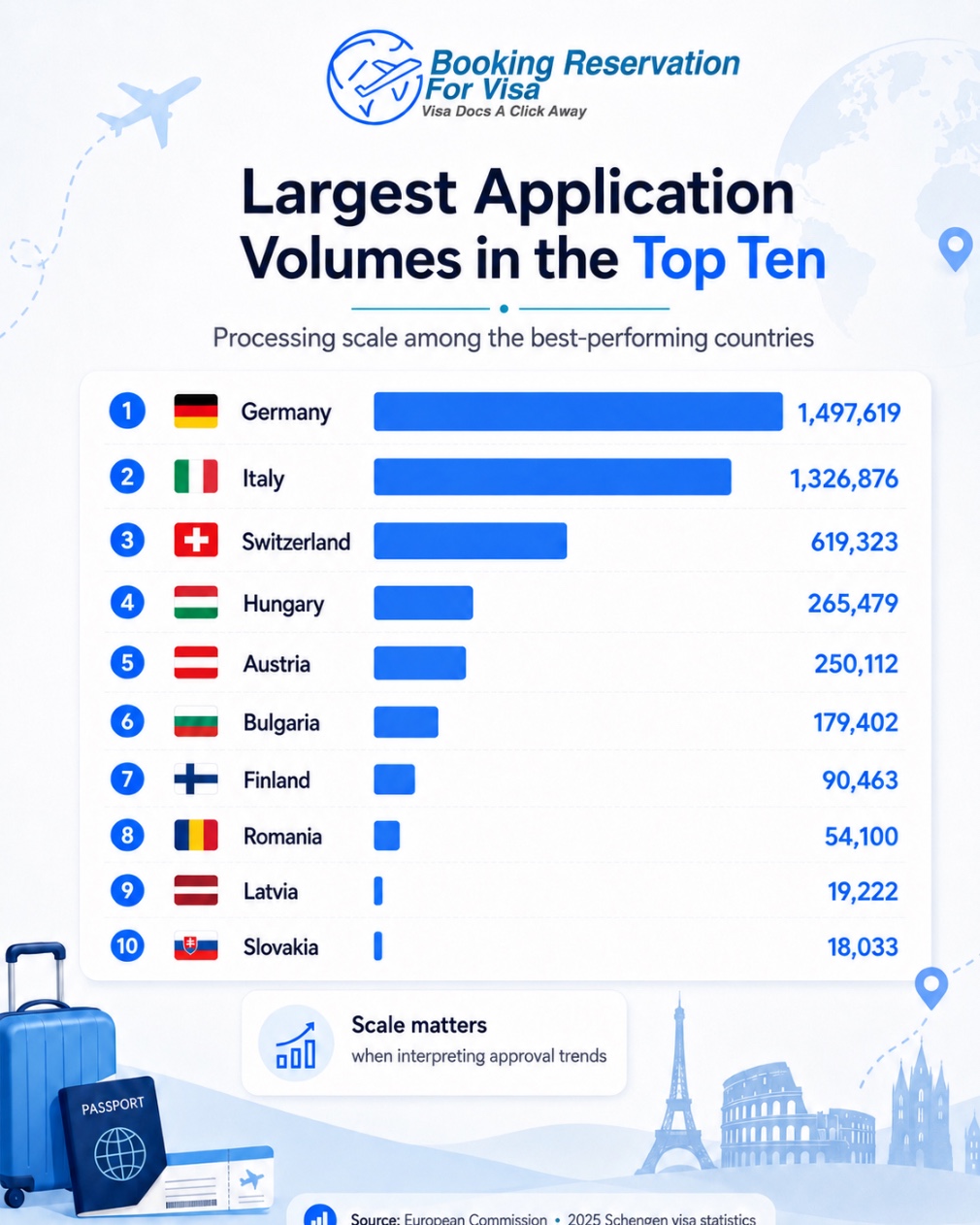
Graphic Title: Largest Application Volumes in the Top Ten
Suggested Caption: Germany and Italy processed the largest numbers of uniform short-stay visa applications among the ten countries included in the ranking.
Comparison with the Schengen-Wide Average
The overall 2025 visa not-issued rate was approximately 14.65%.
Every country in the top ten performed better than that figure:
- Slovakia was approximately 5.02 percentage points below the average.
- Italy was approximately 3.82 points below.
- Romania was approximately 3.17 points below.
- Austria was approximately 2.75 points below.
- Latvia was approximately 2.40 points below.
- Switzerland was approximately 2.15 points below.
- Bulgaria was approximately 2.15 points below.
- Hungary was approximately 1.68 points below.
- Germany was approximately 1.56 points below.
- Finland was approximately 1.25 points below.
The countries immediately outside the top ten included Iceland, Czechia, France, Lithuania, Greece, Spain and Luxembourg.
France and Spain processed extremely high volumes, but their not-issued rates were slightly higher than Finland’s and therefore did not enter the top ten under this methodology.
Which Country Is Easiest for a First-Time Schengen Visa?
There is no universally easiest country for a first-time applicant.
A first-time traveler with stable employment, six months of consistent banking activity, sufficient funds, approved leave and a realistic nine-day Italy itinerary may present a stronger file than a frequent traveler submitting a confused or artificial Slovak application.
For first-time applicants, the most suitable country is often one that allows a simple itinerary:
- One primary destination
- A limited number of cities
- Realistic travel distances
- Consistent accommodation
- A clear return date
- A budget that matches the applicant’s income
- A tourism purpose that can be explained without exaggeration
Italy, Austria, Hungary and Germany can work well because they allow the traveler to build a complete single-country holiday. Slovakia and Latvia can also be persuasive when the applicant genuinely wants to explore those destinations rather than use them as administrative gateways.
Which Country Has the Best Combination of Rate and Volume?
Italy arguably offers the strongest balance.
It recorded:
- The second-lowest not-issued rate
- More than 1.3 million applications
- More than 1.18 million uniform visas issued
- A broadly stable rate compared with 2024
- A 60.68% multiple-entry visa share
- Extensive possibilities for single-country tourism
Germany provides the largest top-ten application volume and the highest MEV share, but its visa not-issued rate was about 2.26 percentage points higher than Italy’s.
Switzerland provides another strong balance, with more than 619,000 applications and a 12.49% visa not-issued rate.
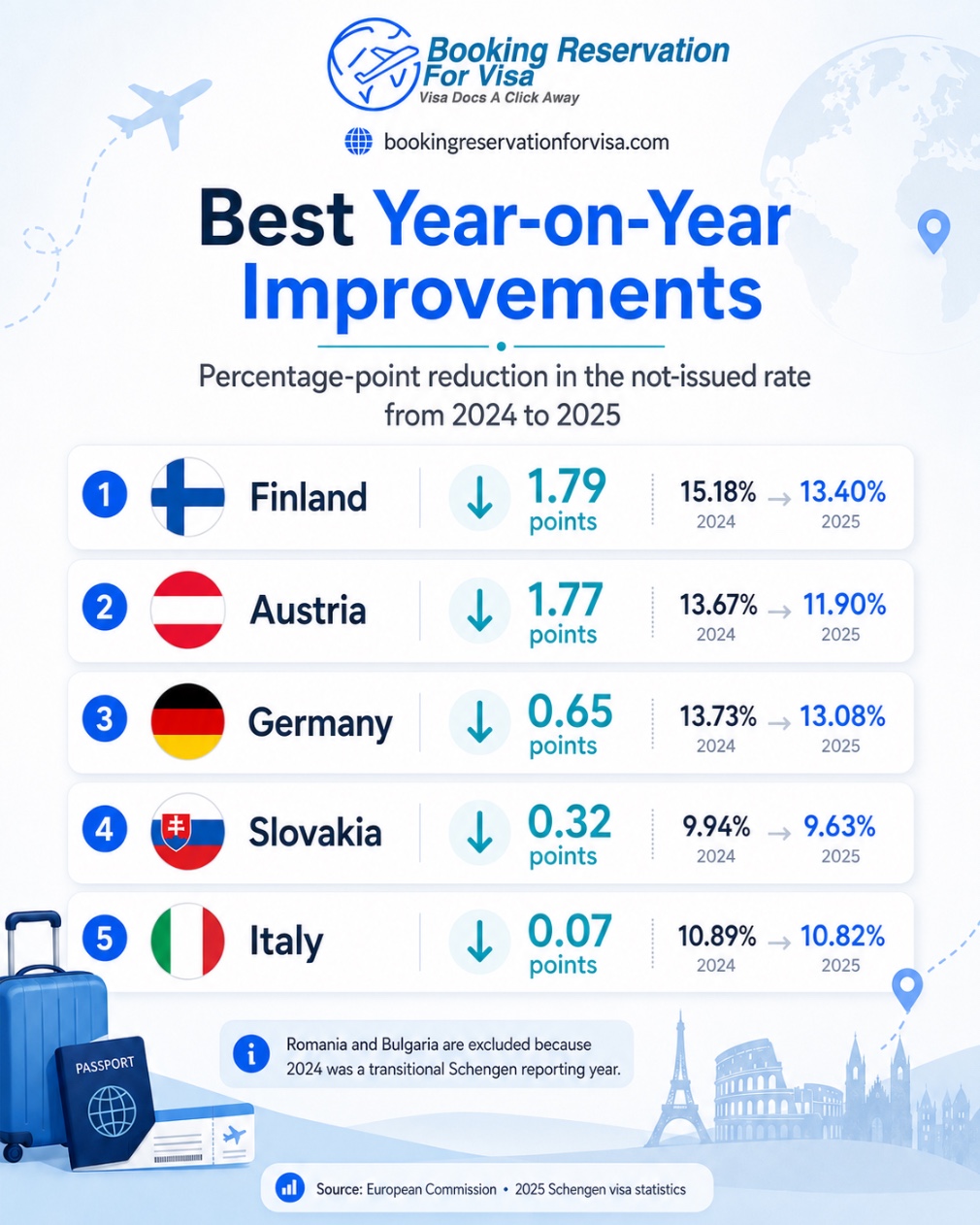
Which Country Improved the Most?
Among established Schengen visa issuers in the top ten:
- Finland improved by approximately 1.79 percentage points.
- Austria improved by approximately 1.77 percentage points.
- Germany improved by approximately 0.65 percentage points.
- Slovakia improved by approximately 0.32 percentage points.
- Italy improved by approximately 0.07 percentage points.
Romania and Bulgaria should not be compared mechanically with 2024 because their 2024 statistics followed the start of Schengen visa issuance during that year.
Graphic Title: Best Year-on-Year Improvements
Suggested Caption: Finland and Austria recorded the strongest reductions in their overall not-issued rates between 2024 and 2025 among the established Schengen issuers included in the top ten.
Why a Low Rejection Rate Does Not Guarantee Approval
Visa statistics measure groups. Visa decisions are made on individual files.
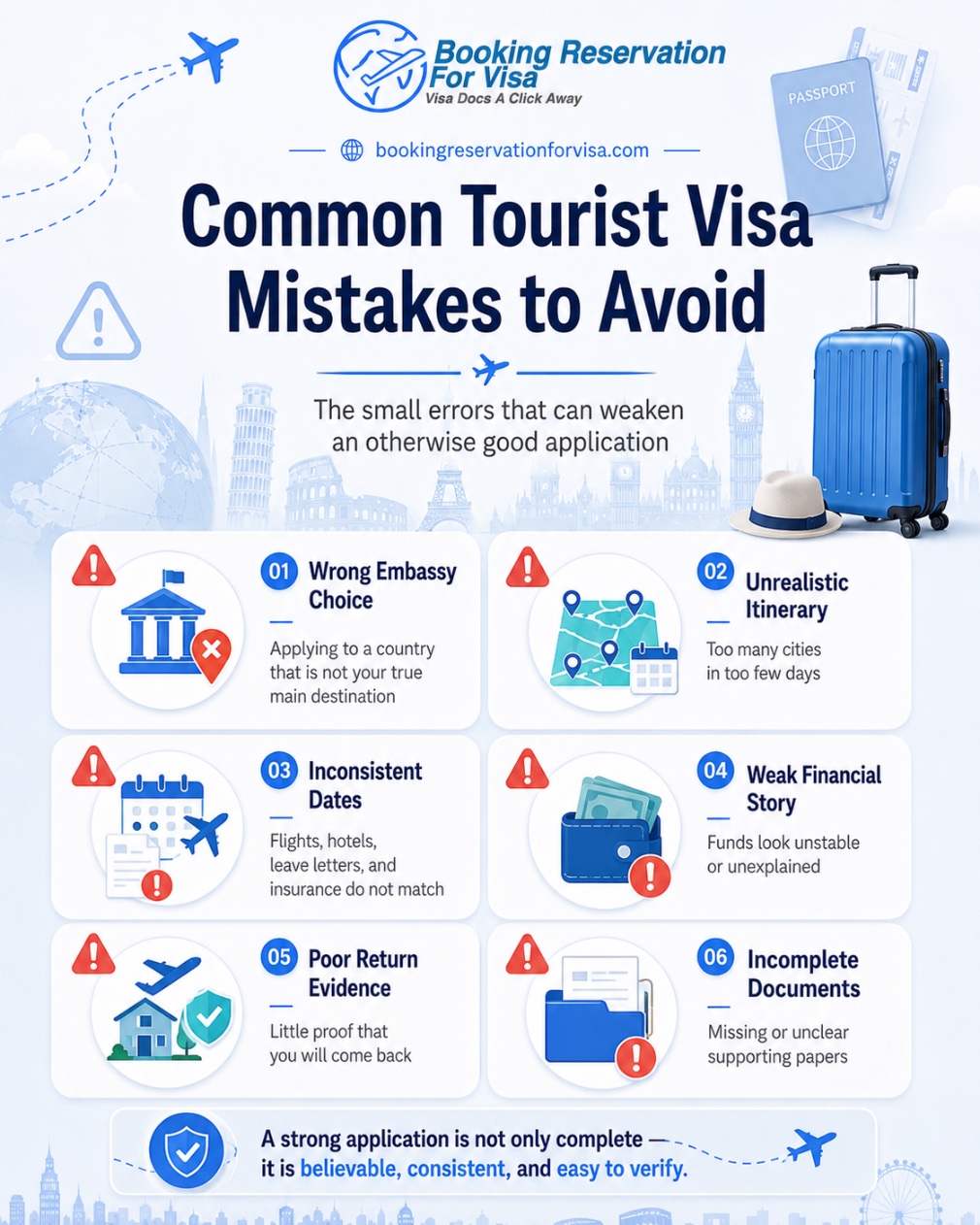
An applicant can still be refused by the statistically best-performing country because of:
An Unclear Travel Purpose
The itinerary may list tourist attractions without explaining why the trip is being taken, why the dates were chosen or who is paying.
Insufficient Financial Evidence
The bank balance may be inadequate, unstable or unrelated to the applicant’s normal earnings.
Large Unexplained Deposits
Money transferred shortly before the appointment can create uncertainty about whether the funds genuinely belong to the applicant.
Weak Evidence of Return
The applicant may not sufficiently document employment, education, family responsibilities, business commitments, property, ongoing projects or another legitimate reason to return.
Contradictory Dates
The flight reservation may show one return date while the hotel booking, insurance, application form or leave letter shows another.
An Unrealistic Itinerary
The traveler may attempt to visit too many cities, underestimate travel time or select transportation that does not correspond with the accommodation schedule.
Incorrect Jurisdiction
The application may be submitted to a country that is not the genuine main destination.
Unverifiable Reservations
A hotel or flight document may contain inaccurate passenger information, expired details or a booking reference that cannot be supported when checked.
Previous Immigration Problems
Overstays, deportations, inconsistent declarations or earlier visa violations can affect a new decision.
Incomplete Documentation
The applicant may omit a checklist item, submit an outdated form, provide an invalid passport or fail to supply requested translations.
Essential Schengen Tourist Visa Requirements
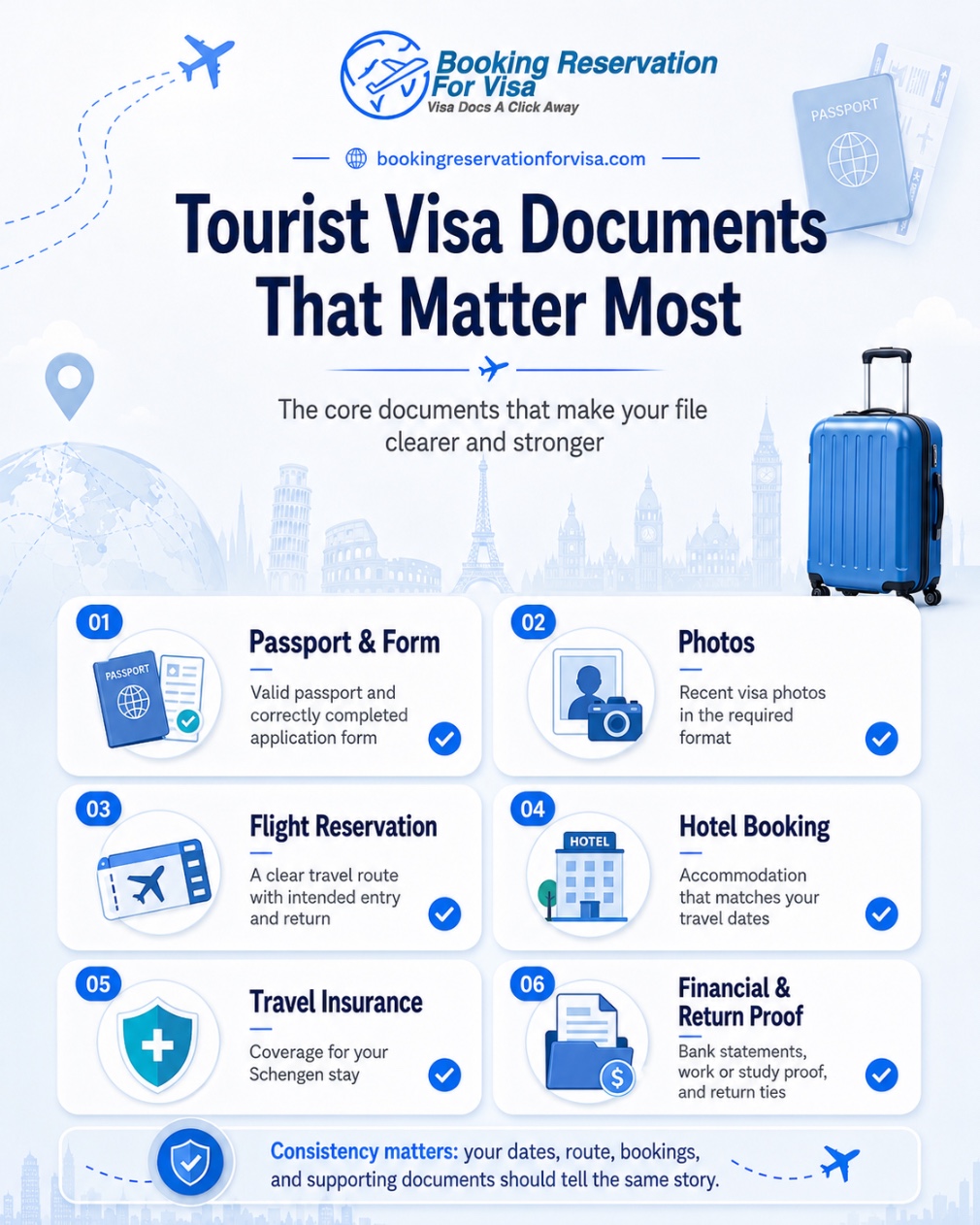
Requirements vary according to nationality, residence, consulate and filing location, but the European Commission identifies several core documents.
Applicants generally need:
- A valid passport
- A completed visa application form
- A compliant photograph
- Travel medical insurance
- Documents establishing the purpose of stay
- Evidence of financial means
- Proof of accommodation
- Evidence of the intention to return
- Biometrics, unless an exemption applies
The passport should generally remain valid for at least three months after the planned departure from the Schengen Area. Applications may normally be lodged no earlier than six months before travel and should be submitted at least 15 days before departure. Standard processing is normally 15 days but may extend to 45 days when further examination is required. The standard adult visa fee is €90, while the fee for children aged six to twelve is €45, subject to applicable exemptions and special arrangements.
Travel medical insurance should comply with the relevant Schengen requirements, including the required geographical validity and minimum coverage. General Schengen guidance commonly specifies minimum coverage of €30,000 for emergency medical treatment, hospitalization and repatriation.
How to Build a Convincing Tourist Visa File
Begin with the Real Trip
Choose the destination because you genuinely intend to visit it.
Do not begin with the refusal-rate table and invent a holiday around the first country. Begin with your available dates, budget, interests and travel history. Then determine which country is responsible for the application.
Keep the Route Proportionate
A seven-day itinerary rarely needs five countries.
Allow enough time for arrival, hotel check-in, transportation, meals, rest and actual sightseeing. A realistic itinerary creates a stronger narrative and is easier to support with reservations.
Match Every Date
The following dates should align:
- Flight departure
- Schengen arrival
- First hotel check-in
- Intercity transportation
- Hotel check-outs
- Insurance coverage
- Approved leave
- Final departure
- Return to employment or education
A one-day discrepancy can appear minor to the traveler but material to an officer assessing whether the file is reliable.
Explain the Funding
The application should identify whether the trip is:
- Self-funded
- Employer-funded
- Sponsored by a family member
- Jointly funded
- Paid through a combination of savings and income
The financial documents should support that explanation.
Demonstrate Personal Stability
The strongest return evidence depends on the applicant.
An employee may provide an employment letter, salary evidence and approved leave. A business owner may provide registration, tax and operational documents. A student may provide enrollment and academic-calendar evidence. A dependent applicant may explain family circumstances and sponsorship.
Use a Specific Cover Letter
A useful cover letter does not repeat the application form. It connects the evidence.
It should briefly explain:
- The purpose of travel
- The dates
- The countries and cities
- The primary destination
- The person paying
- The applicant’s occupation or circumstances
- The reason for returning
- Any unusual transaction or itinerary detail
Flight Reservations and Hotel Bookings for a Schengen Visa
Transportation and accommodation documents do more than show that a traveler has searched for flights and hotels. Together, they create the chronological skeleton of the trip.
A flight reservation should normally display:
- The traveler’s name as shown in the passport
- Departure and arrival airports
- Travel dates
- Flight sectors
- Airline information
- Booking or reservation details
- The return or onward journey, where applicable
A hotel booking should normally display:
- The traveler’s name
- Property name and address
- Check-in date
- Check-out date
- Booking reference
- Contact or verification information
- Accommodation covering the relevant nights
Official Schengen guidance and individual checklists frequently request a flight reservation or itinerary. Some authorities specifically advise applicants not to purchase the final ticket before the visa decision.
The exact terminology can vary. A checklist may refer to:
- Flight reservation for visa
- Flight itinerary
- Round-trip reservation
- Proof of intended transportation
- Travel itinerary
- Airline booking
- Proof of onward travel
- Return-flight reservation
Applicants should follow the wording of the competent consulate’s current checklist.
How Booking Reservation for Visa Supports the Travel-Document Stage
Booking Reservation for Visa provides visa-use travel documentation for applicants who need to present an organized route and accommodation plan before committing to the full cost of final travel.
The available services include:
Flight Reservation for Visa
A flight reservation can present the intended departure, entry, return and connecting sectors in a formal itinerary. Booking Reservation for Visa states that its flight reservations can include a six-digit PNR or booking reference and may be prepared for one-way, round-trip or multi-city travel.

Hotel Booking for Visa
A hotel booking can provide proof of accommodation corresponding with the applicant’s proposed cities and dates.
This is particularly important for multi-city trips, where every check-in and check-out must follow the same chronological sequence as the transportation itinerary.

Combined Flight and Hotel Reservation
The combined option helps applicants coordinate both sides of the travel plan at the same time.
When the flight reservation, hotel booking, visa form, travel insurance and cover letter show the same dates, the application becomes easier to review.
Booking Reservation for Visa also advertises reservation validity of up to approximately two weeks, correction options, urgent delivery and worldwide services. Applicants should confirm the current product conditions before ordering and should always compare the completed documents with the latest official checklist.
No travel-document provider can guarantee visa approval. The visa decision belongs exclusively to the competent consular authority. Reservation services help with document structure and itinerary presentation; they cannot replace sufficient funds, genuine travel intentions, return evidence or compliance with the Visa Code.

Common Mistakes When Using the “Easiest Country” Strategy
Applying to a Country with No Genuine Connection to the Trip
This is the most serious misuse of refusal-rate statistics.
A low rate does not authorize the applicant to disregard the main-destination rule.
Changing the Entire Itinerary After Approval
Reasonable travel changes can occur, but a visa obtained through a materially false itinerary can create problems at the border or in future applications.
Using the Cheapest Country Instead of the Correct Country
Visa fees are broadly harmonized, although service charges and local costs vary. Saving money on an appointment or service fee does not justify applying through the wrong jurisdiction.
Assuming a High MEV Share Guarantees a Multiple-Entry Visa
The visa’s validity and number of entries are decided according to the individual file, travel need and applicable rules.
Ignoring Consulate-Level Differences
Country totals combine decisions from multiple consulates around the world.
The national average may not resemble the rate in the applicant’s country of residence.
Treating a Reservation as the Entire Itinerary
A flight and hotel booking show where and when the traveler proposes to move. They do not explain the complete purpose of travel.
The cover letter and daily itinerary should give the documents context.
Buying Nonrefundable Travel Too Early
A fully purchased ticket can create unnecessary financial exposure. Applicants should check whether the competent authority requests a reservation, itinerary or paid ticket before making an irreversible purchase.
Frequently Asked Questions
Which Schengen country has the easiest tourist visa approval?
Slovakia recorded the lowest 2025 uniform short-stay visa not-issued rate, at approximately 9.63%. Italy ranked second at 10.82%.
These are overall short-stay statistics, not tourism-only approval rates. The appropriate application country still depends on the applicant’s genuine main destination.
Is Italy the easiest Schengen visa country?
Italy was second by not-issued rate but may be considered the strongest overall statistical option because it combined a 10.82% rate with more than 1.3 million applications.
A traveler should apply to Italy only when Italy is the sole or principal destination under the Schengen jurisdiction rules.
Is Germany easy for a Schengen tourist visa?
Germany ranked ninth in the 2025 table, with an official not-issued rate of approximately 13.08%, below the Schengen-wide rate of about 14.65%.
It also processed almost 1.5 million applications and recorded a high multiple-entry visa share. Nevertheless, German applications require complete, consistent and credible documentation.
Which Schengen country has the lowest rejection rate?
Using the European Commission’s official 2025 not-issued rate, Slovakia had the lowest percentage among Schengen visa-issuing states.
Applicants should preserve the distinction between a national average and the refusal rate at a specific consulate.
Can I apply through Slovakia because it has the lowest refusal rate?
Only when Slovakia is legitimately responsible for the trip.
When several Schengen countries are involved, the application normally belongs to the country where the longest stay will occur. When the stays are equal, it generally belongs to the country of first entry.
Does first entry decide the application country?
Not automatically.
The longest stay normally determines the main destination. First entry becomes relevant when the applicant will spend equal periods in several countries and no other principal destination can be established.
Do I need to purchase a confirmed airline ticket before applying?
Many Schengen checklists request a flight reservation or travel itinerary rather than a fully paid ticket. Some expressly advise applicants not to purchase the ticket before the visa is issued.
The applicant must follow the exact checklist of the responsible consulate, as documentary wording can vary.
Is a flight reservation enough for a Schengen visa?
A flight reservation can satisfy the transportation-document requirement when the relevant checklist accepts it.
It does not replace the application form, accommodation, insurance, financial evidence, purpose documents, return evidence or other required material.
Can a hotel booking improve my visa application?
A proper hotel booking helps establish where the traveler intends to stay and whether the accommodation dates correspond with the itinerary.
It does not independently improve an application when the remaining evidence is weak. Its value comes from consistency and credibility.
What amount should be shown in the bank account?
There is no single universal balance that guarantees approval.
Subsistence requirements differ by country, destination, duration and applicant circumstances. The account should show sufficient genuine funds for transportation, accommodation, daily expenses and contingencies, supported by a credible income or savings history.
Is a large recent deposit helpful?
A large deposit without a clear source can weaken an application.
When a legitimate transaction has occurred such as a salary bonus, asset sale, maturity payment or family sponsorship, the applicant should provide documentary evidence and explain it.
Is travel history mandatory?
Travel history can support credibility, but it is not universally mandatory.
A first-time traveler can still present a strong application through stable finances, clear employment or educational circumstances, a modest itinerary, genuine reservations and persuasive return evidence.
Which top-ten country issued the largest share of multiple-entry visas?
Germany recorded the highest MEV share among the top ten at approximately 89.13%.
That national figure does not mean a first-time tourist has an 89.13% chance of receiving a multiple-entry visa.
How early should I apply?
A Schengen application can generally be lodged up to six months before travel and should normally be submitted at least 15 days before departure.
Applicants should allow additional time for appointment availability, document preparation and possible extended examination.
How long does Schengen visa processing take?
The normal processing period is approximately 15 calendar days.
A decision may take up to 45 days when the application requires further examination or additional documents. Appointment waiting time is separate from formal processing time.
Does a Schengen visa guarantee entry?
No.
A visa permits the traveler to present themselves at the external border and request entry. Border authorities may still ask for accommodation, transportation, financial evidence and documents confirming the purpose of travel.
Travelers should carry accessible copies of the important documents used in the visa application.
Final Verdict
The latest statistics place Slovakia at the top of the easiest Schengen countries by official not-issued rate, followed by Italy, Romania, Austria, Latvia, Switzerland, Bulgaria, Hungary, Germany and Finland.
Slovakia recorded the best percentage, but Italy arguably offers the strongest balance of low not-issued rate, high processing volume, tourism relevance and statistical stability. Germany stands out for volume and multiple-entry visa issuance, while Austria and Finland recorded notable year-on-year improvements.
The central lesson, however, is not to chase the lowest percentage.
A convincing Schengen tourist visa application begins with a real journey. The correct country must be selected according to the destination rules. The budget must fit the itinerary. The flight reservation, hotel booking, insurance, leave dates and cover letter must tell the same story. The applicant’s financial and personal evidence must support the intention to travel temporarily and return as declared.
Statistics can identify favorable patterns. They cannot transform an artificial trip into a credible one. The easiest Schengen tourist visa is ultimately the visa supported by the clearest purpose, the most coherent travel plan and the strongest truthful evidence.