
Preparing a visa file looks simple until you start arranging the supporting documents one by one. A passport copy is clear. A bank statement is clear. A flight reservation is also fairly easy to understand. But accommodation often creates confusion because many applicants are not sure whether they should fully pay for a hotel before the visa decision or submit a reservation-based hotel document instead.
That is where the term Dummy Hotel for Visa becomes common.
The phrase sounds informal, but the purpose behind it is practical. Most applicants are not looking for a fake document. They are looking for a hotel booking that can support their visa application without forcing them to pay a large hotel bill before approval. In more professional wording, it is usually called a hotel booking for visa, proof of accommodation, hotel confirmation for visa, dummy hotel booking, or hotel reservation for visa application.
A strong hotel document does more than show a random hotel name. It connects your travel dates, destination city, number of nights, and intended stay arrangement in a way that makes your application easier to understand. If the hotel side is weak, the whole file can feel incomplete. If the accommodation side is clear, verifiable, and properly aligned with your itinerary, the visa file looks more organized.
This guide explains how to get a Dummy Hotel for Visa, what the sample should include, why validity matters, how verification works, and what applicants should check before using the document for submission.
What Is a Dummy Hotel for Visa?
A Dummy Hotel for Visa is a reservation-based hotel booking prepared for visa application purposes. It is used to show where the applicant intends to stay during the trip without requiring full advance payment for the final hotel stay.
It is not meant to mislead the embassy. It is meant to provide a structured proof of accommodation while the applicant is still waiting for the visa decision. Once the visa is approved, the traveler can finalize the actual hotel, adjust the stay if needed, or continue with the same accommodation plan if it remains suitable.
In simple terms, it helps answer these questions inside a visa file:
Where will the applicant stay?
Which city is the stay connected to?
Do the check-in and check-out dates match the travel dates?
Is the stay pattern realistic?
Does the hotel cost make sense with the applicant’s financial documents?
Can the booking be checked or verified if needed?
This is why many applicants search for a Dummy Hotel for Visa instead of immediately buying a non-refundable hotel stay.
Why Hotel Booking Matters in a Visa Application
Accommodation is not just a supporting attachment. It is part of the travel story.
When a visa officer reviews an application, the accommodation document helps explain what happens between arrival and departure. A flight reservation may show that you plan to enter and leave a country, but the hotel booking explains where you plan to stay during those days.
For example, if your flight shows arrival in Paris on 10 July and departure from Paris on 20 July, your hotel booking should normally cover the nights between those dates. If your travel plan includes Paris, Zurich, and Milan, then your accommodation should reflect that movement instead of showing one hotel in only one city.
A properly prepared hotel booking for visa helps establish:
- intended stay location
- trip duration
- city sequence
- date consistency
- financial realism
- proof of accommodation
- travel itinerary logic
This is why accommodation should never be treated as a casual document. It may look like one page, but it supports the structure of the entire application.
Why Applicants Use Dummy Hotel Booking Instead of Full Hotel Payment
Many applicants hesitate to pay for a hotel before the visa decision. That hesitation is understandable.
Visa approval is never guaranteed. If someone pays for a full hotel stay in advance and the visa is refused, delayed, or the travel dates change, the applicant may lose money. Even refundable hotel bookings can create stress because refund rules differ from property to property. Some hotels deduct charges. Some refunds take time. Some bookings are only partially refundable.
A Dummy Hotel for Visa gives applicants a more economical and flexible way to complete the accommodation side of the file. It allows the applicant to show a planned stay without carrying the financial risk of a full hotel purchase before approval.
This is especially useful when:
- the visa result is still pending
- travel dates may slightly change
- the applicant wants to avoid non-refundable hotel costs
- the embassy requires accommodation proof before issuing the visa
- the applicant needs a quick hotel confirmation for submission
- the trip includes multiple cities or changing stay dates
The goal is not to avoid planning. The goal is to plan carefully without paying unnecessary costs too early.
Dummy Hotel for Visa Application: What It Should Include
A weak hotel document can create confusion. A stronger hotel document gives the reviewer enough information to understand the stay without searching for missing details.
A proper dummy hotel booking for visa application should usually include:
- applicant’s full name as written on passport
- hotel name
- hotel address
- hotel phone number or contact details
- check-in date
- check-out date
- number of nights
- booking reference or confirmation number, where applicable
- city and country of stay
- number of guests
- room or stay details, where applicable
- hotel price per night or total stay cost, where available
- booking status or confirmation details
The name is very important. If your passport says “Muhammad Ali Khan” but the booking says “Ali Khan,” the file may look inconsistent. Small differences can make a document feel careless, especially when the visa file is already being checked for accuracy.
The dates are equally important. The hotel stay should cover the intended travel period. If there is a gap between flight arrival and hotel check-in, the file may raise questions. If the hotel checkout is before the flight departure, the stay plan may look incomplete.
Why Hotel Price Per Night Is an Important Detail
Many applicants only think about hotel name and dates. They forget that hotel cost can also matter.
A hotel booking is not only proof of where you intend to stay. It also helps show whether your travel plan is financially realistic. If your bank statement is modest but your hotel booking shows an expensive luxury property, the application may feel financially unbalanced. If the hotel cost is reasonable and fits your travel budget, the file becomes easier to understand.
This is why a hotel booking that includes price per night or estimated stay cost can be helpful. It allows the applicant to understand whether the accommodation matches their available funds.
For example, if an applicant is staying for 10 nights and the hotel cost is very high, the bank statement should reasonably support that expense along with food, transport, insurance, sightseeing, and emergency funds. If the financial documents do not support the total trip cost, the accommodation plan may look unrealistic.
A strong Dummy Hotel for Schengen Visa should therefore not only look presentable. It should also make sense financially.
The hotel cost helps in three practical ways:
First, it helps the applicant estimate the real budget of the trip.
Second, it helps the accommodation side match the bank statement.
Third, it helps the overall itinerary feel more believable and organized.
This is one detail many applicants ignore, but it can make the file appear more complete.
How to Get Dummy Hotel for Visa Application
Getting a Dummy Hotel for Visa should begin with clear travel details. The quality of the final booking depends on the accuracy of the information provided.
Here is a practical process applicants can follow.
Step 1: Confirm Your Travel Dates
Before requesting a Schengen hotel booking, finalize your expected arrival and departure dates. The hotel dates should follow the same travel logic as your flight reservation and visa application form.
Do not choose random dates. If your travel dates are from 5 August to 18 August, your accommodation should normally cover that stay period unless you are staying with a host for part of the trip.
Step 2: Decide Your Stay Cities
If the trip is simple, one city may be enough. If the trip includes multiple destinations, the hotel booking should reflect the city movement.
For example:
This looks more realistic than showing one hotel in Rome while the itinerary claims that the applicant will travel across Italy.
Step 3: Use Passport-Matching Traveler Details
Enter the applicant’s full name exactly as it appears on the passport. For family or group applications, each traveler’s name should be accurate.
Wrong spellings, missing surnames, or casual short names can weaken the document.
Step 4: Choose a Realistic Hotel Category
The hotel should match the applicant’s travel purpose and financial profile. A budget traveler does not need a five-star hotel. A business traveler may need a hotel closer to the meeting venue. A family may need accommodation that supports multiple guests.
The hotel should feel natural for the journey.
Step 5: Request a Verifiable Hotel Confirmation
A stronger hotel confirmation for visa should include contact details, hotel address, stay dates, booking details, and where possible, verification support.
The document should not look like a plain self-made note. It should look like a proper reservation record.
Step 6: Review the Booking Before Submission
Before attaching the hotel booking to the visa file, check:
- spelling of name
- check-in and check-out dates
- hotel address
- number of guests
- city sequence
- price details
- booking reference
- verification details
- match with flight reservation
- match with application form
A hotel document should not contradict the rest of the file.

How to Book a Dummy Hotel through Booking Reservation for Visa
Booking a Dummy Hotel for Visa through Booking Reservation for Visa is a simple process, but the accuracy of the details matters at every step. A hotel booking used for a visa application should match the applicant’s passport details, intended travel dates, destination cities, and overall itinerary. Even a small mismatch in name spelling, check-in dates, or city sequence can make the accommodation document look less consistent with the rest of the file.
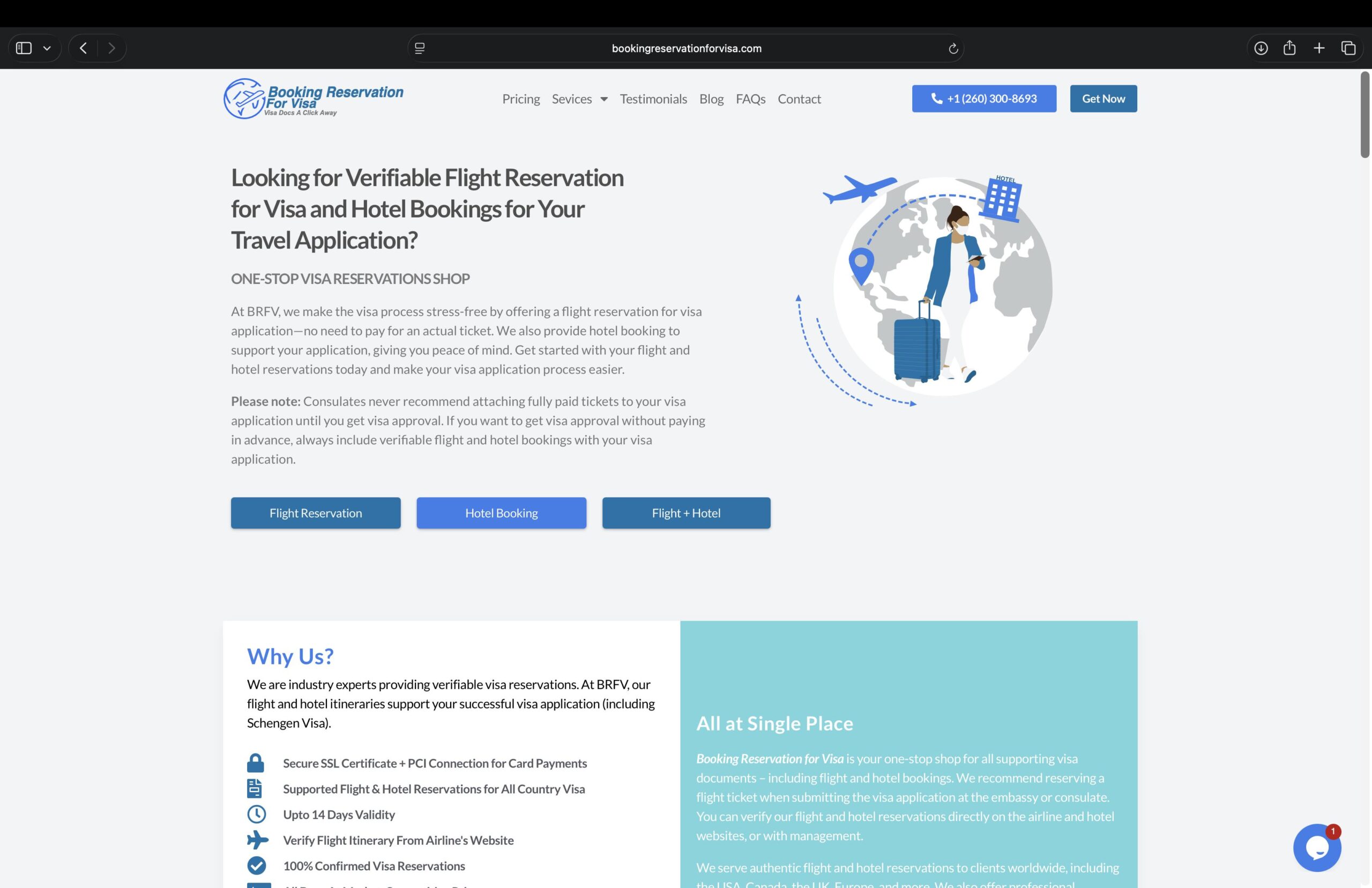
The process works best when the applicant already knows the travel dates, destination city, number of travelers, and visa appointment timeline before starting the order.
Step 1: Open the Hotel Booking Page
Start by visiting the hotel booking page on the Booking Reservation for Visa website. This is the correct service page for applicants who need accommodation proof, hotel confirmation, or a Dummy Hotel for Visa for their visa application.
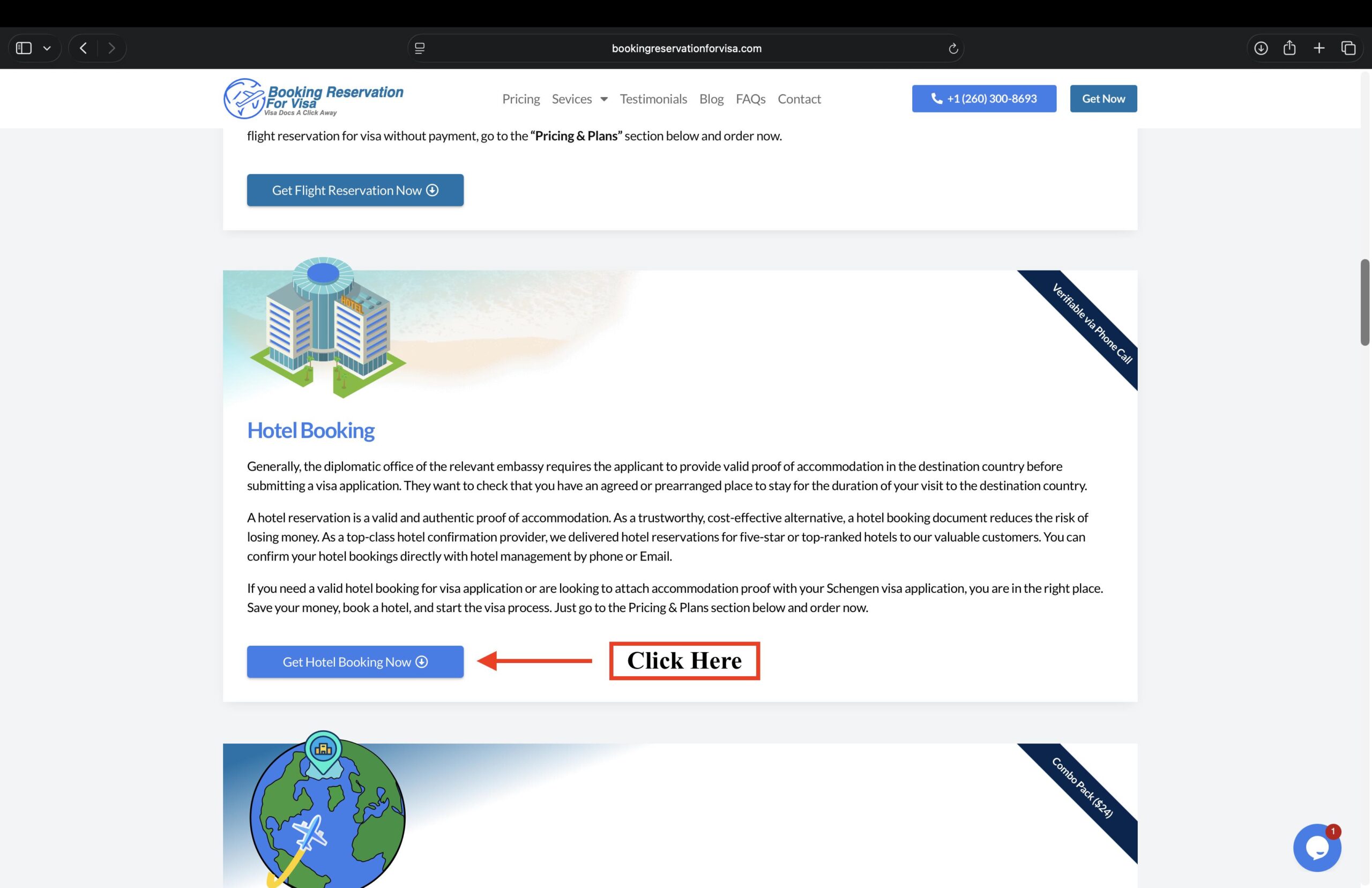
“Start from the BRFV hotel booking page to request a dummy hotel booking for visa application.”
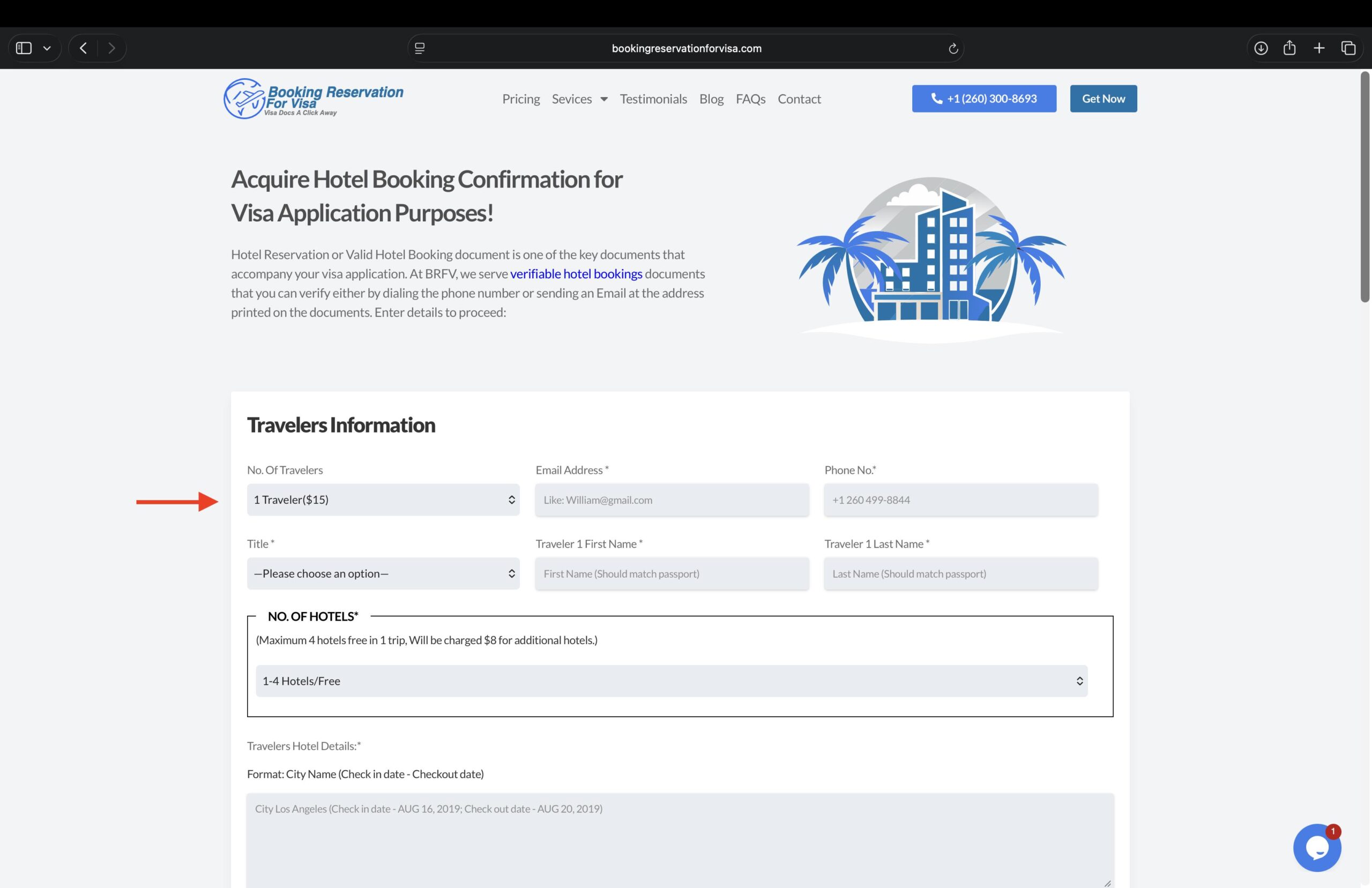
Step 2: Select the Number of Travelers
Choose the correct number of travelers who will be included in the hotel booking. This step is important because a solo traveler, couple, family, or group application should show accommodation details that match the actual number of guests.
If more than one applicant is traveling, the booking should not look like it was prepared for only one person. Correct traveler selection helps make the hotel reservation more accurate and suitable for the visa file.
Step 3: Enter Contact and Traveler Information
Fill in the email address, phone number, title, first name, and last name of the traveler. The name
should be entered exactly as it appears on the passport.
This is one of the most important parts of the process. A Dummy Hotel for Visa may become less useful if the applicant’s name is misspelled, shortened, or written differently from the passport. For example, if the passport includes a full surname, the hotel booking should follow the same spelling and sequence wherever possible.
“Traveler details should be entered carefully so the hotel booking matches the passport information.”
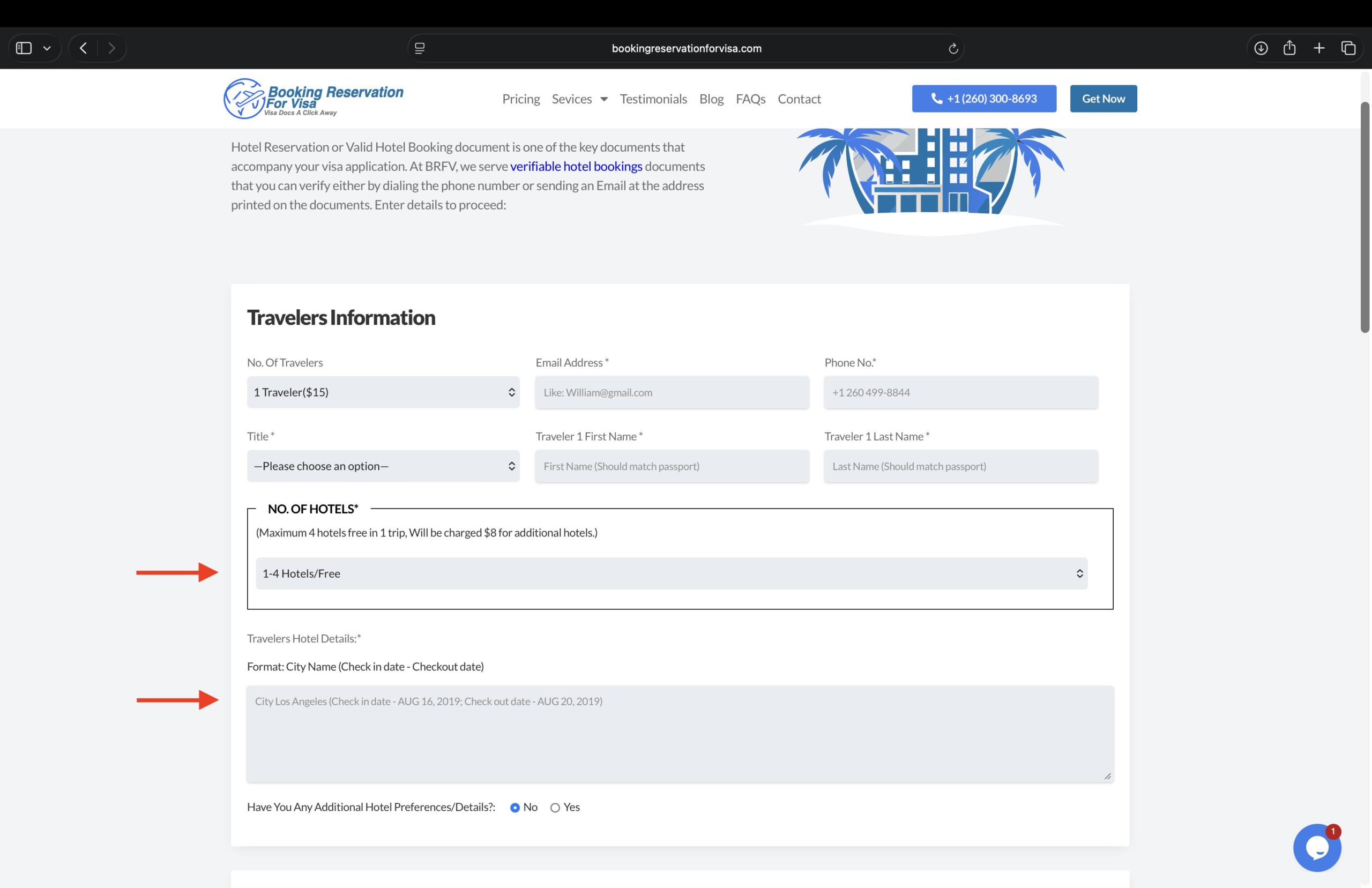
Step 4: Choose the Number of Hotels Required
Select how many hotels are needed for the trip. This depends on the travel plan. If the applicant is staying in one city, one hotel may be enough. If the itinerary includes multiple cities, the hotel booking should reflect that movement.
For example, an applicant visiting Paris, Brussels, and Amsterdam should not force the full trip into one hotel stay unless the itinerary genuinely supports that plan. A multi-city visa file usually looks clearer when the accommodation follows the actual route.
Step 5: Add Hotel Details in City and Date Format
Enter the hotel stay details in the required format, using the destination city with check-in and check-out dates. This is where the applicant should carefully mention where they plan to stay and
for how long.
A clear format may look like this:
Paris: 10 July 2026 – 15 July 2026
Amsterdam: 15 July 2026 – 20 July 2026
This city-and-date structure helps keep the accommodation plan organized. It also makes it easier to compare the hotel booking with the flight reservation, travel itinerary, cover letter, and visa application form.
Step 6: Add Hotel Preferences If Needed
If there are any specific hotel preferences, mention them in the additional details section. This may include preferred city areas, hotel category, stay sequence, family room needs, or accommodation close to a business venue, event location, university, hospital, or tourist area.
This step is especially useful when the visa purpose is more specific than ordinary tourism. For example, a business traveler may need a hotel near a conference venue, while a family may need accommodation suitable for multiple guests.
A more relevant hotel booking can make the stay plan feel better connected to the actual purpose of travel.
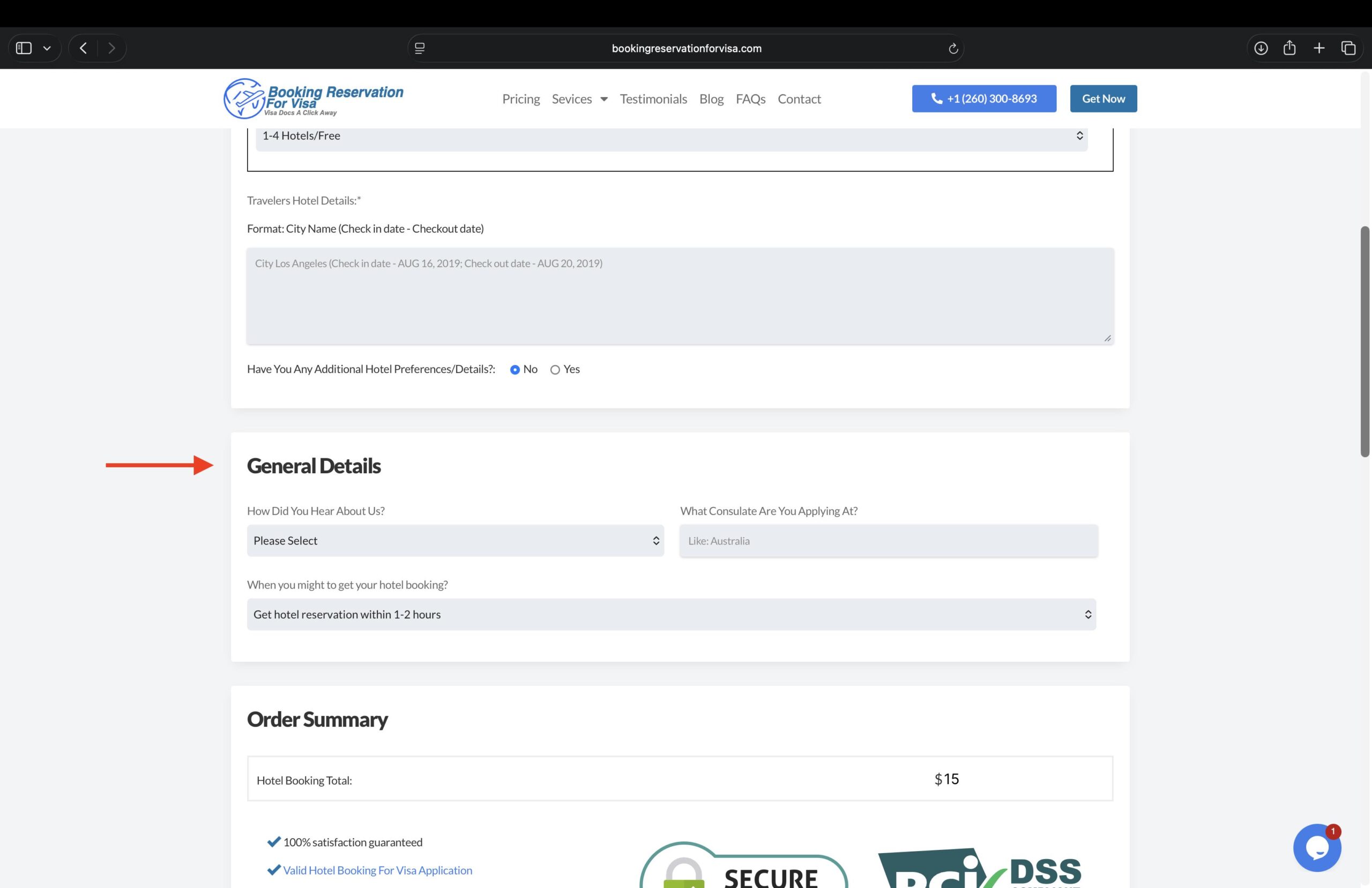
Step 7: Complete the General Details Section
After the hotel and traveler details, complete the general information section. This may include how
the applicant found the service, the consulate where the visa application will be submitted, and when the hotel booking is needed.
Adding the consulate detail is helpful because visa requirements and document expectations can vary from one application location to another. The delivery timing is also important because a Dummy Hotel for Visa should ideally remain valid around the appointment or submission date.
Step 9: Review All Details Before Payment
Before moving to payment, review the full order carefully. Check the traveler name, email address,
phone number, number of travelers, number of hotels, city names, check-in dates, check-out dates, hotel preferences, consulate details, and appointment timing.
This review step should not be skipped. A hotel booking is part of the visa file, so it should not contain careless errors. The accommodation details should match the rest of the application documents as closely as possible.
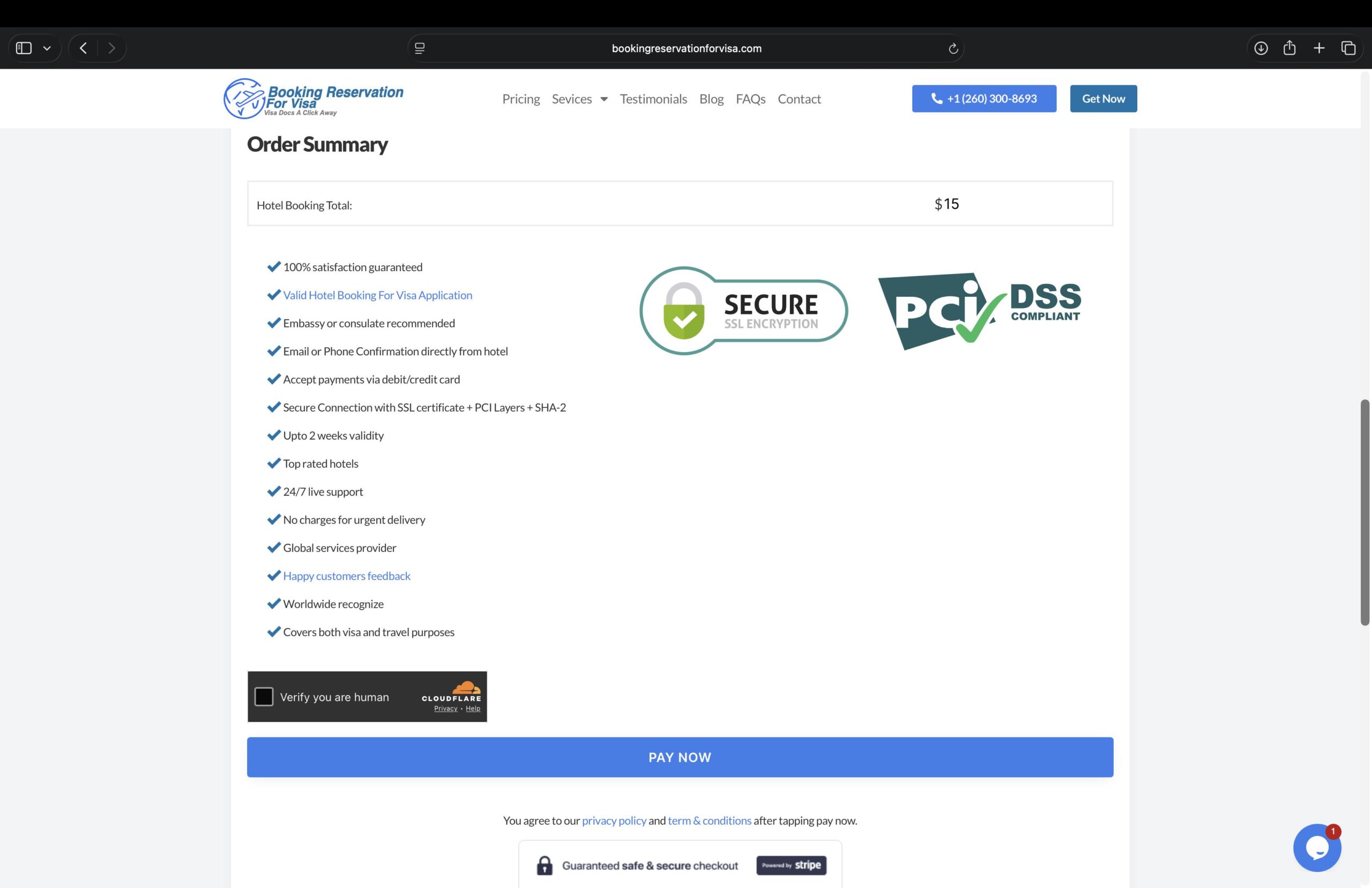
Step 10: Proceed through Secure Checkout
After confirming the details, proceed to checkout and complete the payment. The BRFV order process uses a secure connection for payment activity, which helps make the checkout process safer for applicants.
Once the payment is completed, the order can be processed according to the selected delivery timing.
Step 11: Receive the Hotel Booking by Email
After the order is placed, the hotel booking is delivered by email. The applicant should check the
inbox as well as the spam or junk folder if the confirmation does not appear promptly.
Once received, the document should be reviewed before submission. Check the name, hotel address, stay dates, number of guests, booking reference where available, and hotel contact details. The final Dummy Hotel for Visa should look complete, readable, and aligned with the applicant’s travel plan.
Step 12: Keep the Booking Ready for Verification
After receiving the document, keep a copy ready for the visa file and save the email for reference. If the booking includes hotel contact details, the applicant may use them for verification where needed. A stronger hotel booking should not only show accommodation details but also provide a practical way to review or confirm the stay information.
The process is straightforward, but the quality of the result depends on the accuracy of the information provided. A useful dummy hotel booking is not only a fast document. It is a correctly prepared proof of accommodation that matches the applicant’s travel dates, destination plan, and visa submission timeline.
Dummy Hotel for Visa Validity: Why 14 Days Matters
Validity is one of the most important parts of a hotel booking for visa.
Many applicants focus only on fast delivery. They want the document quickly, but they forget to ask how long it will remain active. A hotel booking that expires too soon can become stressful, especially if the applicant still needs time to complete the rest of the file.
A Dummy Hotel for Visa with up to 14 days validity gives the applicant a more comfortable window. It allows time to review the booking, arrange other documents, finalize the appointment, print the file, and submit the application without rushing everything on the same day.
Validity matters because visa documents are not always checked immediately after they are issued. Sometimes the applicant receives the hotel booking today but submits the file several days later. Sometimes the appointment is delayed. Sometimes the consulate or visa center reviews the file after submission. If the hotel booking is no longer active during that period, it may create unnecessary concern.
This is why BRFV-style hotel booking should focus on practical validity, not just document delivery.
A 14-day validity window can be useful because it gives applicants enough time to:
- check the document properly
- align it with the flight reservation
- match it with the cover letter
- include it in the visa file
- attend the visa appointment
- manage minor delays
- avoid last-minute rebooking stress
A hotel booking with short validity may still be usable, but it leaves less room for timing problems. For visa preparation, a longer valid window is usually more practical.
Monitoring During Dummy Hotel Booking Validity Period
Validity becomes stronger when the booking is monitored.
A hotel booking may sometimes need attention during the promised validity period. This is why monitoring is useful. If a reservation faces an issue within the validity window, support can help review it, update it, or reactivate it where possible.
This is an important point because many applicants do not submit the booking on the same day they receive it. They may receive the document on Monday, print the file on Wednesday, and attend the appointment on Friday. During that time, the reservation should remain useful.
A monitored Dummy Hotel for Schengen Visa is better than a document that is simply delivered and forgotten.
Monitoring helps applicants feel more confident because the booking is not treated as a one-time file attachment. It remains supported during the committed period.
How to Verify Dummy Hotel Booking for Visa
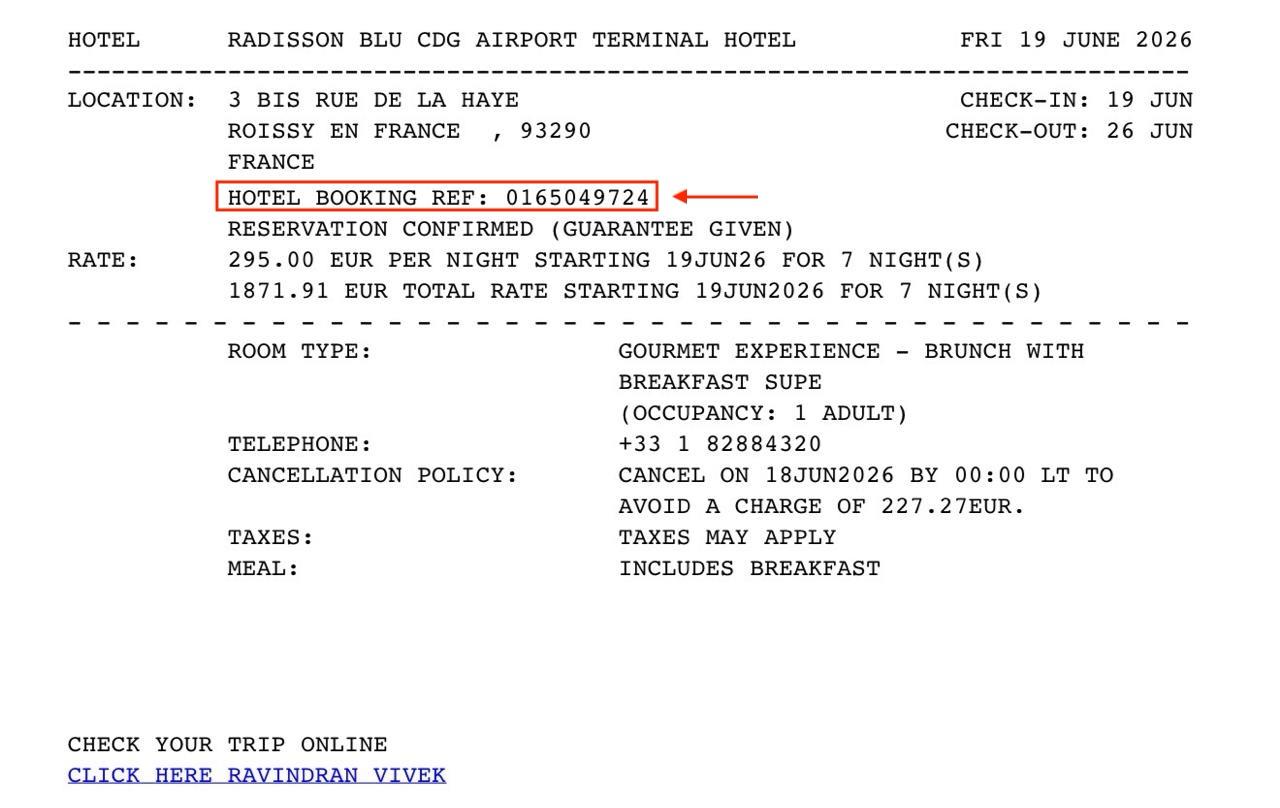
Verification is one of the most important concerns for applicants because a hotel booking should not only look complete on paper. It should also provide a clear way to review or confirm the stay details when needed. A stronger Dummy Hotel for Schengen Visa usually includes details that make the reservation easier to check, such as the hotel name, guest name, stay dates, booking reference, hotel address, and contact information.
There are usually two practical ways to verify a dummy hotel booking for visa application.
Direct Hotel Verification by Phone or Email
The most direct way to verify a hotel booking is by contacting the hotel through the phone number or email address mentioned on the reservation. The applicant can provide the guest name, check-in date, check-out date, and booking reference, if available, to ask whether the accommodation record can be reviewed.
This is why hotel contact details are important. A booking without a hotel phone number, address, or usable contact information may feel incomplete. A properly prepared hotel confirmation gives the applicant a clearer verification path and helps the document feel more reliable within the visa file.
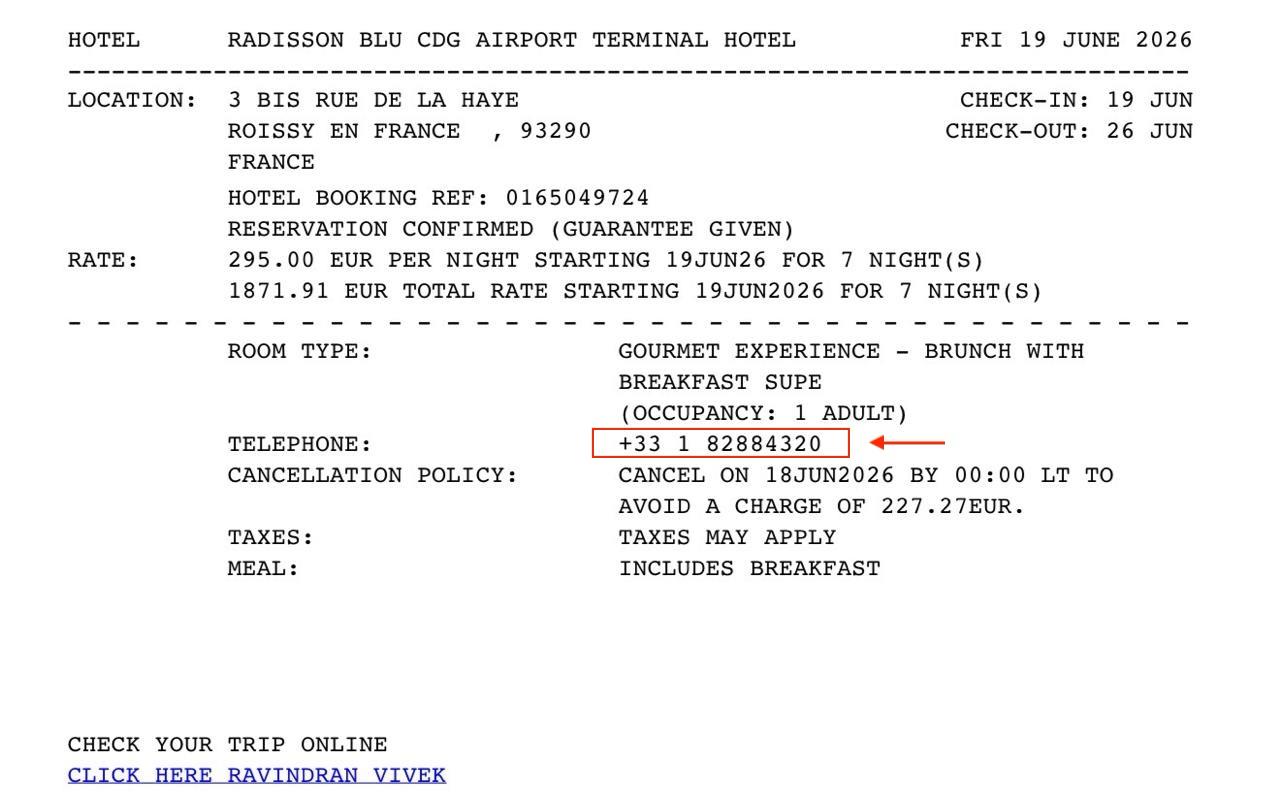
“Hotel contact details can help applicants verify the booking directly with the property.”
CheckMyTrip or Supported Platform Verification
Where applicable, the hotel booking may also be reviewed through CheckMyTrip or a comparable supported platform connected with reservation systems. This can provide an additional way for applicants to review the booking details instead of depending only on a static PDF.
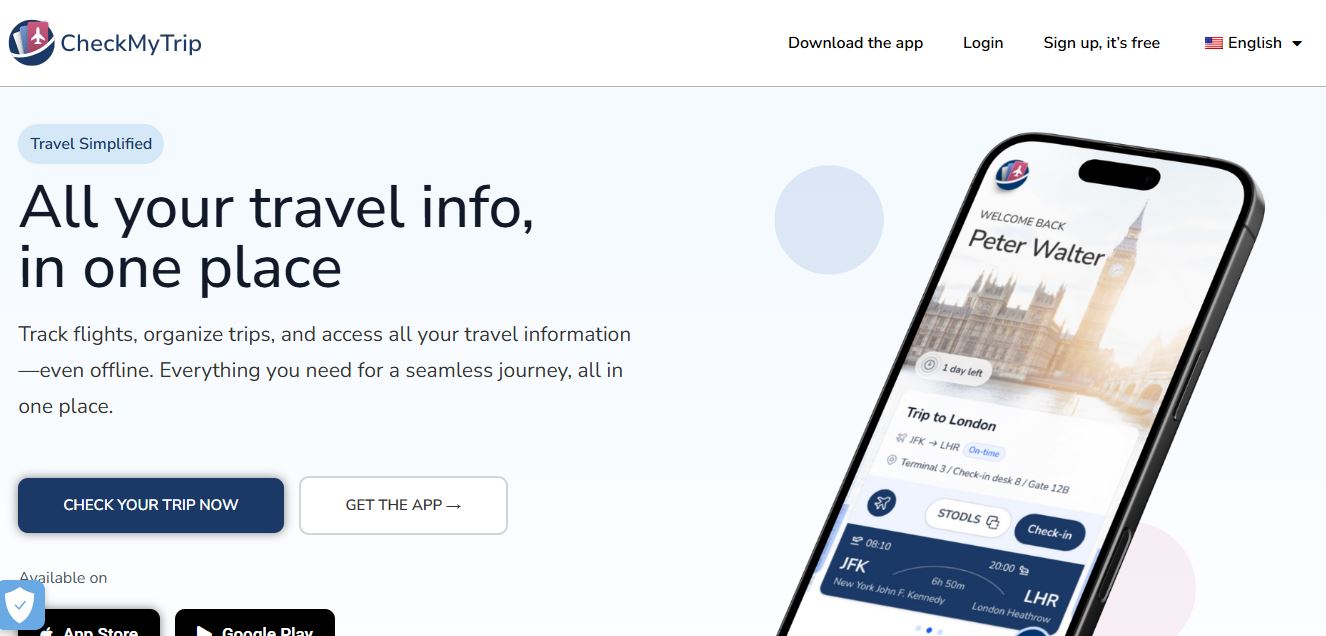
However, verification through CheckMyTrip or any other platform depends on the type of reservation, the hotel system, and the booking method used. Not every hotel booking is visible on every platform, so applicants should understand that platform-based verification may vary from one reservation to another.
This type of verification is useful because it gives travelers another layer of reassurance. When a booking can be checked through hotel contact details, a booking reference, CheckMyTrip, or a supported reservation platform, the proof of accommodation feels more grounded, practical, and suitable for a visa application file.
What Makes a Dummy Hotel Booking Stronger?
Not every dummy hotel booking is equally useful. Some documents are too thin. Some are poorly formatted. Some do not match the travel dates. Some show a hotel but no contact details. Some look unrealistic compared with the applicant’s financial profile.
A stronger Dummy Hotel for Visa usually has five qualities.
- Clear Stay Coverage
The booking should cover the full intended stay or clearly match the itinerary. If the applicant is staying in more than one city, the accommodation should follow that route.
- Passport-Matching Name
The guest name should match the passport. This is one of the easiest mistakes to avoid and one of the most important details to check.
- Realistic Hotel Selection
The hotel should match the traveler’s budget, purpose, and destination. A reasonable hotel choice supports the financial side of the file.
- Verification Details
The booking should include a hotel address, phone number, and booking details where available.
- Validity and Support
A booking that remains active for a useful period is more practical than one that expires too quickly. Monitoring during validity adds another layer of confidence.
Practical Dummy Hotel Booking Features That Support Real Visa Itineraries
Multi-City Hotel Support for a More Complete Visa File
A travel plan does not always stay within one city. Many applicants enter through one destination, continue to another, and complete their trip in a different location. In such cases, the accommodation document should not reduce the entire journey to one hotel if the actual itinerary includes several stops.
A multi-city hotel arrangement allows the proof of accommodation to follow the real movement of the traveler. Each stay can be shown according to its city, check-in date, and check-out date, making the hotel record more relevant to the submitted itinerary. This helps the visa file appear more organized because the accommodation details support the same route shown in the travel plan.
This is especially useful when the applicant is visiting more than one country, planning a city-to-city holiday, attending an event in one location before moving elsewhere, or combining personal visits with hotel stays. When every destination has suitable accommodation coverage, the file becomes easier to follow and less likely to look incomplete.
The booking format also helps applicants present their stay clearly by entering hotel details in a city-and-date structure. This makes the accommodation side more readable and gives the applicant better control over how each part of the trip is represented.

Dummy Proof of Accommodation Support for Families, Couples, and Group Travelers
Visa applications are often prepared for more than one person. Couples, families, friends, business teams, and small travel groups may all need accommodation proof that reflects their shared travel plan. In these cases, a hotel booking prepared for only one person may not properly represent the actual stay arrangement.
A multi-traveler hotel booking allows the accommodation record to include the correct number of guests and relevant traveler details. This gives the file a more coordinated appearance because the applicants are shown under one planned stay structure rather than through scattered or inconsistent documents.
This approach is particularly helpful for family applications, where the hotel record should match the number of people traveling together. It also supports group travel more practically because the accommodation details can be arranged around the shared itinerary, common dates, and same destination plan.
Another useful advantage is cost control. When several travelers are included in one properly arranged request, the accommodation document can be prepared more efficiently. The pricing structure also becomes more practical for applicants who need hotel booking support for multiple travelers instead of arranging every record separately.
Flexible Dummy Hotel Count for Layered Itineraries
Some trips require more than one hotel, especially when the applicant is moving across different cities. A flexible hotel count makes it easier to prepare accommodation according to the actual travel route rather than forcing the applicant into a single-location stay.
This is useful for applicants who need several hotel entries in one trip. The option to include multiple hotels gives the accommodation proof more depth and makes it suitable for complex itineraries. If the trip includes four cities, the hotel record can be planned around those four stays instead of showing one hotel that does not explain the full journey.
For longer or more detailed routes, additional hotel entries can also be included where needed. This makes the service more suitable for real travel situations where applicants may not stay in the same place throughout their visit.
Hotel Preferences for a More Relevant Stay Plan
A hotel booking becomes stronger when it reflects the applicant’s actual travel needs. Some applicants may prefer a hotel near a business venue, embassy appointment location, tourist area, university, hospital, conference center, or family residence. Others may need accommodation suitable for families or group travelers.
The option to add hotel preferences helps make the booking more specific. Instead of producing a generic accommodation record, the hotel details can be shaped around the purpose and structure of the trip. This adds more relevance to the stay plan and helps the accommodation document fit naturally with the rest of the visa file.
For example, a business traveler may benefit from a hotel near the meeting area, while a tourist may need accommodation closer to the main travel route. A family may prefer a stay arrangement that reflects multiple guests. These small details can make the hotel booking look more connected to the applicant’s real journey.
Timing Control Around the Visa Appointment
Hotel booking validity is more useful when it is arranged around the applicant’s submission timeline. A booking received too early may become less helpful if the visa appointment is still far away, while a booking arranged too late can create unnecessary stress before submission.
The option to choose when the hotel booking is needed gives applicants better timing control. Applicants can request urgent delivery when the appointment is close or schedule the booking closer to the visa interview date when needed.
This is important because accommodation proof should ideally remain active and relevant during the file submission period. When the booking timing is planned carefully, the applicant can avoid last-minute confusion and keep the hotel document aligned with the appointment schedule.
Booking Reservation for Visa brings this part of the application into a more settled and document-ready shape. Instead of leaving applicants to manage accommodation proof through scattered confirmations or uncertain arrangements, it offers a cleaner route for preparing hotel documentation with less friction. For travelers who want their visa file to look composed, practical, and carefully assembled, it gives the accommodation section a more dependable finish.
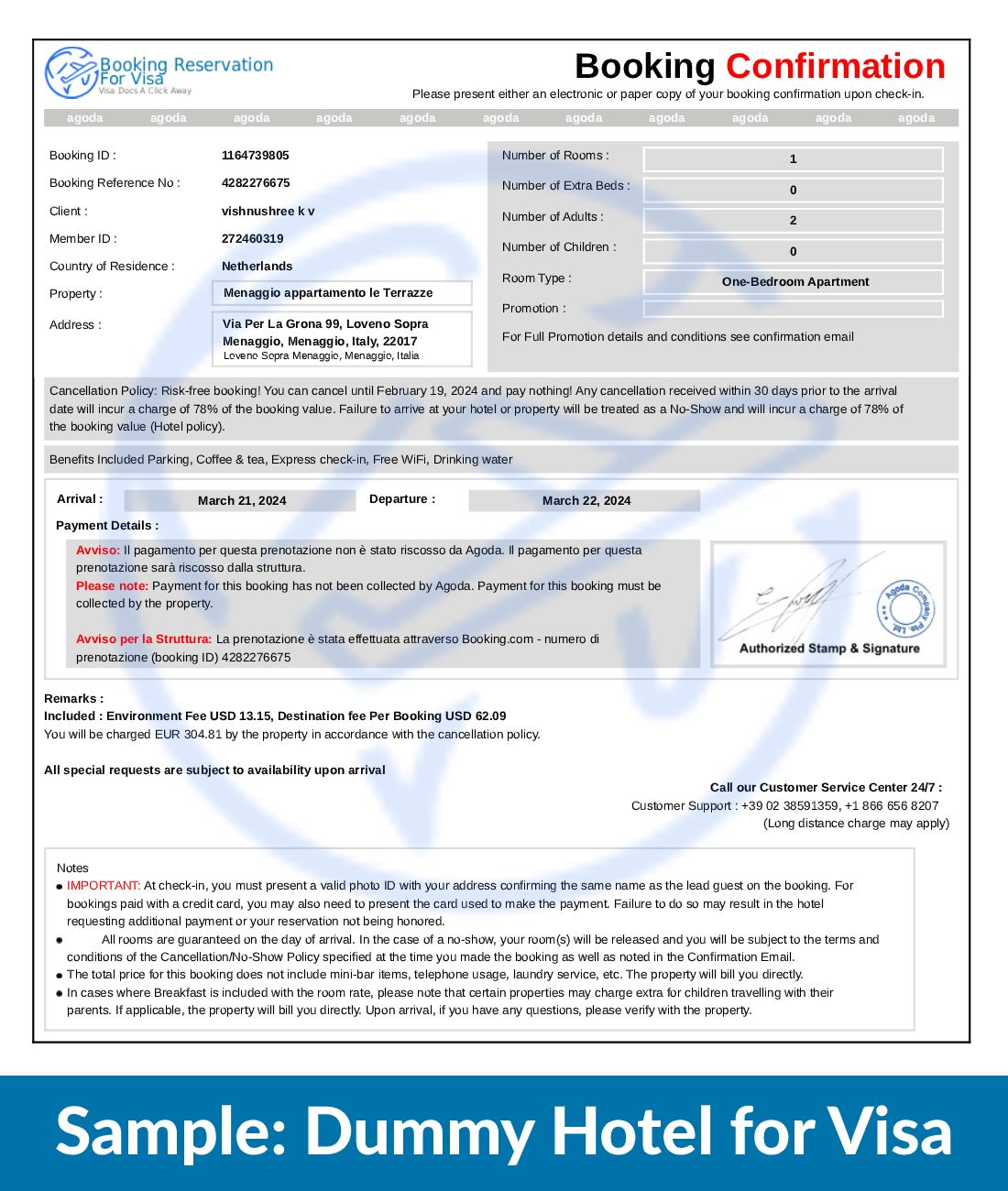
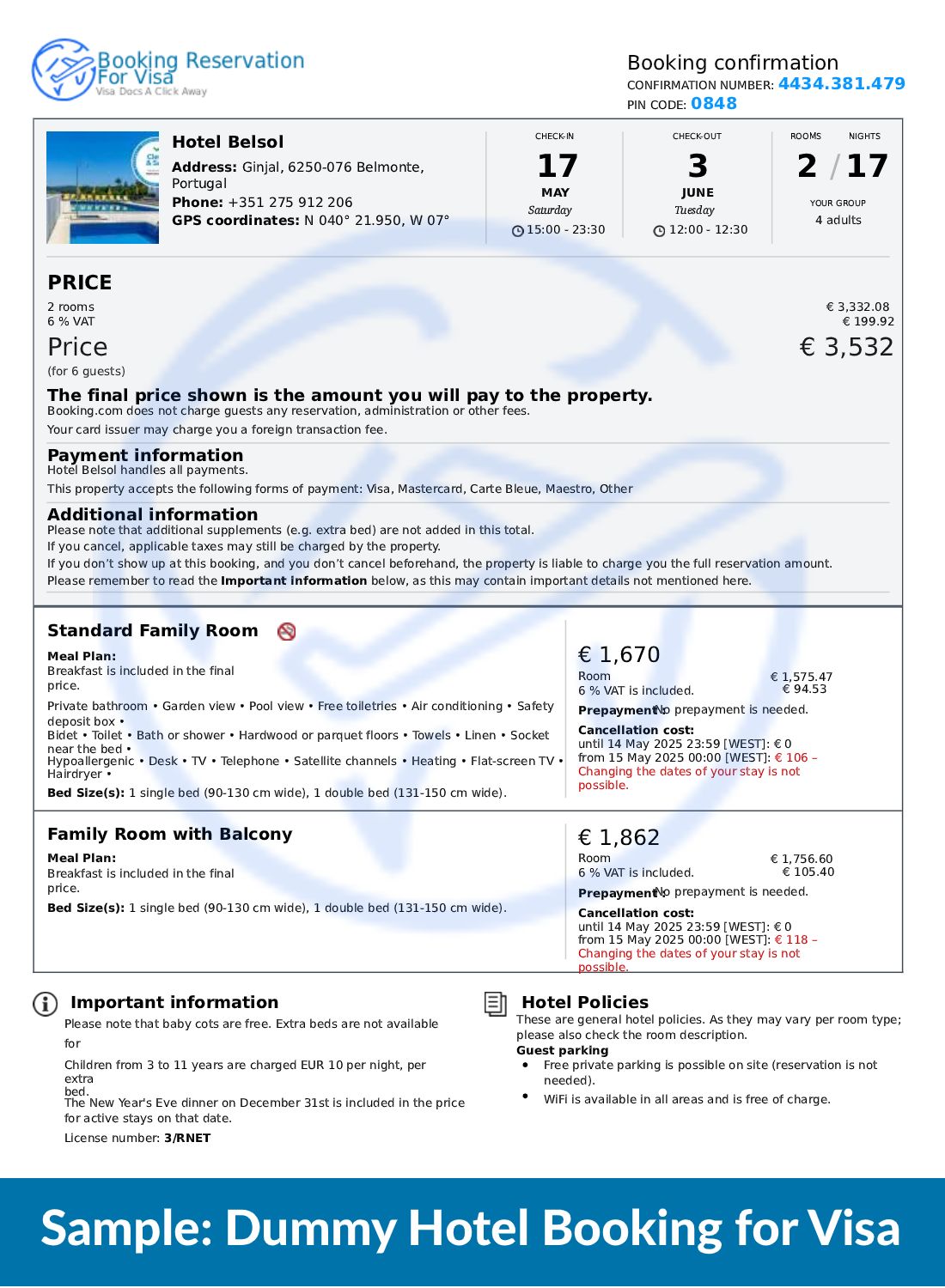
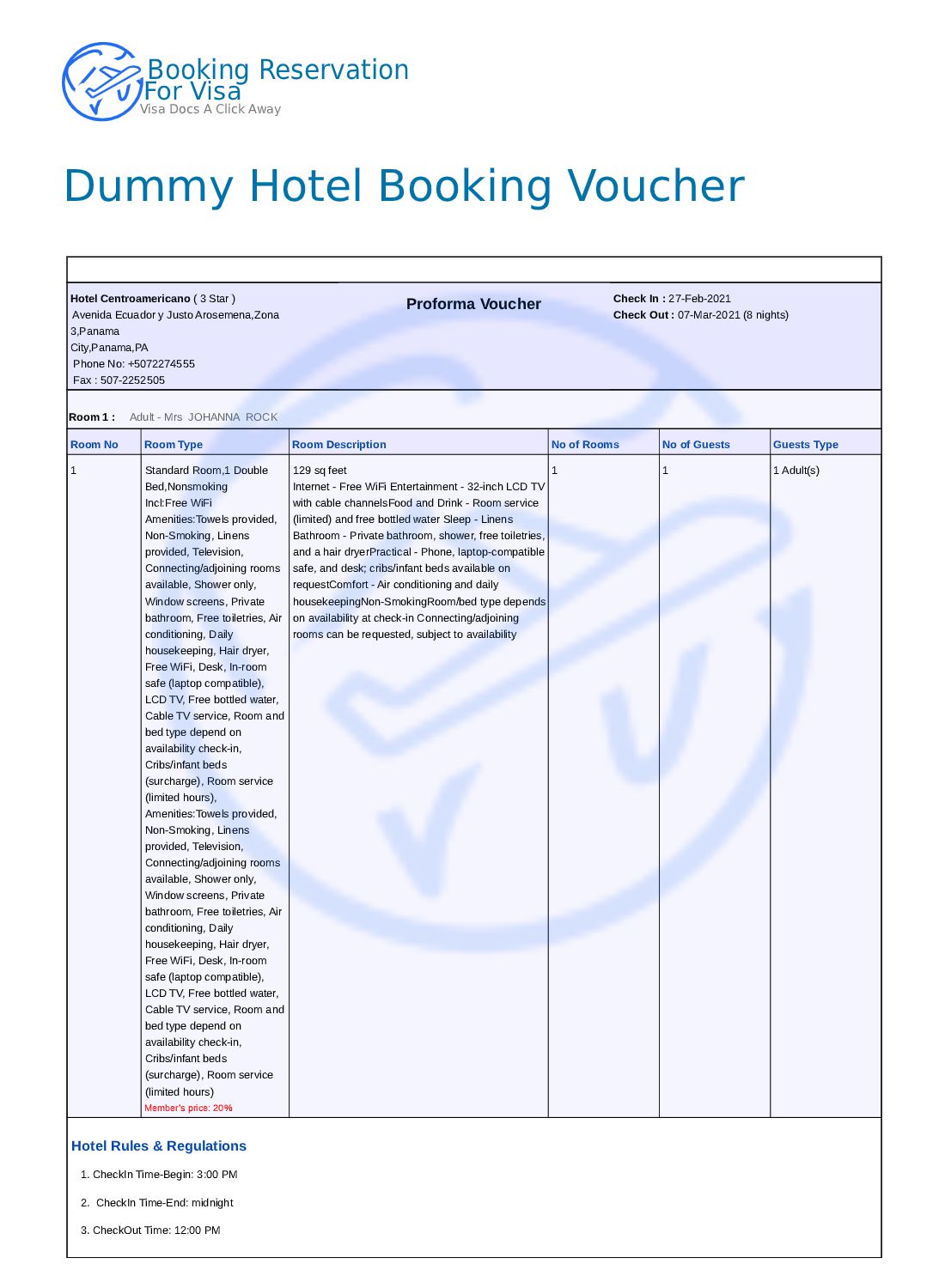
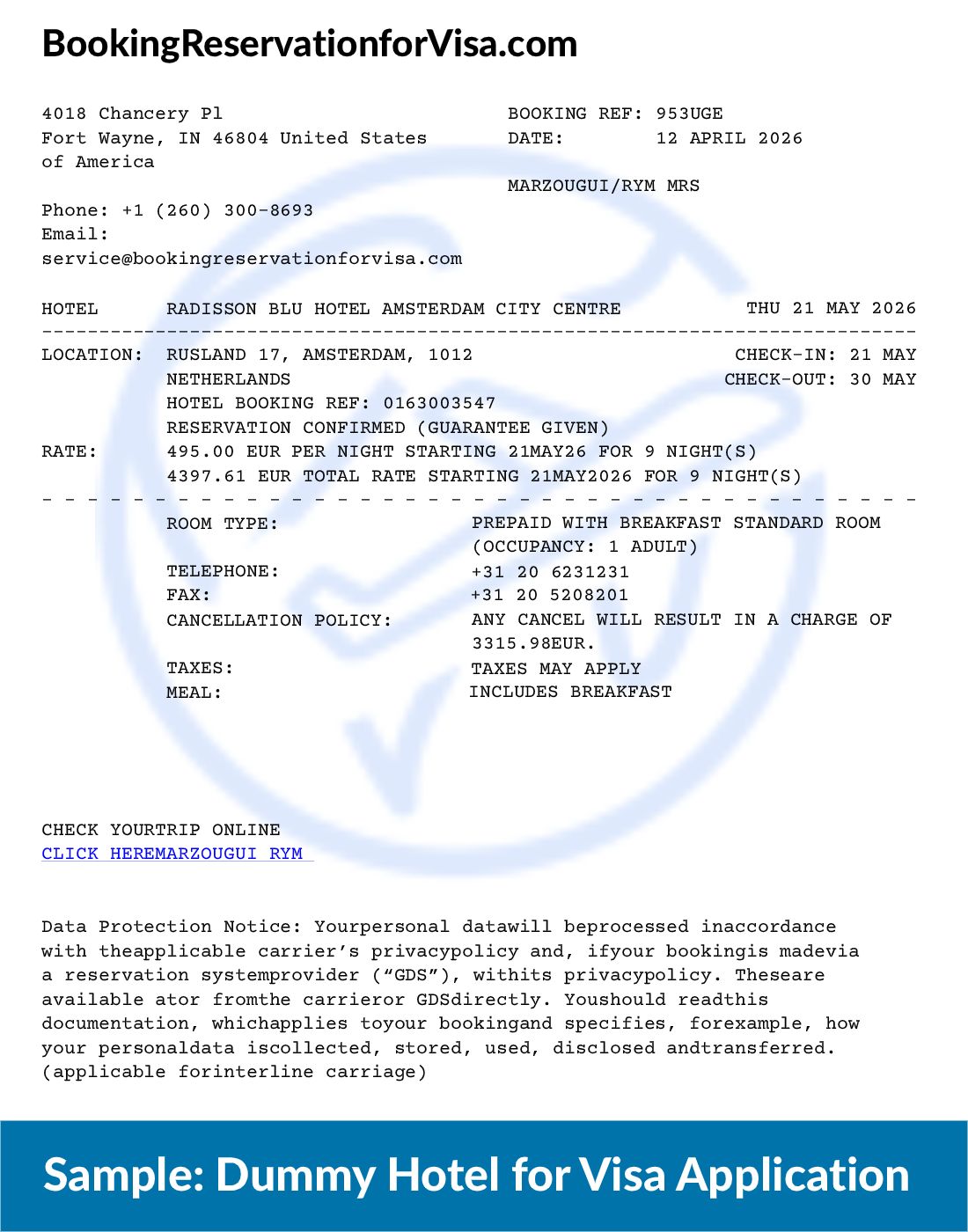
Dummy Hotel for Visa Sample: What the Document Should Show
A sample is useful because many applicants do not know what to expect. A proper hotel booking sample should be easy to read and should not force the applicant or reviewer to guess the stay details.
A standard sample may include the following format.
Why Hotel Booking Should Match the Cover Letter
A hotel booking should not stand alone. It should match the cover letter, flight reservation, travel insurance, and application form.
If the cover letter says the applicant will stay in Madrid from 1 June to 10 June, the hotel booking should not show Barcelona from 3 June to 8 June unless the itinerary explains that movement. If the flight reservation shows entry through Milan, but the hotel booking starts in Vienna without explanation, the file may look disconnected.
The strongest visa files usually have internal consistency.
That means:
- same travel dates across documents
- same destination logic
- same applicant name spelling
- no unexplained gaps
- hotel cities matching itinerary
- stay cost matching financial capacity
- clear proof of accommodation for each night
A Dummy Hotel for Visa becomes more useful when it supports this consistency.
Common Mistakes Applicants Should Avoid
Many hotel booking problems are avoidable. The applicant should check the document carefully before submitting it.
Mistake 1: Using Different Name Spellings
The name on the hotel booking should match the passport. Avoid nicknames, short forms, missing middle names, or spelling changes.
Mistake 2: Leaving Date Gaps
If the flight arrives on 4 September, the hotel should not begin on 6 September unless there is another stay arrangement for the missing nights.
Mistake 3: Ignoring Multi-City Travel
If the itinerary includes several cities, one hotel in one city may not be enough. The accommodation should follow the travel plan.
Mistake 4: Choosing Unrealistic Hotels
The hotel should match the applicant’s financial documents. A very expensive hotel with a weak bank statement can look inconsistent.
Mistake 5: Not Checking Validity
A booking that expires before the appointment may create stress. Always check the validity period before submission.
Mistake 6: Not Verifying Contact Details
The hotel address and phone number should be clear. Verification becomes difficult if contact information is missing.
Mistake 7: Submitting an Unclear PDF
A document that is blurry, cropped, badly formatted, or missing key details should not be used. The booking should be readable and complete.
Dummy Hotel for Visa vs Paid Hotel Booking
A paid hotel booking and a dummy hotel booking serve similar accommodation-proof purposes, but they are not the same in financial risk.
A paid hotel booking may involve advance payment or card authorization. It may be refundable, partially refundable, or non-refundable depending on the hotel policy.
A Dummy Hotel for Visa is usually used when the applicant needs accommodation proof before making the final hotel payment. It is more flexible and economical for visa preparation, especially when the applicant is not ready to lock the final stay before the visa outcome.
However, the dummy hotel booking must still look proper, structured, and verifiable. It should not be carelessly prepared simply because it is temporary.
The best way to understand it is this:
A dummy hotel booking is temporary in payment commitment, but it should not be temporary in quality.
Is Dummy Hotel Booking Accepted for Visa Applications?
Visa requirements differ by country, embassy, consulate, and visa category. Some authorities ask for hotel reservations. Some ask for proof of accommodation. Some accept an invitation letter if the applicant is staying with a host. Some may require additional evidence.
For most tourist visa files, accommodation proof is a normal part of the document set. A hotel booking can support that requirement when it clearly shows the applicant’s stay arrangement.
Still, applicants should always check the latest checklist of the embassy, consulate, or visa application center where they are applying. A Dummy Hotel for Visa should support the file, not replace official requirements.
When Should You Get the Dummy Hotel Booking?
The best time to get the hotel booking is when your travel dates are reasonably final.
Do not arrange it too early if your dates are still uncertain. Do not arrange it too late if your appointment is close. The goal is to get the booking within a useful validity period so it remains active around the time you submit the file.
A practical approach is:
- first confirm travel dates
- then arrange flight reservation
- then arrange hotel booking
- then check insurance dates
- then prepare cover letter
- then review all documents together
This order helps reduce date mismatches.
If the service provides up to 14 days validity, applicants should plan the booking around the appointment and submission timeline.
Why a Proper Dummy Hotel Booking Matters for a Visa Application
A hotel booking for a visa application is not only a document that shows where an applicant may stay. It also helps complete the travel plan in a clear and organized way. When accommodation details are properly arranged, the application becomes easier to review because the intended stay, travel dates, destination cities, and estimated accommodation costs are all presented in one consistent format.
A well-prepared Dummy Hotel for Visa can help applicants avoid paying the full hotel amount before the visa decision while still providing proof of accommodation for the file. This is especially useful for applicants who do not want to risk losing money on non-refundable hotel payments if their visa is delayed, refused, or their travel dates change.
The quality of the booking also matters. A useful hotel reservation should include the applicant’s correct name, hotel name, full address, check-in and check-out dates, number of guests, booking reference where available, and hotel contact details for verification. These details help make the accommodation document more complete and practical for visa submission.
Another important part is financial consistency. The hotel cost should reasonably match the applicant’s travel budget and bank statement. When the accommodation price is visible, it becomes easier to understand whether the planned stay fits the applicant’s financial capacity. This helps the file appear more realistic and better organized.
For applicants visiting more than one city or traveling with family, the hotel booking should also reflect the full stay plan. Multi-city accommodation, correct guest details, and proper date coverage can make the travel itinerary clearer and reduce confusion during document review.
A properly arranged dummy hotel booking does not guarantee visa approval, but it can support the application by making the accommodation section more complete, consistent, and verifiable. Its real value lies in presenting the applicant’s stay plan in a professional format while avoiding unnecessary advance hotel payment before the visa result
Why BRFV Is the Best Choice for Dummy Hotel Booking
- Application-Focused Hotel Selection
BRFV does not treat hotel booking for visa as a random travel formality. The reservation is prepared with the visa application in mind, so the selected accommodation can support the applicant’s stated travel purpose, destination, and stay duration more coherently.
- Consistency with the Applicant’s Travel Narrative
A strong Schengen visa file should read like one connected story. BRFV helps keep the hotel booking aligned with the applicant’s wider travel narrative, including the itinerary, intended destination, travel dates, and visa purpose, so the accommodation does not appear disconnected from the rest of the documents.
- Reduced Risk of Over-Commitment Before Approval
Many applicants make the mistake of financially committing to hotels before they even know the visa result. BRFV offers a more measured approach by helping applicants complete their accommodation requirement without locking themselves into unnecessary expenses too early.
- Cleaner Document Presentation
A hotel booking used for Schengen visa submission should be readable, orderly, and easy to understand. BRFV provides a professionally arranged document format that helps avoid the confusion caused by unclear screenshots, incomplete reservations, or poorly presented booking details.
- Suitable for Complex Travel Plans
Some applicants do not have a simple one-city trip. BRFV is useful for travelers with layered itineraries, including multiple cities, family members, business stays, event travel, or longer routes where accommodation needs to be arranged more carefully.
- Better Control Over Submission Timing
Visa applicants often work around appointment dates, document deadlines, and embassy submission windows. BRFV gives applicants better control by allowing them to arrange the hotel booking for visa closer to the time it is actually needed, instead of preparing it too early and risking expiry.
- Helpful for First-Time Visa Applicants
First-time applicants often struggle to understand what a proof of accommodation should show. BRFV simplifies this part by providing a hotel booking that contains the essential stay details in a more application-ready form.
- Practical Support for Financial Planning
A hotel reservation is not only about where the applicant will stay; it also affects the estimated trip budget. BRFV helps applicants present accommodation in a way that supports a more realistic financial picture for the visa file.
- Less Room for Guesswork
A vague hotel plan can make the accommodation side of an application feel weak. BRFV helps reduce guesswork by turning the applicant’s stay details into a clearer document that can be attached directly with the visa application.
- Professional Alternative to Self-Made Bookings
Some applicants try to create their own hotel proof through screenshots, unpaid carts, or informal confirmations. BRFV offers a more polished alternative that looks more suitable for formal visa documentation.
- Useful When Travel Plans Are Still Conditional
Before visa approval, travel plans are often not fully fixed. BRFV is helpful because it supports the application stage without forcing the applicant to make permanent travel decisions too early.
- Stronger Document Confidence
A properly arranged hotel booking gives applicants more confidence while submitting their file. Instead of worrying whether the accommodation proof looks incomplete, they can submit a clearer, better-structured document with the rest of their visa paperwork.
Checklist Before Using a Dummy Hotel for Visa Application
Before submitting your hotel booking, check the following:
| Detail | What to Check |
| Name | Matches passport exactly |
| Dates | Cover the full intended stay |
| City | Matches travel itinerary |
| Hotel Address | Full address is visible |
| Contact Details | Phone/email available where possible |
| Guests | Correct number of travelers |
| Cost | Reasonable according to budget |
| Booking Reference | Included where applicable |
| Validity | Active around submission date |
| Format | Clear, readable, and complete |
This checklist can prevent many common issues before the file reaches the visa counter.
Dummy Hotel Booking Regarding Frequently Asked Questions
What is a Dummy Hotel for Visa?
A Dummy Hotel for Visa is a temporary hotel reservation used as proof of accommodation for a visa application. It shows where the applicant intends to stay without requiring full hotel payment before visa approval.
Is dummy hotel booking the same as proof of accommodation?
It can be used as proof of accommodation if it includes proper hotel details, applicant name, stay dates, address, and verification information where available.
Why do applicants need hotel booking for visa?
Hotel booking helps show where the applicant plans to stay during the trip. It connects the travel dates with accommodation arrangements and makes the itinerary more complete.
Is a dummy hotel booking fake?
No, it should not be treated as a fake document. A proper dummy hotel booking is a reservation-based accommodation record created for visa submission purposes.
How long should a dummy hotel booking remain valid?
A longer validity period is better for visa preparation. Up to 14 days validity is useful because it gives applicants enough time to review, print, and submit the file.
Why is 14 days validity important?
It helps reduce the risk of the booking expiring too soon. Applicants often need several days to complete documents, attend appointments, or manage submission delays.
Can I verify a dummy hotel booking?
Yes, verification may be possible by contacting the hotel directly using the phone number or contact details on the booking. Some bookings may also have booking references or supported platform verification.
What details should a hotel booking sample show?
A good sample should show the guest name, hotel name, address, phone number, check-in date, check-out date, number of guests, booking reference, and stay cost where available.
Should hotel booking match flight reservation?
Yes. The hotel dates should match the flight dates and overall itinerary. If the travel plan includes multiple cities, the accommodation should also reflect that.
Can I use one hotel booking for multiple cities?
Only if the trip is actually based in one city. If the itinerary shows several cities, it is usually better to show accommodation for each stay location.
Is hotel price important for visa applications?
Yes, it can be important because accommodation cost should make sense with the applicant’s financial documents. A realistic hotel cost supports a more balanced visa file.
Can families use one dummy hotel booking?
Yes, family travelers can use a hotel booking that includes multiple guests, but the names and number of travelers should be accurate.
What happens if the booking becomes inactive?
If monitoring is included during the validity period, the booking may be reviewed, updated, or reactivated where possible. This is why monitored validity is useful.
Should I fully pay for a hotel before visa approval?
Many applicants prefer not to pay the full hotel cost before visa approval because of refund risks. A reservation-based hotel booking can support the file while preserving flexibility.
Does dummy hotel booking guarantee visa approval?
No. No hotel booking can guarantee visa approval. It only supports the accommodation part of the application. The final decision depends on the complete file and the relevant visa authority.
Final Word
A Dummy Hotel for Visa is useful when it is prepared with accuracy, validity, and verification in mind. It should not be treated as a random attachment or a shortcut. It should help explain where the applicant intends to stay, how long the trip will last, whether the stay matches the itinerary, and whether the accommodation cost makes sense with the applicant’s financial profile.
For visa preparation, the best hotel booking is not simply the fastest one. It is the one that remains valid during the submission window, shows clear hotel details, includes realistic stay dates, offers a possible verification path, and fits naturally with the rest of the file.
When used properly, a dummy hotel booking can help the visa application look more complete, more organized, and easier to review.