The most confusing part of a Schengen visa file is often not the application form, the insurance, or even the appointment. It is the dummy flight ticket for visa document.
People hear different advice from different places. Some are told to buy a real airline ticket before they apply. Others are warned not to spend heavily before a visa decision arrives. Many do not know whether they need a paid ticket, a temporary dummy flight reservation, or simply an itinerary that shows their intended movement. That uncertainty is normal, especially because a Schengen application is not judged on one paper alone but on how all the documents work together. Under the common Schengen visa policy, all 29 Schengen countries apply the same short-stay visa rules. A Schengen visa generally allows travel for up to 90 days within any 180-day period, and short-stay applications are normally processed within 15 days, though some cases can take up to 45 days.
That timing explains why applicants look for a dummy flight ticket in the first place. A visa file usually needs proof of intended travel, but many applicants do not want to commit to a fully paid ticket before they know the outcome. Official Schengen-facing guidance from application channels often asks for proof of return travel or flight reservations and, in some cases, specifically advises applicants not to buy the ticket before the visa is issued.
A dummy flight ticket for visa, in practical terms, is a reservation-style travel document prepared to support a visa application. It is not the same thing as a fully paid airline ticket, and it is not meant to function as a boarding pass. Its real value is simpler than that: it helps show the intended route, proposed travel dates, and structure of the trip in a way that supports the rest of the application. When it is done properly, it strengthens the file quietly. When it is sloppy, inconsistent, or too short-lived, it can do the opposite. Guidance for Schengen applicants stresses that the documents provided should be accurate and should correspond to the applicant’s actual travel plans in the Schengen area.
What a dummy flight ticket for visa actually is?
A dummy flight ticket for visa is best understood as evidence of planned travel rather than evidence of a completed purchase. It usually shows the traveler’s name, route, dates, airline details, and booking structure in a format that resembles a real reservation record. That is why it sits in a very useful middle ground. It gives the visa file a travel shape without forcing the applicant into a full airline purchase too early. Official Schengen application guidance asks for documents such as a valid passport, application form, photograph, insurance, and supporting travel documents, which is why reservation-based proof has become a common part of short-stay files.
This is also why terminology often creates more confusion than clarity. Applicants keep focusing on what the document is called, when the real issue is whether it functions properly inside the application. A visa officer is not impressed because a document uses a fashionable label. The officer is looking at whether the travel plan appears sensible, whether the dates align with the intended stay, and whether the file feels internally coherent. Schengen guidance makes that standard plain by requiring the documents to support the complete stay and reflect the trip honestly.
Why applicants use dummy flight ticket for Schengen visas?
There is a practical reason dummy flight tickets are so widely discussed: they solve a financial and documentary problem at the same time.
On one side, many visa procedures expect some proof of intended transport. On the other, a visa decision is never guaranteed, even where an application looks complete. That means buying a real ticket too early can expose the applicant to unnecessary loss, especially where fares are restrictive or only partly refundable. Reservation-style travel proof became popular because it gives structure to the file without creating the same level of financial commitment. Official checklists from Schengen-facing visa channels commonly ask for flight reservations specifying dates and personal details, while some also caution applicants not to buy the actual ticket before the visa is issued.
There is another advantage that people do not always notice at first. A good flight itinerary forces the rest of the file to become sharper. Once the dates and route are visible, the accommodation plan becomes easier to align, the cover letter becomes easier to explain, and the stay duration starts to look more deliberate. In that sense, a dummy ticket for visa is not simply one more document. It often becomes the page that makes the rest of the travel story easier to believe. Schengen visa guidance on where to apply and how to document the trip is built around exactly that logic: main destination, first point of entry where relevant, and sufficient proof for the full stay.
What Schengen authorities are really looking for?
Most weak applications are not weak because one document is missing a fancy term. They are weak because the story is inconsistent.
A flight booking for visa that shows one set of dates while the hotel booking shows another can create avoidable tension in the file. A cover letter that describes one route while the transport booking points somewhere else makes the application feel less stable. Even where everything looks polished on the surface, internal contradiction can quietly damage credibility. That is why official guidance emphasizes that the documents should match the trip being declared and that sufficient proof should be submitted for the complete stay in the Schengen territory.
The smartest applicants therefore stop asking, “Do I have a flight confirmation paper?” and start asking better questions. Does the route make sense? Does the timing fit the purpose of travel? Is the booking still likely to be relevant when the file is actually reviewed? The stronger the answers to those questions, the more useful the reservation becomes.
What a proper dummy flight booking for visa should contain?
A useful dummy ticket for visa should look serious because it is serious. It should normally reflect the traveler’s full name exactly as in the passport, a believable route, proposed dates, airline information, and enough structure to show that it is tied to an actual travel plan rather than random text placed on a page. Some visa checklists explicitly refer to flight itineraries specifying flight numbers, dates, and personal details, which shows how closely travel proof is expected to align with the identity and route being declared.
A weak flight reservation usually fails in one of three ways. It may be too vague, too short-lived, or too disconnected from the rest of the file. Vague documents omit route logic or essential details. Short-lived ones expire before they can meaningfully support the application. Disconnected ones show dates, sectors, or travel patterns that do not fit the broader file. None of these problems are solved by visual polish. What matters is whether the reservation behaves like a believable part of a real trip.
Validity guide: why the life of the dummy flight ticket for visa matters?
Validity is one of the most important parts of this entire subject, yet it is often treated like a footnote.
A dummy flight booking can look perfectly fine on the day it is issued and still become less useful by the time the file is examined. Since short-stay Schengen applications are normally processed in 15 days and may, in some cases, take as long as 45 days, the travel flight reservation should not be evaluated only at the moment it arrives in the applicant’s inbox. It should be evaluated against the real review window of the visa file.
This is where many applicants make a costly mistake in judgment. They assume that once they have the document, the task is complete. In reality, the life of the dummy flight ticket matters almost as much as the presence of the reservation. If it disappears too quickly, it may stop being useful at the exact stage when the embassy or visa center is checking the application. A flight reservation that remains active for a more practical period often gives the file better support than a document that looks good but collapses almost immediately.
Validity also matters because Schengen applications are not always reviewed in the neat order applicants imagine. Appointment availability, local workload, document verification, or extra scrutiny can all affect when the file receives real attention. For that reason, a strong onward dummy ticket is not merely one that exists, but one that remains believable long enough to be worth submitting.

Verification guide: why checking the dummy flight booking matters
Verification is what separates a decorative document from a functional one.
If a dummy flight reservation is meant to be verifiable, that claim should not remain theoretical. The applicant should test it. In practice, verification usually means going to the airline’s official website, locating the manage-booking or retrieve-booking area, and entering the booking reference together with the traveler’s surname. If the flight booking for visa is active, the travel itinerary details should normally surface through that path. While not every reservation product on the market is built the same way, the principle is simple: where verification is offered, it should be checked before the document is placed into the visa file.
The reason this matters is obvious once stated plainly. A PDF can be formatted to look convincing. A retrievable flight booking reference is harder to fake in practice. That is why applicants should verify sooner rather than later. Waiting until the last minute increases the chance that a minor issue becomes a major inconvenience. A tested travel flight reservation is always better than an assumed one.
There is also a discipline benefit here. When applicants verify the dummy ticket themselves, they slow down and inspect the details properly. They notice if the spelling is off, if the route looks wrong, or if the dates need correction. That kind of checking improves the quality of the entire submission, not just the transport document.
Countries whose nationals generally need dummy flight ticket for Schengen visa
The official legal basis for who needs a short-stay Schengen visa is the EU’s common visa list. The European Commission states that this list is set out in Regulation (EU) 2018/1806. As of the current framework, the ordinary passport holders of many countries remain visa-required for short stays in the Schengen area. Kosovo is no longer part of the ordinary visa-required short-stay list because visa-free travel for Kosovo passport holders began on 1 January 2024, while Vanuatu was transferred into the visa-required list by a later amendment.
The countries whose nationals generally need dummy flight booking for Schengen visa for short stays include:
Asia and the Middle East:
- Afghanistan
- Armenia
- Azerbaijan
- Bahrain
- Bangladesh
- Bhutan
- Cambodia
- China
- India
- Indonesia
- Iran
- Iraq
- Jordan
- Kazakhstan
- Kuwait
- Kyrgyzstan
- Laos
- Lebanon
- Maldives
- Mongolia
- Myanmar
- Nepal
- North Korea
- Oman
- Pakistan
- the Philippines
- Qatar
- Russia
- Saudi Arabia
- Sri Lanka
- Syria
- Tajikistan
- Thailand
- Turkey
- Turkmenistan
- Uzbekistan
- Vietnam
- Yemen
Africa:
- Algeria
- Angola
- Benin
- Botswana
- Burkina Faso
- Burundi
- Cabo Verde
- Cameroon
- Central African Republic
- Chad
- Comoros
- Congo
- Côte d’Ivoire
- Democratic Republic of the Congo
- Djibouti
- Egypt
- Equatorial Guinea
- Eritrea
- Eswatini
- Ethiopia
- Gabon
- Gambia
- Ghana
- Guinea
- Guinea-Bissau
- Kenya
- Lesotho
- Liberia
- Libya
- Madagascar
- Malawi
- Mali
- Mauritania
- Morocco
- Mozambique
- Namibia
- Niger
- Nigeria
- Rwanda
- São Tomé and Príncipe
- Senegal
- Sierra Leone
- Somalia
- South Africa
- South Sudan
- Sudan
- Tanzania
- Togo
- Tunisia
- Uganda
- Zambia
- Zimbabwe
The Americas and Caribbean:
- Belize
- Bolivia
- Cuba
- the Dominican Republic
- Ecuador
- Guyana
- Haiti
- Jamaica
- Suriname
Pacific states on the visa-required framework:
- Fiji
- Papua New Guinea
- Vanuatu
Because EU visa policy can be amended, applicants should still check the latest official framework for their nationality before filing. The legal list, rather than travel gossip or forum posts, is what matters.

Common mistakes that weaken the use of a dummy flight ticket for visa
The first mistake is using a flight reservation that does not match the rest of the file. Even a good-looking travel flight document becomes weak if it clashes with the proposed stay, route, or purpose. Schengen visa guidance expects the documents to support the declared travel plan rather than contradict it.
The second mistake is treating validity as irrelevant. A document that expires too early can lose much of its practical value before the application is truly reviewed. That risk becomes more obvious when applicants remember that some files take longer than the standard timeline.
The third mistake is assuming that a dummy flight confirmation should never be checked. Where retrieval or verification is possible, it should be tested early. That helps catch errors while there is still time to correct them.
The fourth mistake is thinking that the flight ticket for visa alone carries the application. It does not. It supports the application. A strong visa file still depends on the passport, insurance, application form, finances, purpose of stay, and document consistency as a whole.
How to book a dummy flight ticket through BRFV, step by step
If an applicant chooses to use BRFV for this purpose, the process on the site is presented in a short stepwise format rather than a long booking flow. The general order path shown on the website is to select a plan, submit travel details and payment, and receive the document by email.
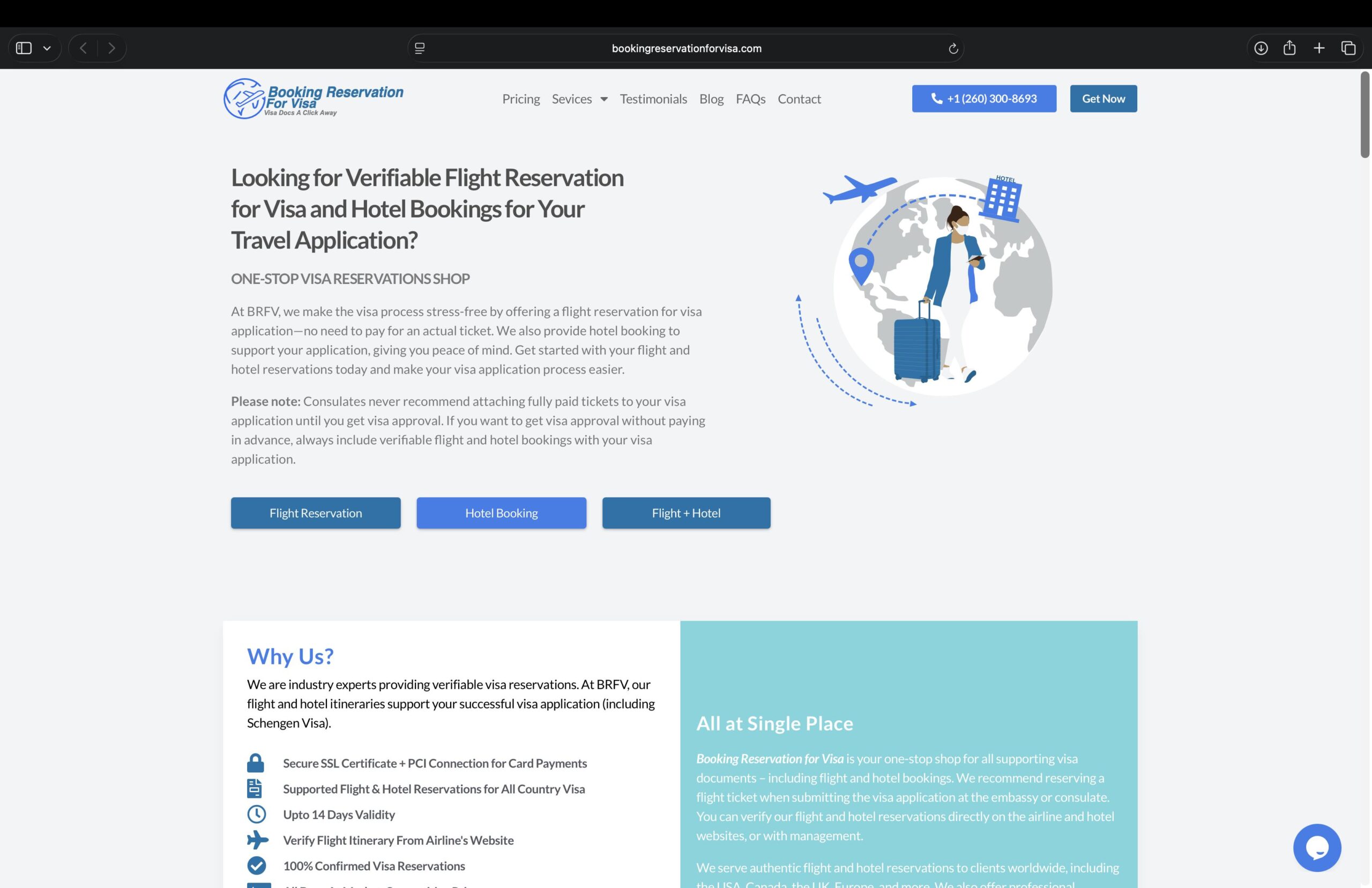
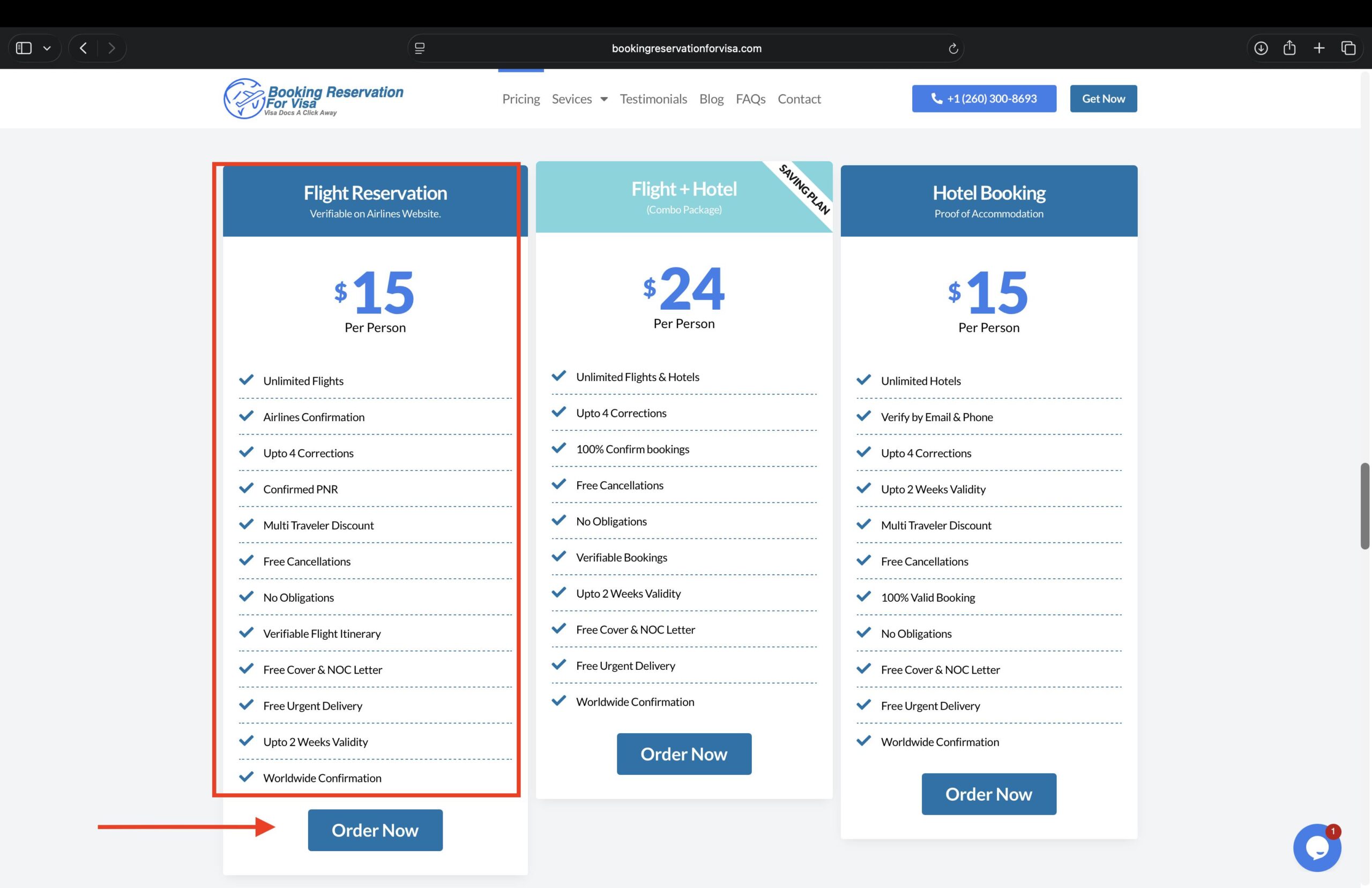
Step 1: Open the Flight Reservation section
The process begins by going directly to the flight reservation for visa option. Since this part of the article is specifically about a dummy flight ticket for visa application, the applicant should stay focused on the flight itinerary page and use that as the starting point. This keeps the process simple and avoids confusion with any other travel-related services.
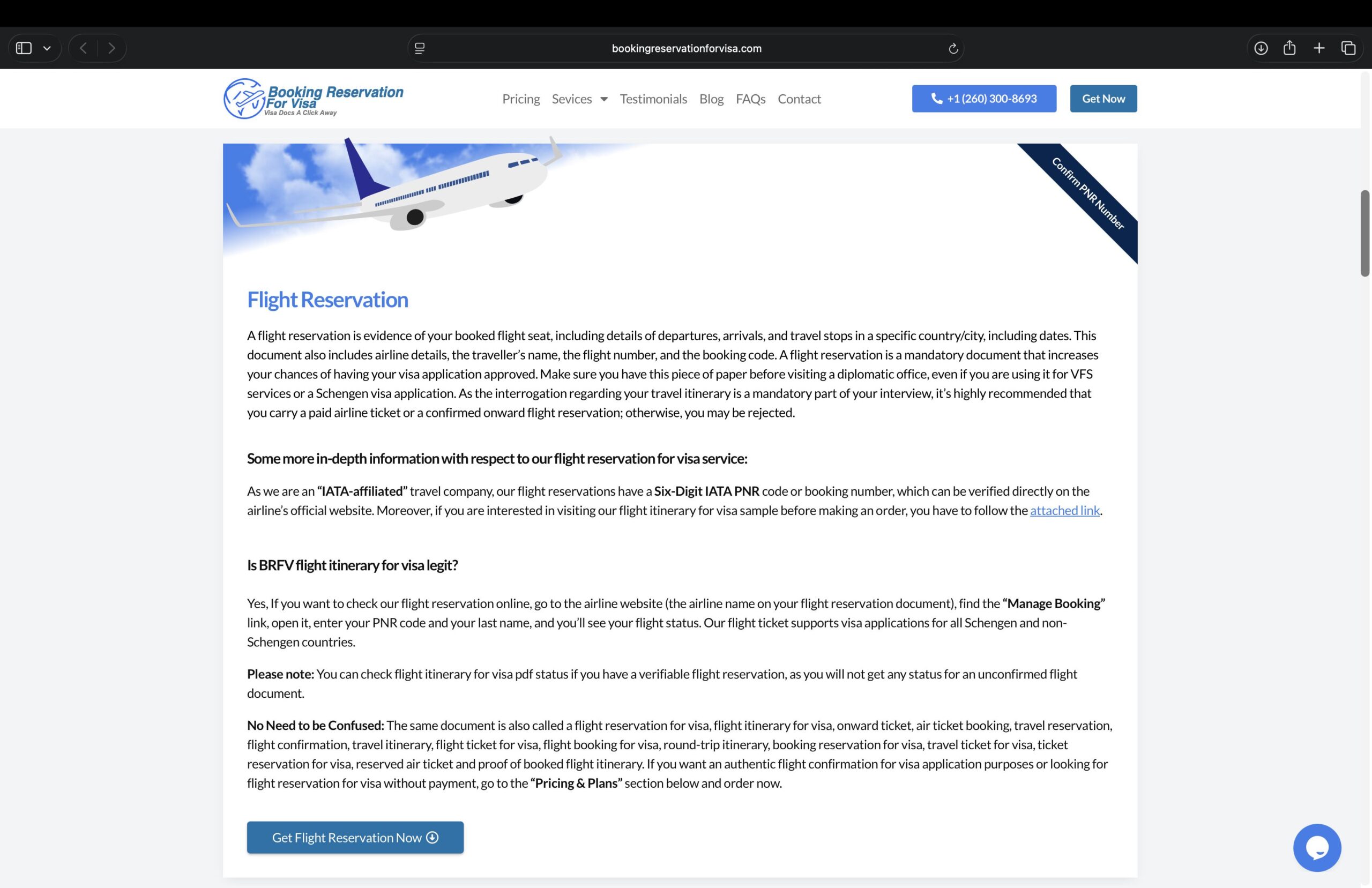
At this stage, the applicant is not buying a fully paid airline ticket. The purpose is to begin the order for a travel ticket reservation document that can support the visa file. That difference is important because many applicants confuse a reservation with a real ticket purchase. The first step is simply to enter the part of the website where the dummy ticket for visa request is made.
Step 2: Enter the travel details carefully
Once the applicant is on the flight reservation page, the next step is to provide the travel information needed to prepare the document. This is one of the most important stages of the entire process because the final flight ticket reservation will only be as accurate as the details submitted here.
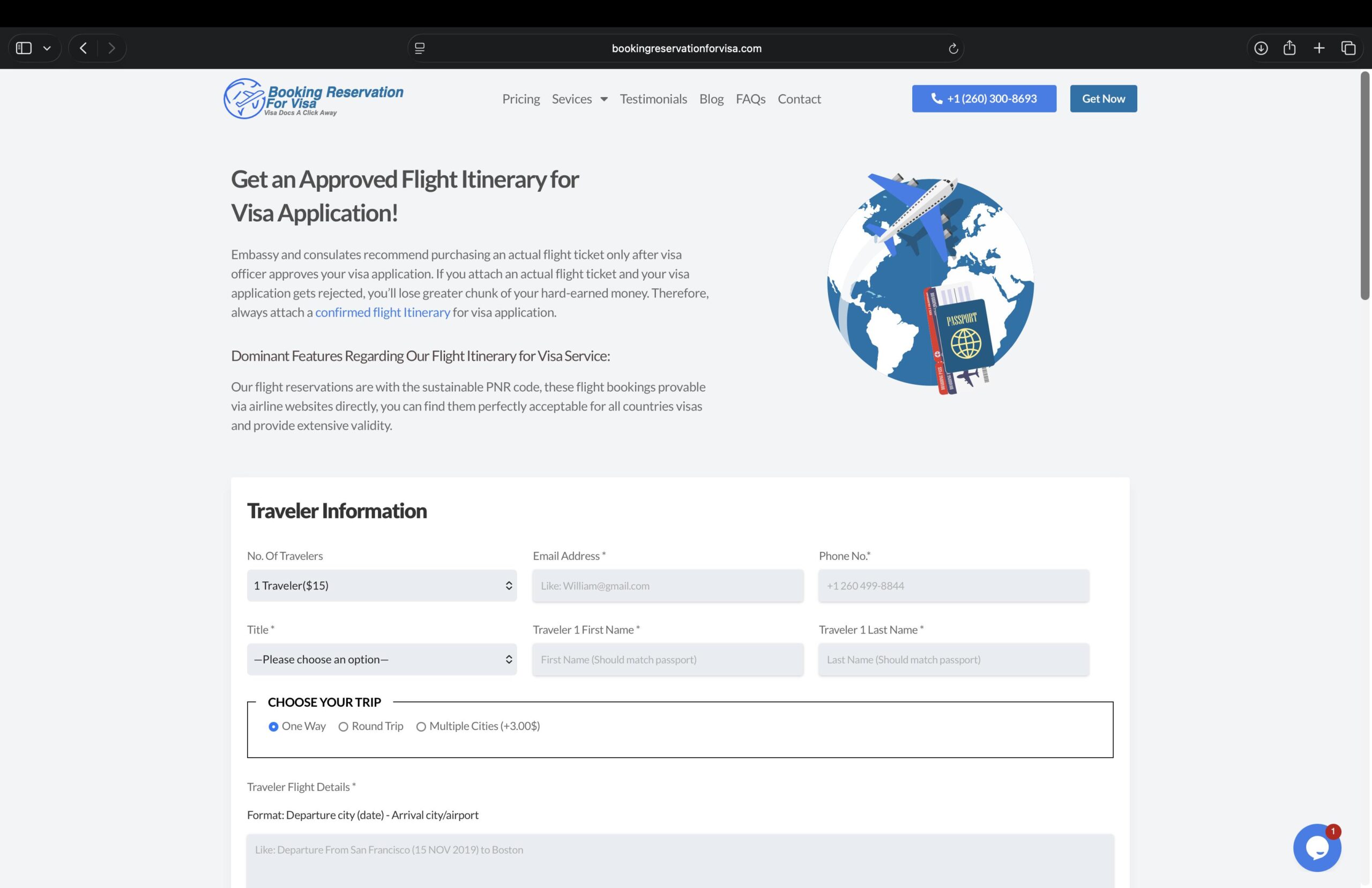
The passenger’s name should be entered exactly as it appears on the passport. Even a small spelling difference can create problems later. The departure and arrival points should reflect the intended route, and the travel dates should match the broader Schengen visa plan. If the applicant already has a draft itinerary, hotel bookings, or a cover letter in mind, the dummy flight ticket details should align with all of those. A weak application often becomes weak at this point, not because the flight reservation is missing, but because the dates or route do not fit the rest of the file.
This step should therefore be handled slowly and carefully. The applicant is not merely filling in a form; they are shaping a document that will become part of the visa application story.
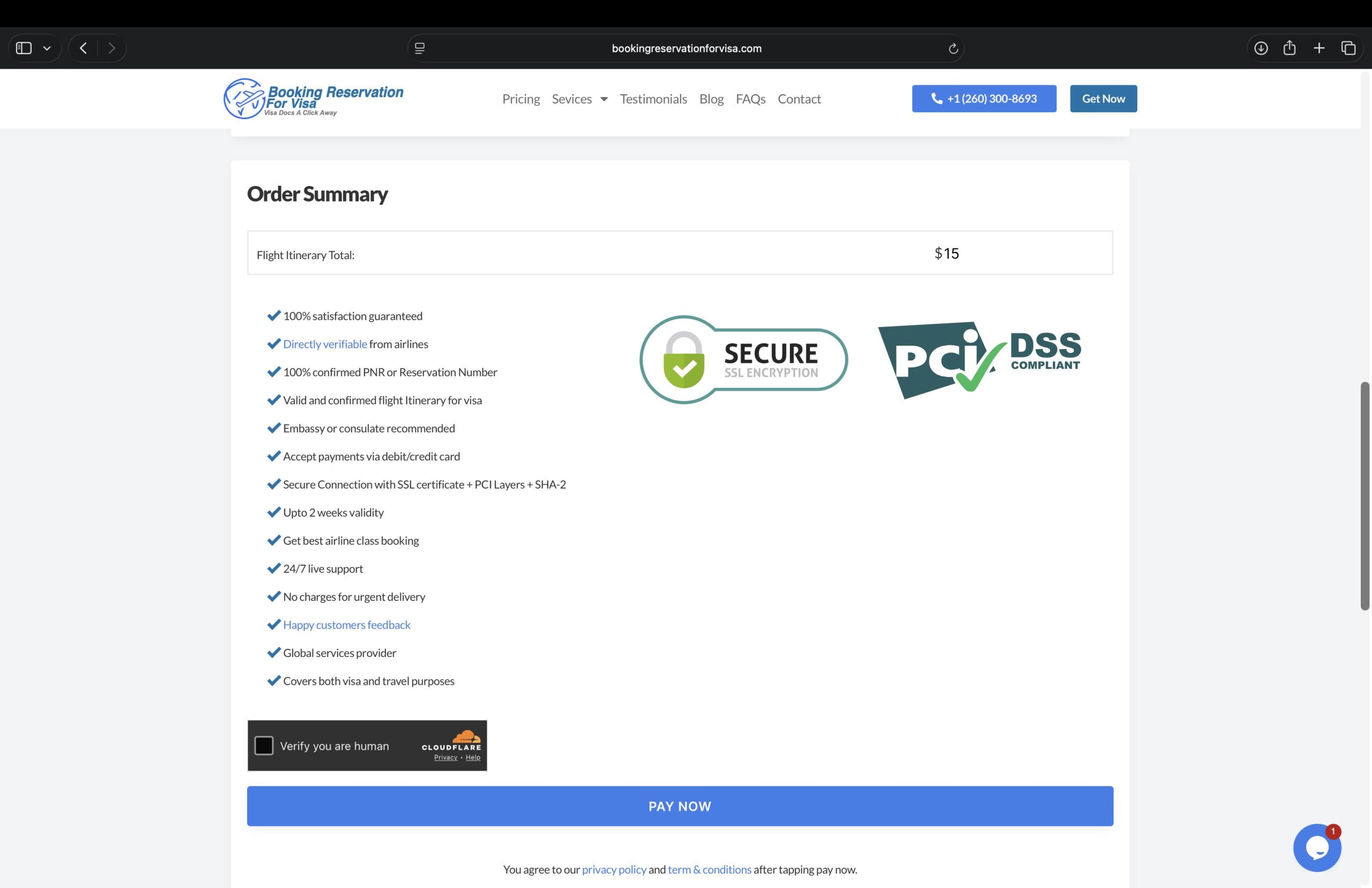
Step 3: Complete payment and wait for the reservation by email
After the travel details are submitted, the next step is to complete the payment so the flight reservation can be processed. Once that is done, the document is prepared and sent by email. According to BRFV’s FAQ, delivery usually happens within 2 to 3 hours, although in some cases it may take longer during busy periods.
This stage is straightforward, but it is still important because many applicants assume the process ends once payment is made. In reality, payment is only the point at which the request moves into preparation. The real focus should remain on the quality of the document that arrives afterward. The applicant should therefore keep an eye on their inbox and be ready to review the reservation as soon as it is received.
Step 4: Review and verify the reservation after receiving it
When the dummy flight ticket arrives by email, it should not be placed into the visa file immediately. It should first be reviewed properly.
The applicant should read the document line by line and check the passenger name, route, dates, airline details, and booking information. Everything should look accurate and consistent with the intended journey. If the flight itinerary includes verifiable booking details, this is also the stage where the applicant should test them. A document is far more useful when it has been checked rather than simply assumed to be correct.
This step matters because even a minor error can create inconsistency in the visa file. If the name is incomplete, if the route is not what the applicant intended, or if the dates do not match the rest of the paperwork, the flight reservation for visa may weaken the application rather than support it. Reviewing the document before using it is therefore not optional; it is part of using the reservation properly.
Step 5: Add the dummy flight booking to the visa file only after it matches the rest of the documents
The final step is to place the dummy ticket into the visa application only after confirming that it aligns with the rest of the paperwork. A flight reservation should not sit in isolation. It should work naturally with the cover letter, travel dates, accommodation plan, and overall purpose of travel.
This is what makes the dummy ticket booking actually useful. Its role is not simply to show that a flight-related paper exists. Its real role is to strengthen the overall file by making the travel plan look clear, realistic, and organized. Once the applicant is satisfied that the flight reservation matches the broader Schengen application, it can be printed or attached as part of the supporting documents.
A well-used dummy flight booking does not feel forced inside the file. It fits so naturally that it helps the rest of the application make more sense.
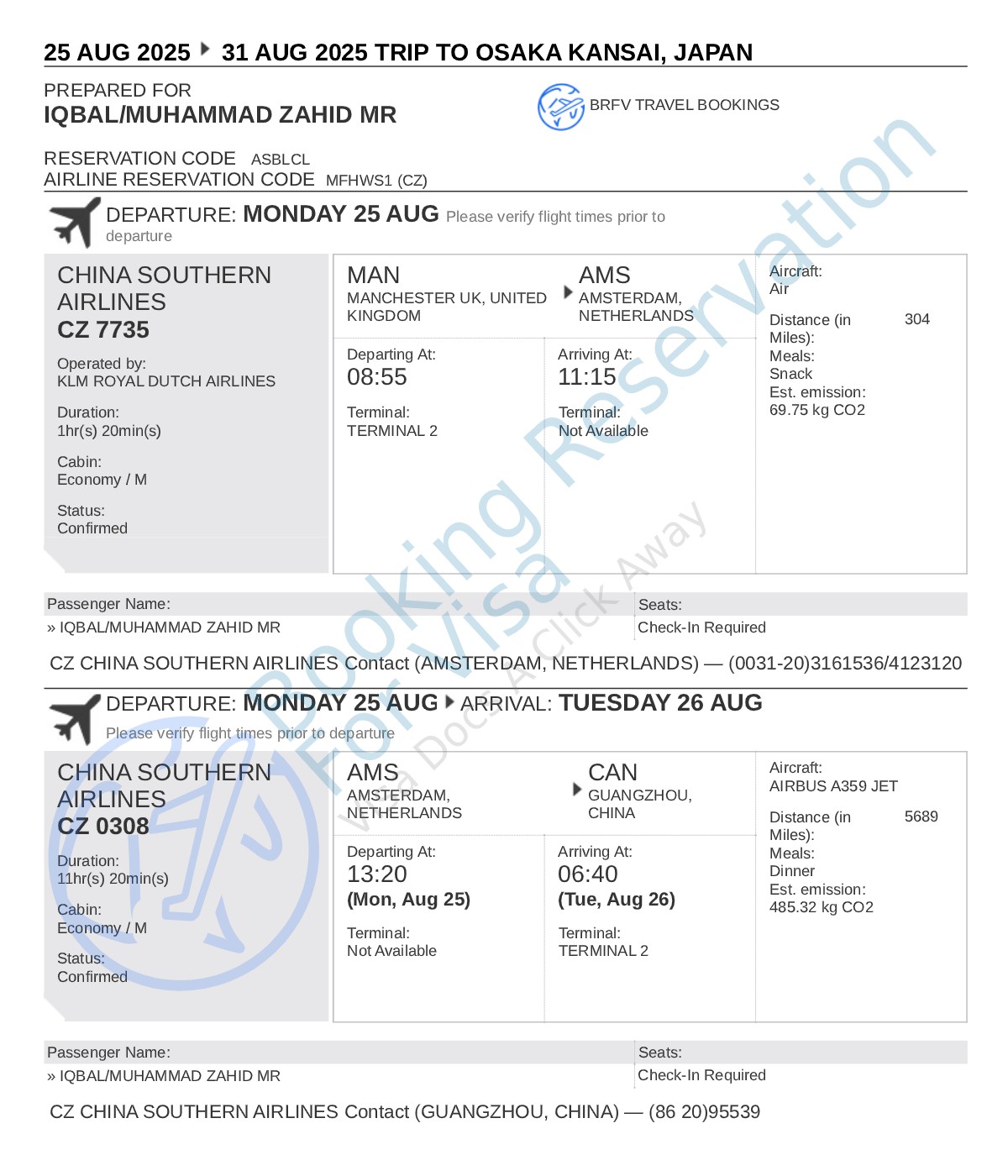
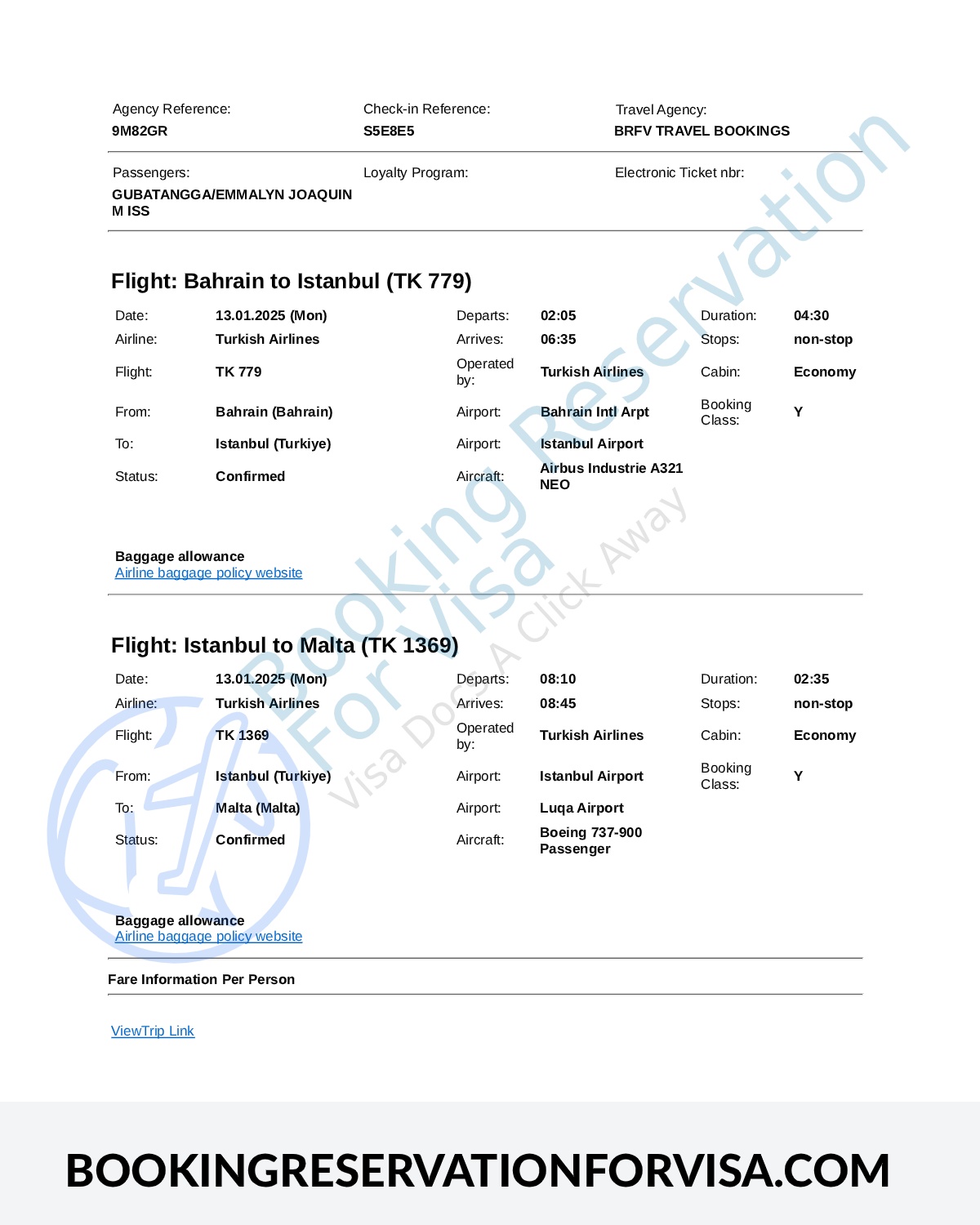
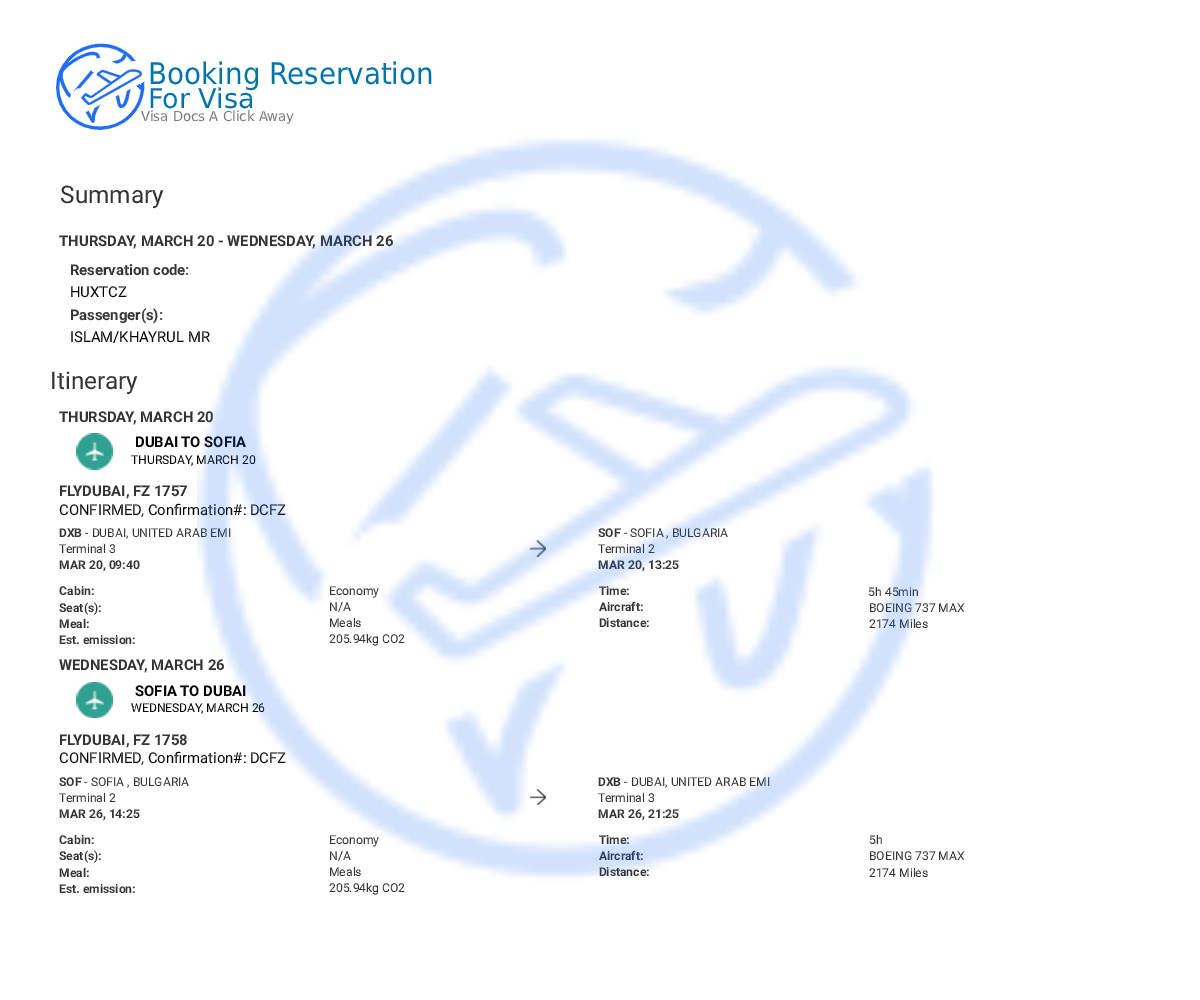
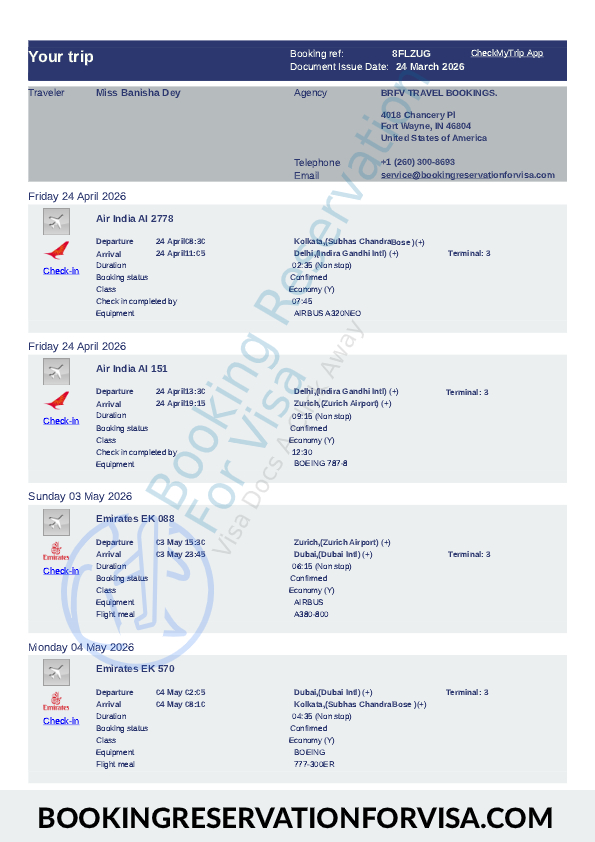
Dummy Flight Ticket for Visa Samples:
Applicants often search for a sample dummy flight reservation before they order one because they want to understand the shape of the document they are about to submit. That instinct is reasonable. A sample gives them a sense of what should normally appear on the page: traveler identity, journey structure, travel dates, and booking details. The purpose is not to flood the reader with copied layouts, but to prepare them to recognize the difference between a meaningful reservation and a weak one.
Frequently Asked Questions
Is a dummy flight ticket the same as an actual airline ticket?
No. A dummy flight ticket is generally used as reservation-style travel proof for visa support, while an actual airline ticket reflects a completed purchase. Schengen-facing checklists commonly ask for transport reservations or proof of return travel rather than insisting that applicants buy the final ticket before the visa is issued.
Is a Schengen visa valid across all Schengen countries?
For short stays, a Schengen visa is generally valid throughout the Schengen area, because all 29 Schengen countries apply the same short-stay visa rules.
When should a Schengen visa application be submitted?
Applications should generally be lodged at least 15 calendar days before the intended trip. Earlier preparation is possible, and the system allows planning months in advance.
How long does short-stay Schengen processing usually take?
The normal timeline is 15 days, but some cases can take up to 45 days when additional examination is required.
If I use BRFV, how long does the reservation usually stay valid?
According to BRFV’s FAQ, the reservation can generally be held for 7 up to 14 days, depending on airline booking capacity, and in many cases remains valid for up to 14 days.
If I use BRFV, how quickly is the document usually delivered?
BRFV’s FAQ says the itinerary is usually delivered within 2 to 3 hours, although rare busy periods may extend that timeline.
Does BRFV show a step-based booking method?
Yes. On its website, BRFV presents the booking flow in simple stages: choose a plan, submit details and payment, and receive the document by email.
Do I still need the rest of my documents to match the reservation?
Yes. That is essential. Schengen guidance expects the supporting documents to correspond to the actual travel plan and to cover the complete stay credibly.
Should I buy a real ticket before the visa is approved?
Not usually, unless a specific authority clearly requires it. Some Schengen-facing checklist sources explicitly advise applicants not to buy the ticket before the visa is issued.
Conclusion
A dummy flight ticket helps most when it does not behave like a marketing document or a decorative extra. It should behave like a real part of a real trip.
That means it should show a believable route, fit the dates and purpose of travel, remain useful for the review window, and sit naturally beside the rest of the visa file. Schengen rules and guidance already make clear what matters most: timing, consistency, proof for the complete stay, and documents that correspond to the travel plan being declared.
If someone chooses to order through BRFV, then the brand belongs in the practical parts of the conversation: how to book it, how long it may remain valid, and how quickly it is usually sent. Outside of that, the article should stay focused on the visa logic itself. And that logic is simple. A good reservation does not try to shout. It simply helps the whole application make sense.
If you want, I can now do the final polishing pass and make this sound more premium and blog-ready without changing the structure.