
For travelers in Mongolia, Italy continues to hold strong appeal as both a destination in its own right and a gateway to the wider Schengen Area. Some visit for tourism and cultural exploration, others for short professional assignments, academic programs, events, or family-related travel. Whatever the reason, the first essential step is understanding the visa procedure correctly, because short-stay access to Italy is governed by a formal Schengen application process handled under Italian consular rules.
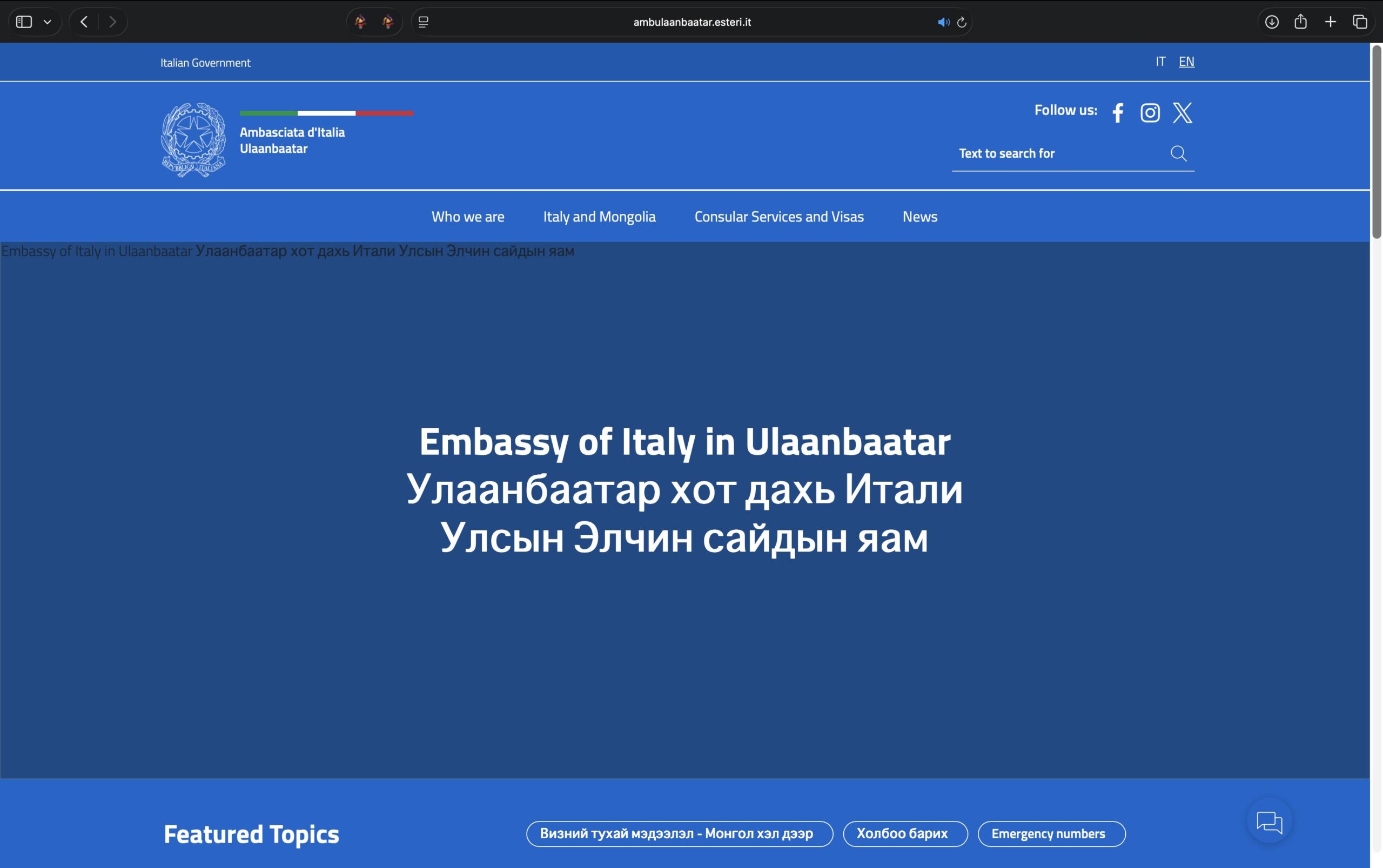
What makes the Mongolian route distinctive is that applicants do not file through a generic regional mechanism. The official route is tied to the Embassy of Italy in Ulaanbaatar the capital of Mongolia, which accepts Schengen and national visa applications from Mongolian citizens and from foreign nationals who are legally resident in Mongolia and require a visa. Appointment booking is handled through Italy’s official Prenot@Mi system, and in-person attendance is normally required for biometric collection.
The importance of following the correct channel cannot be overstated. In visa matters, procedural accuracy is often as important as documentary completeness. Applicants who misunderstand where to file, how early to begin, or what type of visa corresponds to their intended journey may encounter delays that could have been avoided with proper preparation. For this reason, those applying from Mongolia should approach the process not as a routine formality, but as a structured legal procedure in which clarity, timing, and consistency play a decisive role.
It is equally important to understand that a Schengen visa application is assessed as a complete file rather than as a collection of separate papers. The authorities look not only at whether the required documents are present, but also at whether the overall submission presents a credible and coherent travel plan. A well-prepared application should demonstrate the purpose of the visit, the applicant’s financial capacity, the arrangements for accommodation, and the intention to return after the stay. When these elements are aligned, the application becomes significantly stronger and more persuasive.
What the Italian Schengen Visa Covers
The Italian Schengen visa is a short-stay authorization, commonly referred to as Type C, which allows travel to Italy and the broader Schengen Area for up to 90 days in any 180-day period. It is intended for temporary visits and not for long-term settlement. The most common travel purposes include tourism, business trips, private visits, cultural participation, and short study or training stays.
The legal logic behind the visa is straightforward: the Italian authorities assess whether the applicant has a legitimate and time-limited reason for entering the Schengen Area, sufficient financial means for the trip, and a consistent file that supports the declared purpose of travel. That means the application is judged not only on whether documents are present, but on whether they make sense together.
Who Can Apply in Mongolia
The official Italian Embassy page for Ulaanbaatar states that Schengen visa applications may be submitted by Mongolian citizens. It also confirms that citizens of other countries whose nationals are subject to visa requirements may apply in Mongolia, provided they are legally resident there. This is important for expatriates, students, and foreign residents in Mongolia who need a Schengen visa and intend to travel to Italy as their main destination.
The same official guidance also notes one specific exemption: holders of Mongolian diplomatic passports are visa-exempt for short stays of up to 90 days within 180 days under the applicable bilateral arrangement. In addition, family members of EU/EEA citizens benefit from procedural facilitations and may in some cases appear without a regular appointment during a designated time window, subject to proof of relationship.
Where the Application Is Submitted
Unlike some countries where Italian short-stay visa applications are outsourced to a visa service company, the Italian Schengen visa from Mongolia is centered on the Embassy of Italy in Ulaanbaatar. The Embassy’s visa page states that appointments must be requested through the official Prenot@Mi booking system and that applicants must attend the Embassy with a confirmed appointment. It also specifies the Embassy address in the ICC Tower, 14th floor, Jamiyan Gun’s Street 9, 1st khoroo, Sukhbaatar district, Ulaanbaatar.
This matters from an SEO and practical standpoint because many applicants search for a visa center route when the real process is embassy-based. For Mongolia, the official filing channel is the Italian Embassy itself, unless the Embassy later announces an operational change.
When You Are Allowed to Apply
The Ulaanbaatar visa guidance recommends submitting the application well in advance for Italian Schengen visa from Mongolia, specifying that Schengen visa files may be lodged up to six months before the planned departure and recommending filing at least 15 days before travel. This filing window is particularly important for applicants aligning visa preparation with flight reservations, leave approvals, or event invitations.
The Embassy also states the jurisdiction rule for when Italy is the correct Schengen state for filing. Applicants should apply to Italy if Italy is the sole destination, or the main destination in terms of duration or purpose of stay, or—where no main destination can be determined if Italy is the external Schengen border through which the traveler first intends to enter.
Step-by-Step Application Process
- Confirm That Italy Is the Correct Country for Your Filing
Before anything else, the applicant should ensure that the trip genuinely belongs under Italian jurisdiction. This is especially relevant where multiple Schengen states are included in the same itinerary. If the main stay is elsewhere, filing through Italy may not be appropriate. The Embassy’s guidance explicitly sets out the three core criteria for when Italy is the correct state of application.
- Decide the Exact Purpose of Travel
A strong Italian Schengen visa from Mongolia application begins with clarity. Tourism, business travel, family visit, study, and event participation are not interchangeable categories. The purpose selected must correspond to the real travel plan and to the documents later submitted in support of it. A tourism application supported only by generic bank papers but no meaningful travel structure is weaker than a file that clearly shows hotels, itinerary, and leave from work.
- Book an Appointment Through Prenot@Mi
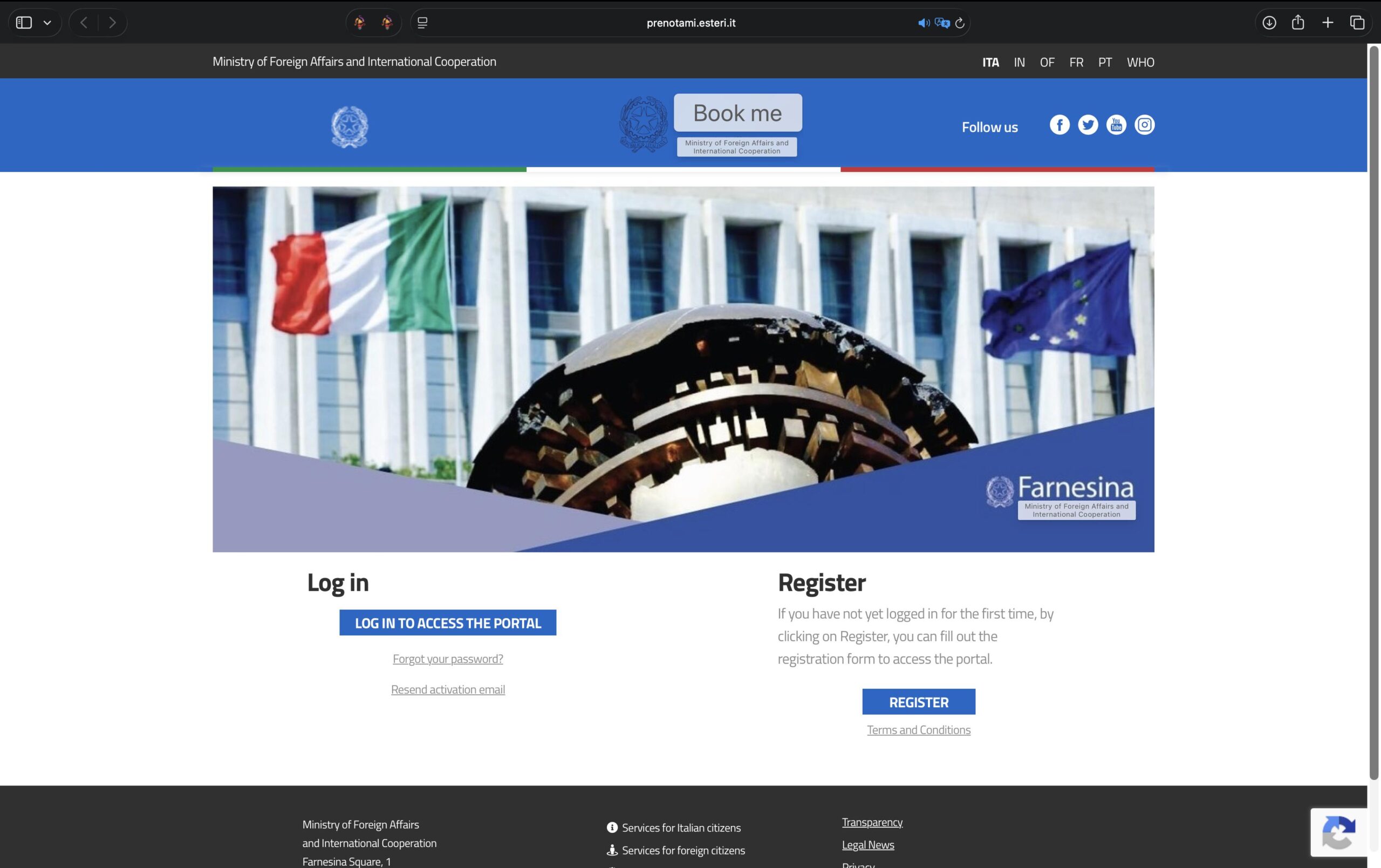
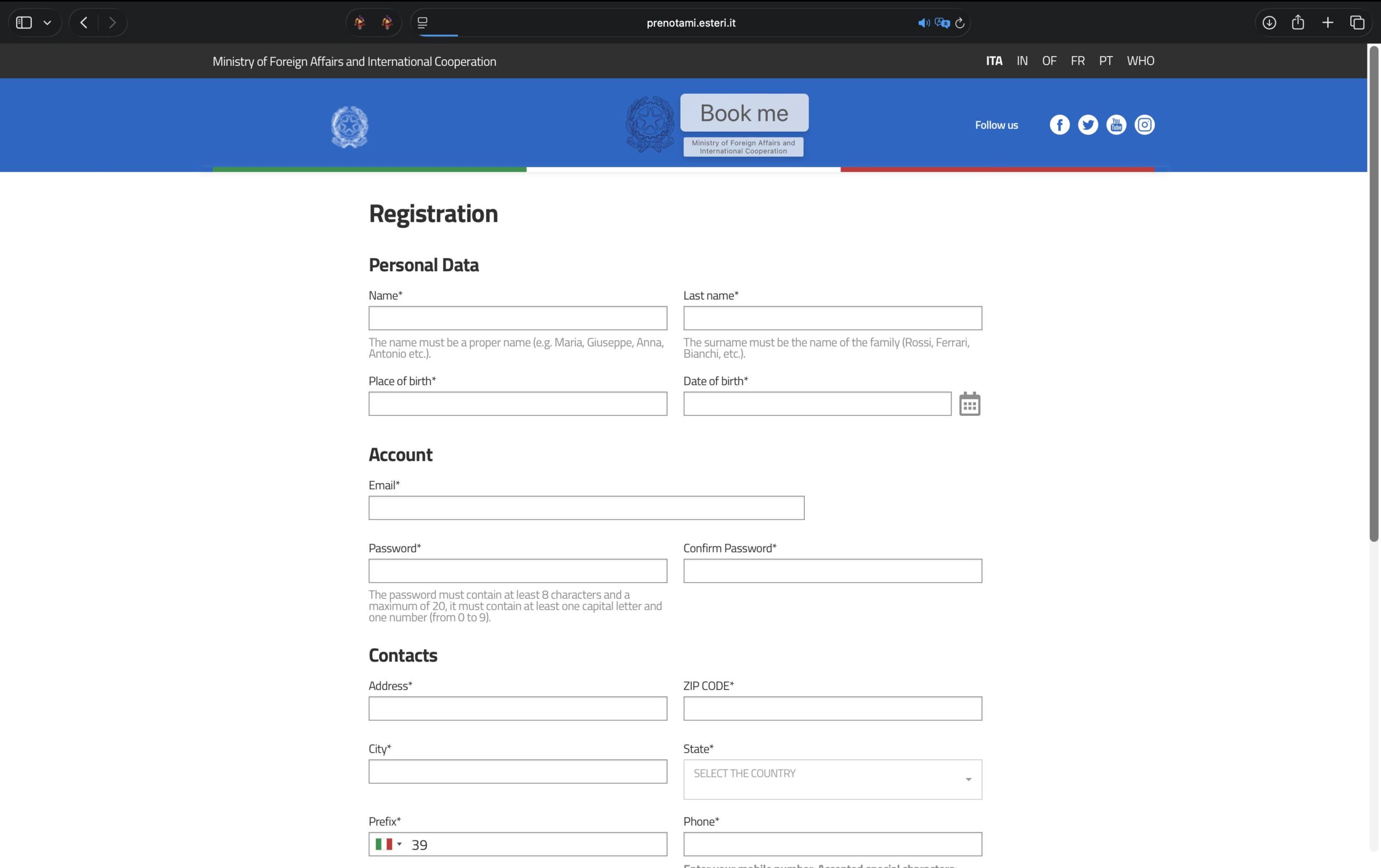
The official Embassy page states that appointments must be requested through Prenot@Mi, Italy’s online consular appointment platform. Applicants must bring the appointment confirmation with them because access to the Embassy is restricted to those with a confirmed appointment. This is therefore not an optional preliminary step; it is the gateway to submission.
- Prepare the Visa File Carefully
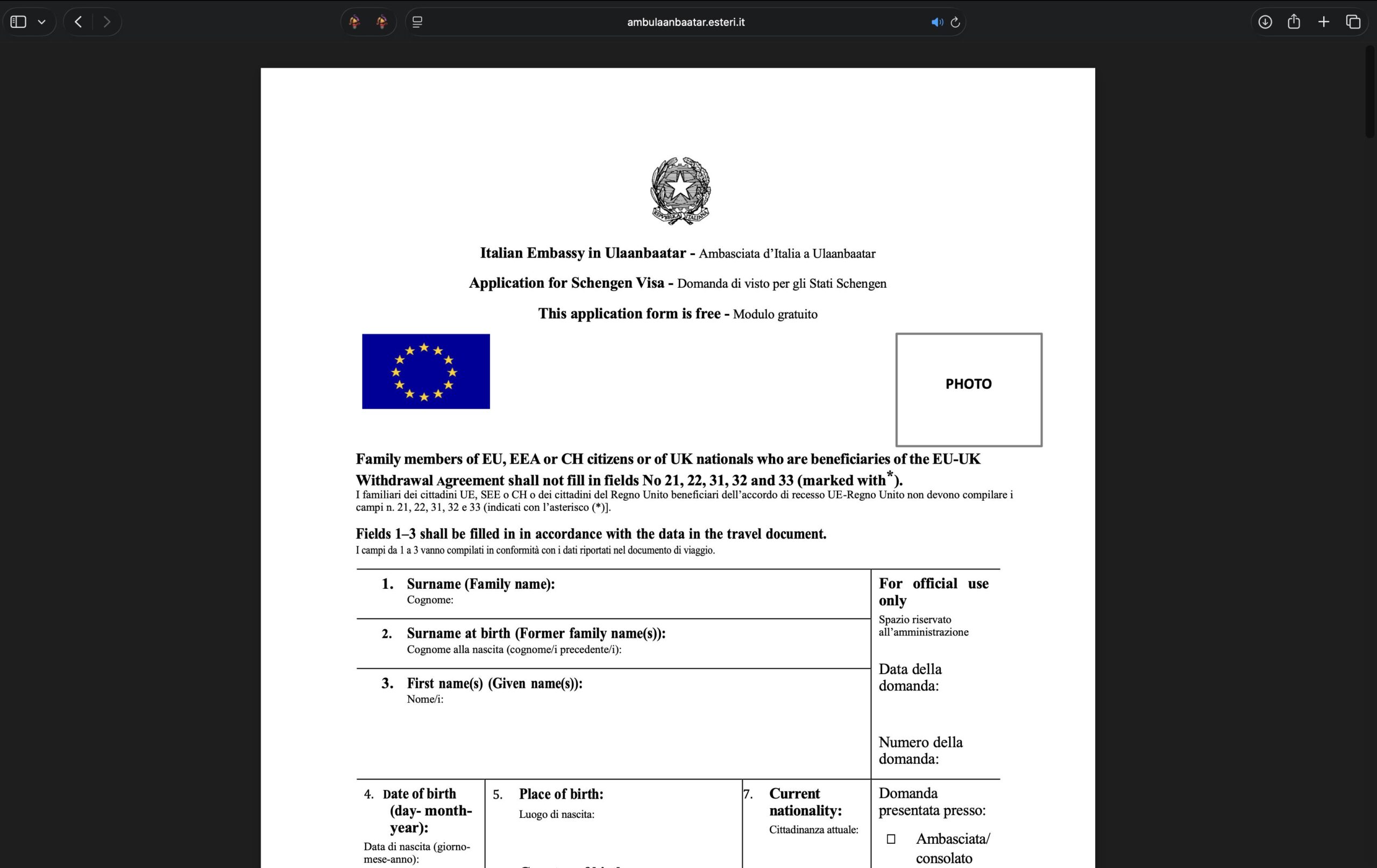
This is where most applications are either strengthened or weakened. A well-prepared Italian Schengen visa from Mongolia visa file does more than gather papers; it presents a coherent narrative. It should show who the applicant is, why they are traveling, how long they intend to stay, where they will stay, how they will fund the trip, and why the stay is temporary. Documents should be current, clear, and logically arranged along with duly filled and signed schengen form. Even where the facts are acceptable, a disorganized file creates avoidable friction.
- Attend the Appointment in Person
The Embassy makes clear that Italian Schengen visa from Mongolia applicants must normally appear in person in order to lodge the form and provide biometric data for the Visa Information System. It describes the process as quick and routine, with biometric data stored for up to 59 months. Children under 12 and certain other narrowly defined categories are exempt from fingerprint collection. The Embassy also notes that fingerprint acquisition is not required for national visas of type D, but this exemption does not apply to ordinary Schengen visa filings.
- Pay the Visa Fee
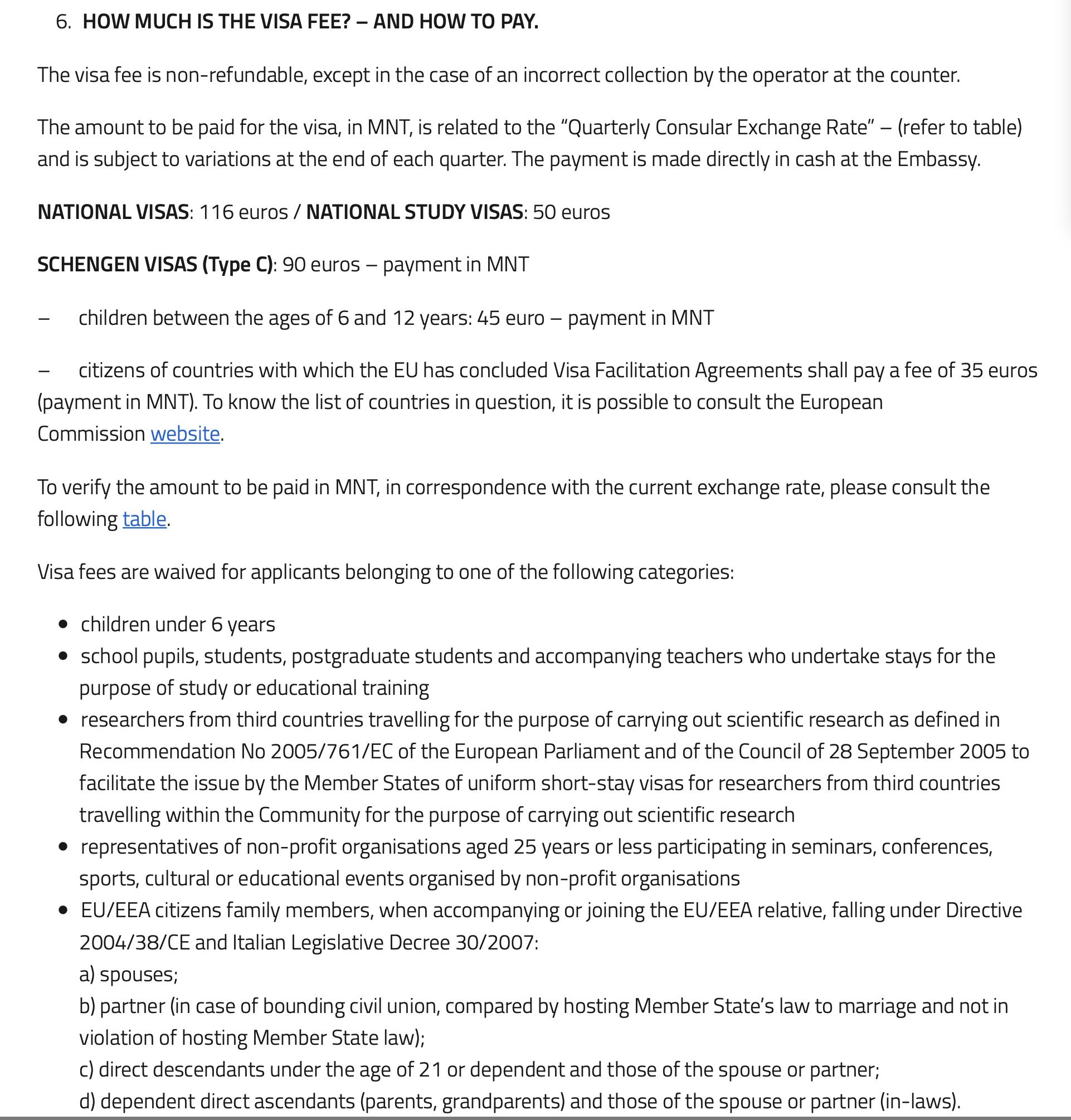
The Ulaanbaatar visa page states that the Schengen visa fee is €90, paid in Mongolian tögrög, and that the amount is tied to the quarterly consular exchange rate. Payment is made directly in cash at the Embassy. The Embassy also states that the fee is non-refundable except where there has been an incorrect collection by the operator at the counter.
- Wait for the Decision and Review the Passport
After submission, the Embassy reviews the application. If a visa is granted, the applicant should check the sticker immediately for name accuracy, validity dates, duration of stay, and number of entries. The Embassy also reminds applicants that a visa does not automatically create an absolute right of entry and that border officials retain control over admission at the point of entry.

Approval Requirements: What the Authorities Are Looking For
Italian Schengen visa from Mongolia approval is not based on one document alone. It depends on the overall credibility of the file. In practical terms, approval tends to depend on five broad elements.
The first is jurisdictional correctness. Italy must actually be the right state through which to apply. The second is purpose clarity. The declared reason for travel must be specific and believable. The third is financial sufficiency. The applicant must show enough funds or support to sustain the trip. The fourth is document consistency. Dates, names, bookings, and supporting records must align with each other. The fifth is temporary intent, which is demonstrated through work, study, family, business, or other ties that support return after the visit.
The Embassy also notes that in the event of refusal, the applicant is informed of the reasons and may either reapply with a stronger file or appeal within the legal framework indicated in the official guidance.
Document Checklist for the Italian Schengen Visa from Mongolia
Below is a separate and practical document list for applicants preparing a short-stay file. The exact category-specific requirements can vary, but these are the core document classes most applicants will need.
Identity and Core Application Documents
Applicants should prepare:
- A valid passport issued within the last ten years
- A passport with at least two blank pages
- A passport valid for at least three months beyond the intended departure from the Schengen Area
- A completed Schengen visa application form
- Recent biometric passport photographs in the required format
Proof of Residence in Mongolia
For foreign nationals applying from Mongolia, legal residence in Mongolia must be demonstrated, since the Embassy states that non-Mongolian applicants may file only if they are legally resident there.
Travel Planning Documents
Applicants should provide:
- A round-trip or onward flight reservation
- A clear itinerary with intended dates and destinations
- Hotel confirmations or other proof of accommodation
- Invitation letters where the stay is with a host rather than a hotel
Financial Documents
A strong file normally includes:
- Recent bank statements
- Salary slips or income proof
- Employer certification or business records, depending on profile
- Sponsorship evidence if another person is covering the travel expenses
Employment, Study, or Professional Status Documents
Depending on category, this may include:
- Employer letter confirming position and approved leave
- Student enrollment confirmation
- Business registration or commercial documentation
- Event invitation or attendance proof
Travel Medical Insurance
The policy should:
- Cover the full Schengen travel period
- Include emergency treatment, hospitalization, and repatriation
- Be valid for the required Schengen territories
Additional Civil or Family Documents
Where relevant, applicants may also need:
- Marriage certificate
- Birth certificate
- Proof of family relationship
- Consent documents for minors
- Guardianship records if applicable
Special Documents for EU/EEA Family Members
The Embassy states that EU/EEA family members benefit from facilitations and should bring their own identity documents plus certificates establishing marriage, kinship, or birth, depending on the case.

Practical Advice for a Stronger File
Applicants often assume that a visa is refused only where documents are missing. In reality, many files become weak because the documents do not support a single convincing story. A hotel booking that does not match the itinerary, a business claim without any invitation, or a financial profile that does not fit the planned trip can all raise concerns.
The strongest applications are not always the thickest. They are the most coherent. A polished file should be readable at a glance and credible in substance.
Processing Notes and Refusal Awareness
The Embassy advises applying early and notes that refusal decisions are formally notified with reasons. It also explains that applicants may reapply with improved documentation or use the appeal route described under Italian law. For family-based cases, the appeal route may differ depending on the legal basis of the visa sought.
This is useful for applicants because it makes one thing clear: refusal is not the end of the road, but it does mean the first application was not persuasive enough. That is why file quality matters from the beginning.
Conclusion
Applying for an Italian Schengen visa from Mongolia is a structured embassy-based process that begins with confirming Italy’s jurisdiction, continues through the Prenot@Mi booking system, and ends with in-person submission and biometric enrollment at the Italian Embassy in Ulaanbaatar. The official rules on who may apply, when to apply, what fee is payable, and where the file must be lodged are clearly set out by the Embassy and should be followed closely.
For travelers planning an Italian journey, the most effective approach is to build the visa application and the travel plan together. When accommodation, itinerary, financial proof, and travel purpose all align, the application becomes stronger and more credible. Italy remains one of Europe’s most desired destinations; the visa process is simply the formal beginning of that journey.