
Introduction
For travelers in Mongolia, France remains one of Europe’s most compelling destinations, whether the purpose of travel is tourism, private visit, business, education, or cultural participation. Yet the path to France begins long before departure. It starts with a properly prepared visa file, submitted through the correct official channel and supported by documents that present a clear and credible travel plan.
Applicants often search for general Schengen information, but Mongolia requires a more precise understanding of the French route. The process is not outsourced to a broad regional filing system, nor is it handled through a generic third-party visa center. Instead, visa applications submitted in Mongolia are examined by the Embassy of France in Ulaanbaatar, which acts as the sole French authority for visa decisions made locally. This makes accuracy in procedure especially important, because applicants must rely on the official French consular framework rather than a simplified commercial route.
For many applicants, the visa process unfolds alongside the practical details of travel planning, including accommodation arrangements, intended travel dates, and transport reservations. In that context, a successful application depends not only on meeting formal requirements, but also on presenting a file that is well-structured, credible, and consistent from start to finish. Clear preparation at an early stage allows travelers to align their documents with their itinerary more effectively and approach the submission process with greater confidence.
Why the French Visa Route in Mongolia Deserves Special Attention
Mongolia is one of those jurisdictions where the visa process is relatively direct but still highly formal. There is no benefit in treating it casually. The French authorities expect applicants to begin online, request an appointment through the proper channel, appear in person for submission, and present a file that is internally consistent.
That means the success of the application does not depend only on whether the right documents exist. It also depends on whether the documents make sense together. A traveler who submits hotel bookings, financial proof, travel insurance, and a round-trip reservation that all support the same trip profile presents a much stronger case than someone who assembles documents without alignment. For this reason, applicants in Mongolia should approach the French Schengen visa process not as a checklist exercise, but as a structured legal and administrative submission.
What the French Schengen Visa Allows
The French Schengen visa is a short-stay authorization that allows travel to France and other Schengen member states for up to 90 days within any 180-day period. It is designed for temporary travel only and does not function as a residence permit.
In practice, this visa is used by travelers whose stay in France will be limited in duration and clearly defined in purpose. It can be appropriate for leisure travel, short business trips, attending conferences, visiting relatives or friends, receiving short-term training, participating in cultural events, or undertaking other temporary, non-settlement travel.
Applicants should remember that the visa is issued on the basis of a declared purpose. That purpose should shape the file from the start. If the trip is tourism, the application should look like tourism. If the purpose is professional, the supporting evidence should clearly reflect that. A mismatch between the category selected and the documents submitted can weaken the case significantly.

French Visa Types Relevant to Applicants in Mongolia
The most commonly requested category is the short-stay Schengen visa, but within that category there are several practical travel profiles.
Tourism and Private Stay
This is the route most travelers use when visiting France for holidays, city travel, sightseeing, or private leisure. It also covers private visits where the applicant intends to stay with a host rather than in commercial accommodation.
Business Travel
Applicants traveling for meetings, trade events, company visits, professional negotiations, or short commercial engagements generally fall into this category. The supporting file should demonstrate a concrete professional purpose rather than a vague commercial intention.
Family or Personal Visit
Where the traveler is visiting family members or close personal contacts in France, the file should be structured around that relationship. This often involves host documentation and proof of the relationship or invitation basis.
Study, Training, or Short Educational Stay
Some applicants travel for short non-residential courses, seminars, internships, or educational activities that do not amount to long-term study residence. These cases require documentation from the receiving institution or program.
Airport Transit, Where Applicable
Applicants whose travel involves only transit through a French airport may need to assess whether an airport transit visa applies, depending on nationality and route. This is a separate matter from an ordinary short-stay entry visa and should not be assumed automatically.
Who Can Submit a Visa Application in Mongolia
The French filing route in Mongolia is available to those submitting their application locally through the Embassy of France in Ulaanbaatar. In practical terms, that includes Mongolian nationals applying for short-stay entry to France, as well as foreign nationals legally resident in Mongolia when their file is accepted under local jurisdiction.
The key principle is that applications lodged in Mongolia are handled in Mongolia by the French Embassy in Ulaanbaatar. This makes it particularly important that the applicant’s file be prepared according to France-Visas instructions, because the embassy relies on the official online pre-application system as the first stage of the process.
Where to Submit the French Schengen Visa from Mongolia Application
The submission point is the visa service of the Embassy of France in Ulaanbaatar. This is the local authority that receives the file and is empowered to process visa applications lodged in Mongolia.
The process begins online through France-Visas, but the file is physically submitted to the Embassy in Ulaanbaatar by appointment only. This is not a walk-in system. Applicants must secure an appointment in advance and attend in person on the day assigned.
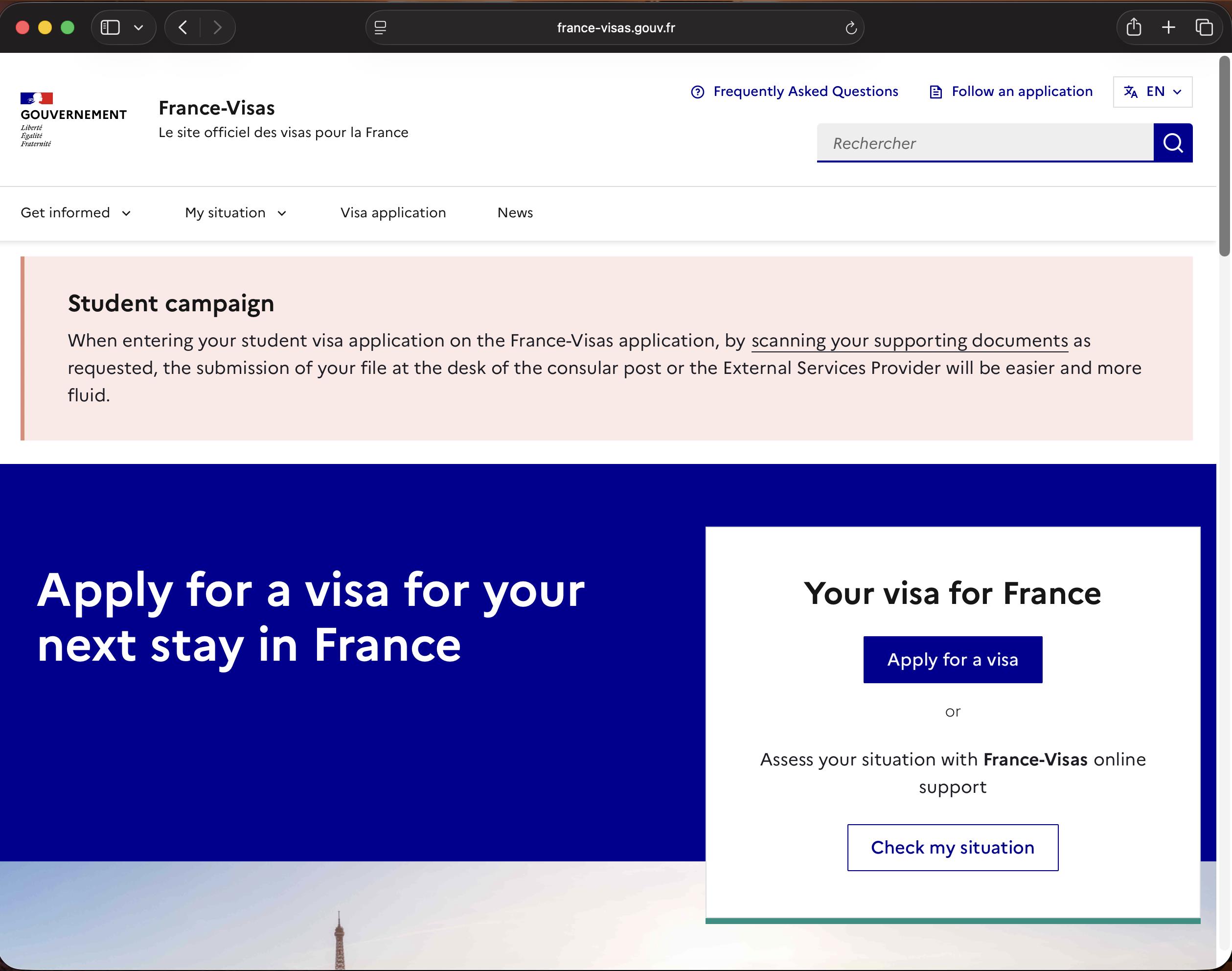
Because the filing route is embassy-based rather than outsourced, applicants should pay particular attention to scheduling windows and office hours. An incomplete or poorly timed file is more likely to face delay in a direct embassy environment than in a more heavily commercialized intake structure.
When to Apply for French Schengen Visa from Mongolia
Timing is one of the most important elements of a strong visa strategy. Applicants should not wait until the trip is imminent before beginning the process. A French short-stay application in Mongolia should be planned early enough to allow time for both appointment availability and processing.
As a general filing strategy, applicants should begin preparing their file as soon as travel dates become reasonably clear. This is especially important during busy seasons, when appointment demand tends to increase and scheduling flexibility decreases.
A disciplined applicant treats visa planning as part of the travel timeline itself, not as something that can be added at the end. Reservations, leave approvals, insurance, and supporting documents all take time to coordinate, and the application is stronger when those elements are assembled without haste.
Step-by-Step Submission Guide
Step 1: Start the process on France-Visas
The first step for French Schengen Visa Application from Mongolia is always the official France-Visas portal. Applicants should use it to identify the correct visa category, verify whether a visa is required, complete the online form, and generate the official checklist attached to their case.
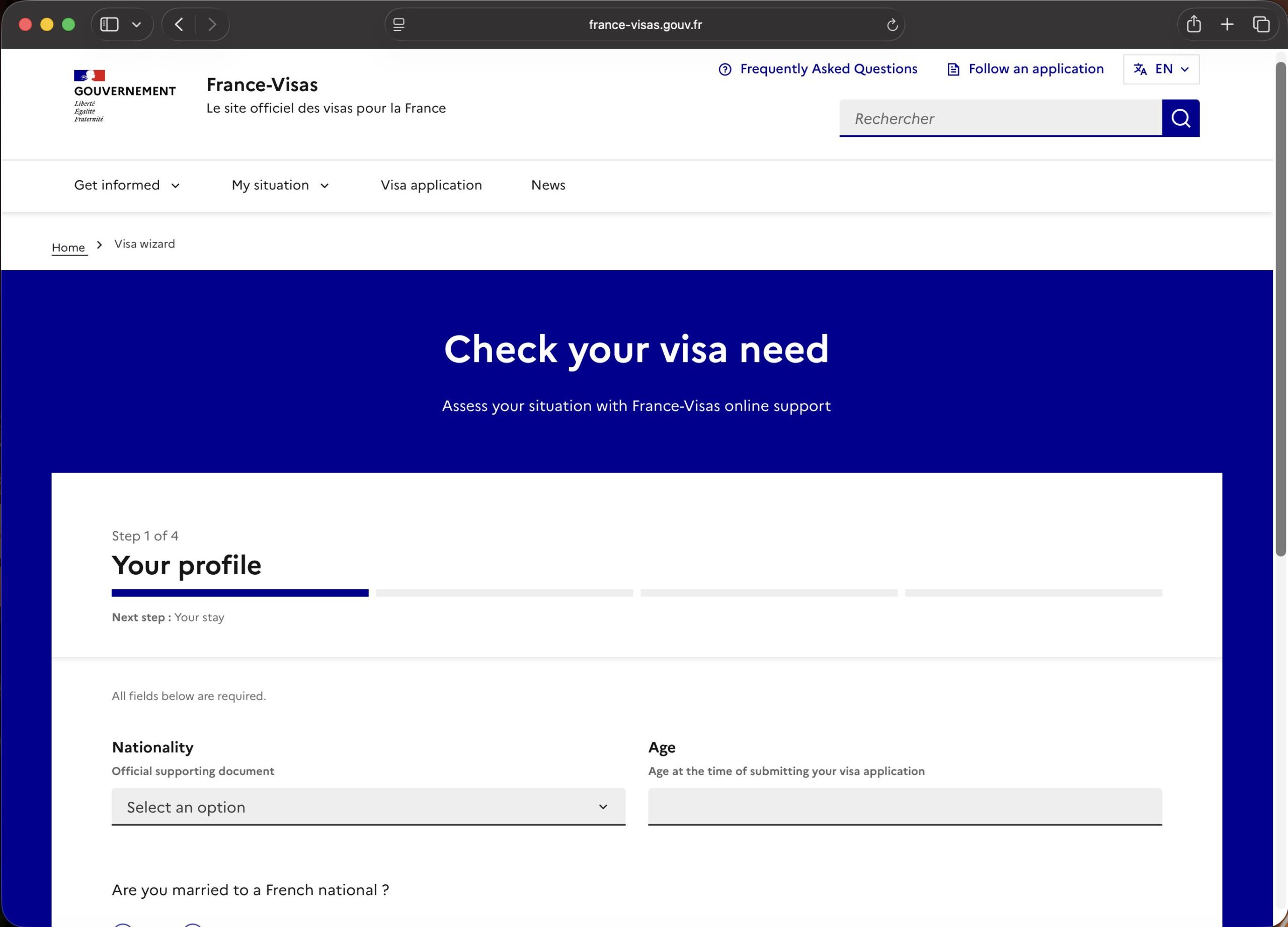
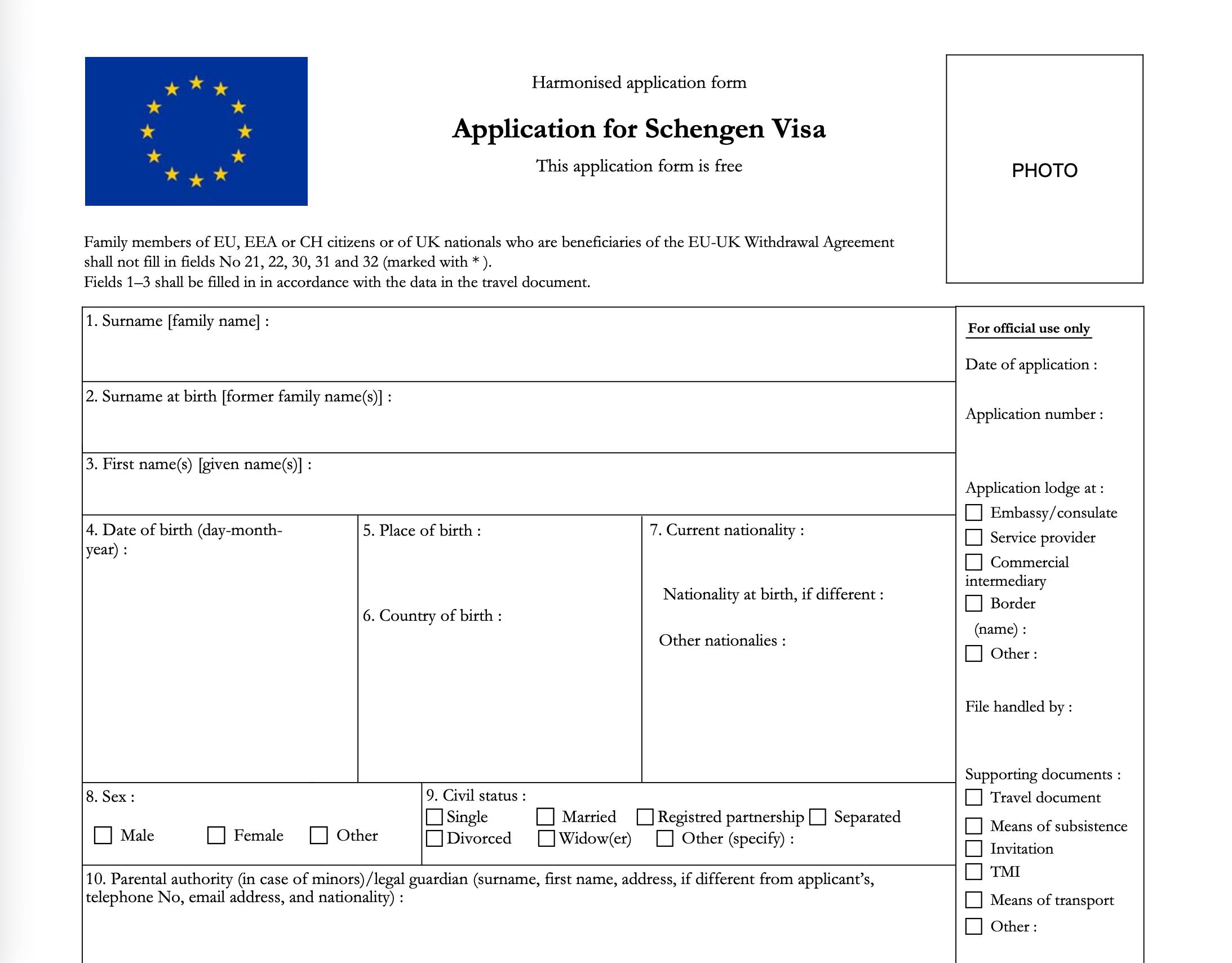
Step 2: Build the application around the correct travel purpose
Before collecting documents, define the exact nature of the trip. Tourism, business, family visit, and short study are not interchangeable. Each category calls for a different supporting logic, and the file should be organized accordingly.
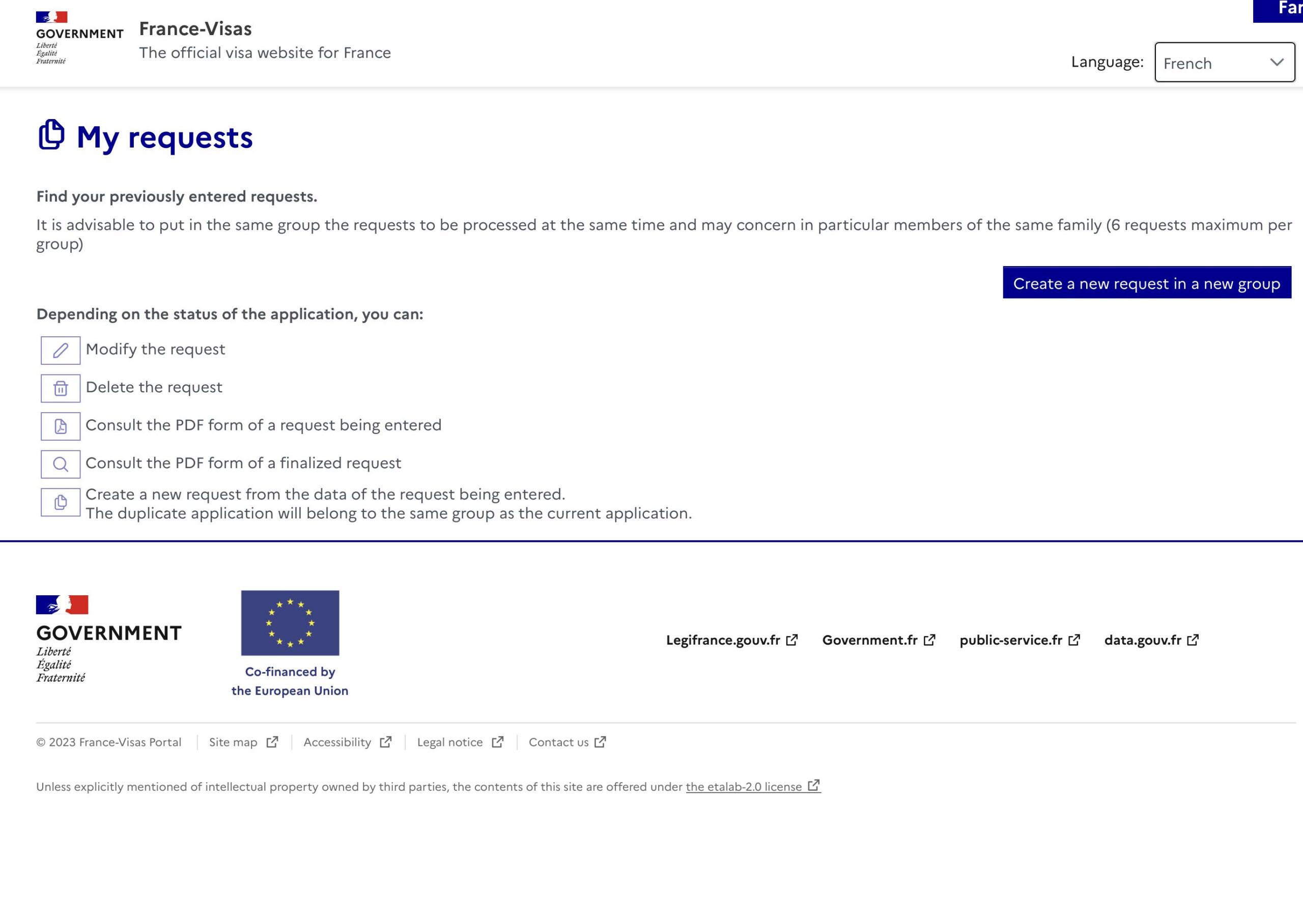
Step 3: Request the appointment with the Embassy of France in Ulaanbaatar
Once the online stage is complete, the applicant must request an appointment with the visa service of the Embassy of France in Ulaanbaatar. Submission takes place by appointment only, so this stage is essential.
Step 4: Prepare the file in final form
Applicants should print the completed visa form and prepare the full documentary set required for the category chosen. This is the stage where many cases are strengthened or weakened. A polished file should be complete, clear, and easy to review.
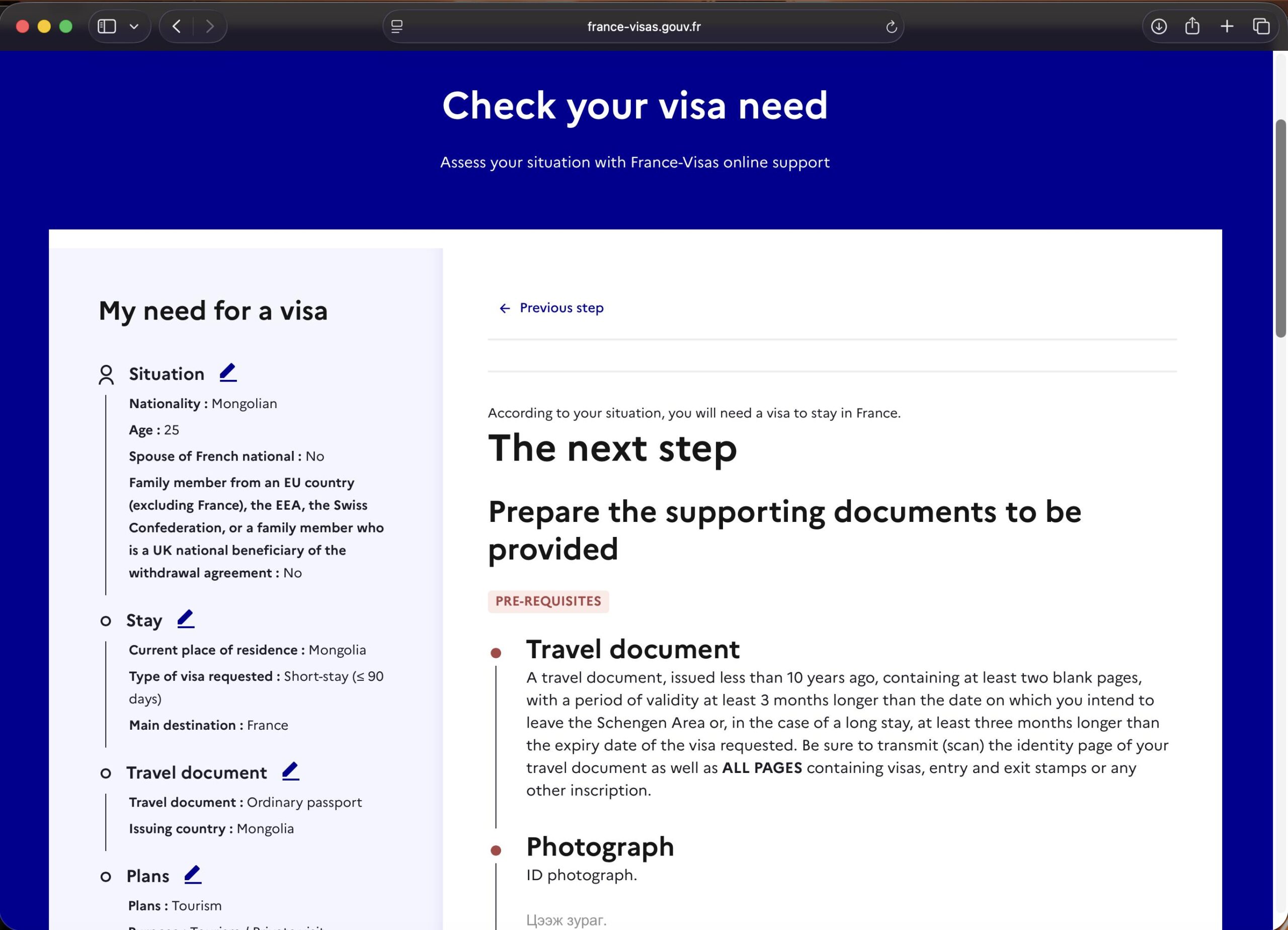
Step 5: Attend the appointment in person
The applicant must appear personally for submission. The file is presented at the embassy and biometrics are collected where required. Personal appearance is a formal part of the process, not an optional add-on.
Step 6: Follow the application after submission
After the file has been lodged, the applicant should monitor the case through the official channels linked to the France-Visas process. It is wise to keep all receipts, appointment records, and reference details accessible.
Step 7: Collect the passport once the case is finalized
When the passport is ready, it may be collected in accordance with the collection procedure communicated by the embassy. Applicants should check the visa carefully on receipt, especially the dates, number of entries, and personal details.
Requirements for a Strong French Schengen Visa Application from Mongolia
A successful application is not judged by one document alone. The file is assessed as a whole. The consular authority is looking for a travel plan that appears legitimate, time-limited, financially supported, and properly documented.
A strong file generally demonstrates five things. First, the purpose of the trip is clear. Second, the itinerary is realistic. Third, the applicant has the means to support the journey. Fourth, the accommodation basis is documented. Fifth, the submission gives no indication that the declared short stay is being used to mask another intention.
This is why consistency matters so much. Dates in the itinerary should match the hotel booking and the insurance period. Financial evidence should make sense in light of the cost and length of the trip. Employment or academic records should support the applicant’s temporary travel profile. When the file tells one coherent story, it becomes far more persuasive.
Document Checklist
The exact list depends on the visa category and the checklist generated through France-Visas, but the following document groups are central to most short-stay applications.
Core identity documents
Applicants should prepare a valid passport, recent passport photographs, and the completed visa application form in printed final format. The passport should have adequate validity, sufficient blank pages, and be in suitable condition for visa issuance.
Travel documents
A round-trip or onward travel reservation is normally expected, together with a clear itinerary that reflects the proposed travel dates and intended stay in France and, if relevant, elsewhere in the Schengen Area.
Accommodation proof
Applicants should include hotel reservations or, where staying with a host, an invitation-based accommodation arrangement supported by the relevant host documents. Accommodation proof should correspond to the full declared duration of the stay.
Financial proof
This usually includes recent bank statements and, depending on the applicant’s status, salary evidence, employment confirmation, business records, or sponsorship documentation. The financial profile should show that the trip can be funded without ambiguity.
Travel medical insurance
A Schengen-compliant medical insurance policy is required. It should cover the entire travel period and include emergency treatment, hospitalization, and repatriation.
Employment, study, or status documents
Employees should normally provide an employer letter and leave approval. Students should include proof of enrollment. Self-employed applicants should submit business registration and related activity documents. These records help show both the applicant’s stability and their reason to return after the trip.
Civil and relationship documents where relevant
Where the purpose is a family or private visit, additional records such as marriage certificates, birth certificates, or documents proving the relationship to the host may be necessary. Applications involving minors may also require parental consent or guardianship proof.
Processing and Practical Expectations
Applicants should expect that processing time may vary depending on nationality, season, and visa type. Some files move efficiently, while others take longer because of additional review or documentary clarification. This is one reason why early preparation is so important.
It is also worth understanding that incomplete files are not merely weak, they may be unusable. Where a submission lacks essential support, the application may not move forward effectively. Applicants should therefore treat completeness and order as mandatory, not cosmetic.
For short-stay travel, it is especially helpful to think in terms of chronology. If the trip begins on a certain date, the file should be prepared well before that date, the appointment booked with enough lead time, the travel insurance aligned with the itinerary, and the accommodation evidence corresponding to the intended stay from start to finish.

How Booking Reservation for Visa Supports the Application Process
At Booking Reservation for Visa, the value lies not only in helping travelers arrange the practical side of their journey, but also in supporting the documentary structure required for a credible visa application. A visa file is strongest when the reservations and supporting records align clearly with the declared purpose of travel. Accommodation confirmations should correspond to the intended stay, flight reservations should reflect the travel period accurately, and travel insurance should cover the same dates shown in the itinerary.
This is why a platform such as bookingreservationforvisa plays an important role in the overall preparation process. It helps applicants move beyond simple trip planning and toward a more complete, well-supported application strategy. For travelers applying for a French Schengen visa from Mongolia, that connection is particularly valuable because the submission route is direct, embassy-based, and highly document-oriented. When reservations are arranged carefully and presented consistently, they contribute not only to travel readiness, but to a stronger and more persuasive visa file.
In addition to helping applicants align their reservations with visa requirements, Booking Reservation for Visa offers practical support through services such as flight reservations for visa purposes, hotel booking confirmations, and other travel-related documents commonly used in short-stay visa applications. These services are particularly useful for travelers who need a structured itinerary or temporary reservation record before purchasing fully paid tickets. When used properly, such support can help applicants present a more organized file while maintaining flexibility during the visa decision period.
Conclusion
The French Schengen visa from Mongolia is best approached as a structured embassy-led submission rather than a routine travel formality. Applicants must begin on France-Visas, book correctly with the Embassy of France in Ulaanbaatar, prepare a coherent and category-specific file, and submit it in person with all required supporting evidence. The stronger the alignment between purpose, itinerary, finances, and accommodation, the stronger the application becomes. For travelers planning a visit to France, good preparation is not merely helpful it is one of the decisive factors behind a smooth and successful visa outcome.